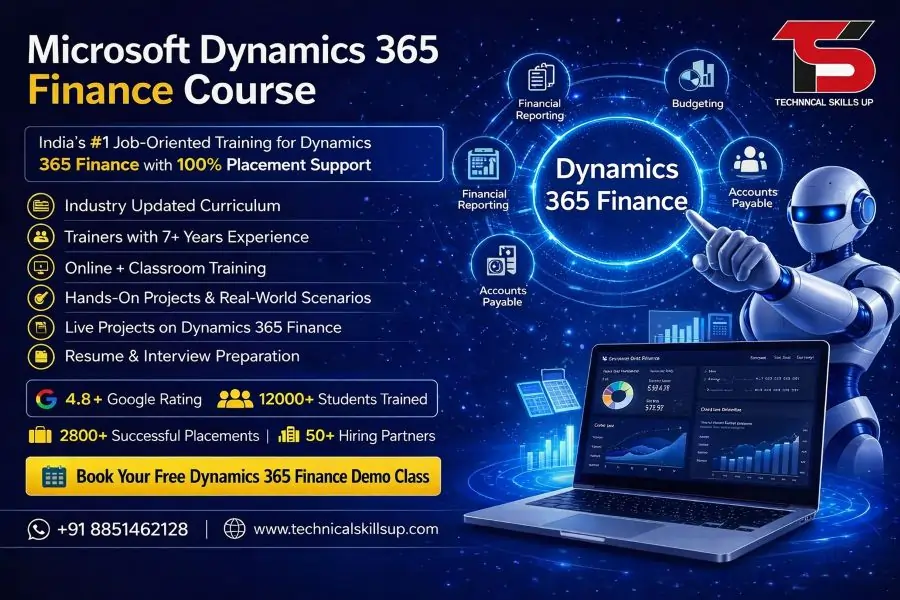
Microsoft Dynamics 365 Finance Online Course in India

Modern companies need smart finance professionals who can manage accounting, reporting, taxation, budgeting, and business operations with advanced ERP software. Microsoft Dynamics 365 Finance Course helps learners understand real business processes with practical training and industry-based projects. Technical Skills Up provides career-focused learning that helps students, working professionals, and business owners gain strong knowledge of financial management systems. Practical sessions, expert guidance, and live project exposure make learning simple and useful for real jobs. Many companies across manufacturing, retail, logistics, healthcare, and IT sectors use Microsoft Dynamics solutions to improve their financial operations. Strong knowledge of ERP software creates better career opportunities in India and international markets. Technical Skills Up focuses on easy learning methods, practical implementation, and updated industry concepts to help learners build confidence for real-time work environments.

Table of Contents

Why Choose Technical Skills Up

Technical Skills Up focuses on practical education instead of only theoretical concepts. Trainers explain every topic in simple language so beginners can understand ERP concepts without confusion. Industry experts guide students with real business examples and hands-on assignments.

Key Benefits of Learning with Technical Skills Up

  • Experienced corporate trainers
  • Practical live projects
  • Updated course modules
  • Interview preparation support
  • Flexible learning schedules
  • Online and classroom training
  • Real-time case studies
  • Career guidance support
  • Industry-oriented assignments
  • Step-by-step learning process

Overview of Microsoft Dynamics 365 Finance Training

Businesses use ERP software to manage financial operations, automate accounting tasks, and improve reporting accuracy. Microsoft Dynamics 365 Finance Training helps learners understand how modern organizations manage their finance departments through cloud-based ERP solutions.

Training sessions include practical learning on:

  • Financial accounting
  • Budget management
  • Accounts payable
  • Accounts receivable
  • General ledger
  • Cash and bank management
  • Taxation process
  • Financial reporting
  • Procurement and sourcing
  • Asset management

Practical exposure helps students understand real business workflows and company operations effectively.

Industry Demand for ERP Finance Professionals

Large organizations prefer skilled professionals who understand enterprise finance systems. Growing digital transformation across industries increases demand for ERP finance experts in India and abroad.

Industries Hiring ERP Finance Professionals

  • Manufacturing companies
  • Retail businesses
  • Healthcare organizations
  • IT companies
  • E-commerce firms
  • Banking sector
  • Logistics companies
  • Consulting firms
  • Education sector
  • Government organizations

Strong ERP skills improve job opportunities for finance graduates, accountants, MBA students, and working professionals.

Skills You Will Learn During the Course

Professional ERP learning helps students build both technical and business management skills. Training modules focus on practical implementation so learners can work confidently in real company environments.

Important Skills Covered

Financial Management Skills

  • Ledger management
  • Expense tracking
  • Budget planning
  • Financial analysis
  • Vendor management
  • Invoice processing

ERP Functional Skills

  • Workflow configuration
  • Data management
  • User management
  • Reporting tools
  • Dashboard handling
  • Business process automation

Professional Skills

  • Communication skills
  • Business understanding
  • Analytical thinking
  • Problem-solving techniques
  • Team collaboration
  • Project handling

Course Modules Covered in Training

Well-structured modules help students learn concepts from basic to advanced levels. Trainers provide hands-on practice for every module.

Introduction to ERP and Dynamics 365

  • ERP fundamentals
  • Cloud technology overview
  • Business process understanding
  • Microsoft ecosystem introduction

Financial Management

  • General ledger setup
  • Fiscal calendars
  • Journal entries
  • Financial dimensions

Accounts Payable

  • Vendor creation
  • Invoice management
  • Payment processing
  • Purchase order handling

Accounts Receivable

  • Customer management
  • Sales invoices
  • Collections management
  • Customer payments

Budgeting and Forecasting

  • Budget planning
  • Budget control
  • Financial forecasting
  • Budget reporting

Cash and Bank Management

  • Bank reconciliation
  • Cash flow management
  • Payment processing
  • Bank transaction handling

Fixed Asset Management

  • Asset acquisition
  • Asset depreciation
  • Asset transfer
  • Asset disposal

Financial Reporting

  • Financial statements
  • Reporting tools
  • Power BI integration
  • Analytics dashboard

Importance of Practical Learning

Technical knowledge becomes stronger with practical implementation. Real-time exercises help learners understand how companies use ERP systems in daily operations.

Practical Activities Included

  • Live ERP software practice
  • Business case studies
  • Real project simulations
  • Financial transaction processing
  • Reporting practice
  • Workflow configuration tasks

Hands-on learning improves confidence and problem-solving skills for real workplace situations.

Microsoft Dynamics 365 Finance Online Course Benefits

Online learning helps students attend classes from any location without travel issues. Flexible schedules make learning convenient for working professionals and college students.

Advantages of Online Learning

  • Learn from home
  • Access recorded sessions
  • Flexible class timing
  • Interactive live classes
  • Easy doubt-solving support
  • Digital study materials
  • Real-time software access

Technical Skills Up provides professional online support to ensure smooth and effective learning for every student.

Career Opportunities After Course Completion

ERP finance knowledge opens multiple career opportunities in domestic and international companies. Many organizations prefer certified professionals with practical ERP skills.

Popular Job Roles

  • ERP Functional Consultant
  • Finance Executive
  • Accounts Manager
  • Financial Analyst
  • ERP Support Executive
  • Business Analyst
  • Accounts Payable Specialist
  • Accounts Receivable Executive
  • ERP Implementation Consultant
  • Finance Operations Associate

Professional training improves job readiness and career growth opportunities.

Certification Training for Better Career Growth

Companies prefer candidates with recognized technical skills and practical expertise. Microsoft Dynamics 365 Finance Certification Course helps learners validate their ERP knowledge and improve professional credibility.

Benefits of Certification Preparation

  • Better job opportunities
  • Professional recognition
  • Higher salary potential
  • Improved technical confidence
  • Industry-standard knowledge
  • Better interview performance

Technical Skills Up helps students prepare for certification exams with practical assignments and expert guidance.

Learning Approach at Technical Skills Up

Simple teaching methods help students understand complex ERP concepts easily. Trainers focus on practical examples instead of difficult technical explanations.

Training Features

Interactive Sessions

Live discussions and demonstrations improve learning quality and concept clarity.

Real-Time Examples

Business-based examples help students understand actual company workflows.

Practical Assignments

Assignments improve implementation knowledge and technical skills.

Doubt-Clearing Support

Dedicated support sessions help students solve technical and functional queries.

Interview Preparation

Mock interviews and resume guidance improve placement readiness.

Why ERP Finance Skills Matter in Modern Business

Digital finance systems help organizations reduce manual work and improve operational efficiency. Companies now prefer cloud-based ERP solutions for better data management and financial transparency.

Advantages of ERP Finance Systems

  • Automated accounting process
  • Faster financial reporting
  • Better business visibility
  • Improved compliance management
  • Real-time data access
  • Reduced manual errors
  • Better decision-making process

Knowledge of ERP finance software helps professionals stay competitive in the modern job market.

Who Can Join This Training Program

Flexible learning structure makes this course suitable for different educational and professional backgrounds.

Suitable for

  • B.Com students
  • M.Com graduates
  • MBA finance students
  • Accountants
  • Finance professionals
  • ERP beginners
  • Business owners
  • Working professionals
  • Job seekers

Basic computer knowledge helps learners understand software operations more easily.

Placement Assistance and Career Support

Career guidance plays an important role in professional growth. Technical Skills Up supports students with placement preparation and interview guidance.

Career Support Services

  • Resume building assistance
  • Mock interview sessions
  • Technical interview preparation
  • Career counseling
  • Professional skill development
  • Job opportunity updates

Professional mentorship helps students improve confidence for interviews and workplace challenges.

Business Applications of Microsoft Dynamics Finance

Organizations use ERP systems to manage various financial and operational activities effectively. Understanding business applications helps students learn practical implementation strategies.

Common Business Uses

  • Financial accounting management
  • Vendor payment processing
  • Customer billing management
  • Tax management
  • Budget planning
  • Financial reporting
  • Expense management
  • Business analytics

Practical business exposure helps learners understand real company requirements.

Advantages of Choosing ERP Finance as a Career

ERP finance remains one of the fastest-growing career domains in modern industries. Skilled professionals receive strong demand from multinational companies and consulting firms.

Career Advantages

  • High industry demand
  • Strong salary growth
  • International career opportunities
  • Professional skill development
  • Long-term career stability
  • Multiple industry options

ERP professionals with practical knowledge and certification often receive better career growth opportunities.

Microsoft Dynamics 365 Finance Classes with Expert Trainers

Professional guidance helps students learn software features more effectively. Trainers at Technical Skills Up explain every module with practical business scenarios.

Trainer Support Includes

  • Real industry knowledge
  • Live project explanation
  • Practical ERP implementation
  • Technical problem-solving guidance
  • Business workflow understanding

Interactive classes improve learning quality and help students understand complex financial processes easily.

Importance of Cloud-Based ERP Solutions

Cloud technology changes how companies manage business operations. Modern ERP solutions provide secure and flexible financial management systems for organizations.

Benefits of Cloud ERP

  • Remote access flexibility
  • Data security
  • Faster implementation
  • Better scalability
  • Automatic software updates
  • Reduced infrastructure costs

Understanding cloud ERP systems helps professionals stay updated with industry technology trends.

Learning Environment at Technical Skills Up

Positive learning environments improve focus, confidence, and skill development. Technical Skills Up provides professional training support with practical implementation methods.

Student Learning Benefits

  • Beginner-friendly teaching
  • Professional study material
  • Live practical sessions
  • Personalized support
  • Updated curriculum
  • Flexible batch options

Supportive training environments help students complete courses successfully and improve career readiness.

Future Scope of ERP Finance Professionals

Businesses continue adopting digital finance systems to improve operational efficiency. Growing technology adoption increases the demand for ERP finance specialists across industries.

Future Career Scope

  • ERP consulting opportunities
  • International job roles
  • Cloud ERP implementation careers
  • Business process consulting
  • Financial operations management
  • ERP support services

Continuous learning and practical experience help professionals achieve long-term success in ERP finance careers.

Start Your Professional ERP Journey Today

Professional ERP skills help individuals build strong careers in finance, accounting, and business management sectors. Microsoft Dynamics 365 Finance Course in India provides excellent opportunities for students and professionals who want to work with modern business technologies. Technical Skills Up focuses on practical learning, industry exposure, and career-oriented training methods to help learners achieve professional success. Expert trainers, real-time projects, flexible learning options, and placement guidance create a complete learning experience for students from different backgrounds. Strong ERP knowledge, practical skills, and certification preparation improve career opportunities in today’s competitive job market.

FAQs:

Q1. What is the Microsoft Dynamics 365 Finance Course?

Ans: The Microsoft Dynamics 365 Finance Course is a professional ERP training program designed to teach the management of Finance, Accounting, Budgeting, Financial Reporting, Taxation, and Business Operations. This course is based on the ERP software utilized by large businesses and corporations.

Q2. Who is the Microsoft Dynamics 365 Finance Training suitable for?

Ans: This course is an excellent option for B.Com, M.Com, and MBA graduates, finance students, accountants, working professionals, and candidates looking to kickstart a career in ERP. This training proves highly beneficial for individuals aspiring to build a career in the fields of Finance and Accounting.

Q3. What are the key highlights of the Microsoft Dynamics 365 Finance Course at Technical Skills Up?

Ans: At Technical Skills Up, we provide industry-expert trainers, practical projects, live sessions, interview preparation, and placement assistance. The training is delivered in simple language and through a practical approach, enabling students to learn quickly and effectively.

Q4. What job opportunities are available after completing the Microsoft Dynamics 365 Finance Course?

Ans: Upon completing this course, candidates can apply for roles such as ERP Functional Consultant, Finance Executive, Dynamics 365 Consultant, Business Analyst, Accounts Manager, and ERP Support Executive.

Q5. What is the duration of the Microsoft Dynamics 365 Finance Course?

Ans: At most institutes, this course is completed within a timeframe of 2 to 4 months. The actual duration of the training depends on the specific batch timings and the course modules covered.

Q6. Is coding knowledge required for the Microsoft Dynamics 365 Finance Course?

Ans: No, prior coding knowledge is not a prerequisite for this course. It is a functional ERP course that places its primary focus on finance and business processes.

Q7. What are the benefits of obtaining a Microsoft Dynamics 365 Finance Certification?

Ans: Certification serves to validate a candidate’s skills and knowledge. It strengthens one’s resume and significantly increases the chances of securing a job with reputable companies.

Q8. Is an online version of the Microsoft Dynamics 365 Finance Course available?

Ans: Yes, many institutes offer online live training sessions. Through online classes, students can benefit from practical training and access recorded sessions from the comfort of their own homes.

Q9. What topics are covered in the Microsoft Dynamics 365 Finance Course?

Ans: This course covers topics such as General Ledger, Accounts Payable, Accounts Receivable, Fixed Assets, Budgeting, Taxation, Financial Reporting, Expense Management, and ERP Workflow.

Q10. Can freshers take the Microsoft Dynamics 365 Finance course?

Ans: Yes, freshers can easily take this course as well. Having basic accounting knowledge makes the learning process even easier.

Q11. What salary can one expect after completing Microsoft Dynamics 365 Finance training?

Ans: A fresher candidate can secure a good salary package right at the start of their career. The salary depends on the candidate’s skills, certifications, experience, and the company’s location.

Q12. Does this course include practical training?

Ans: Yes, the professional training involves working on live projects, real-time scenarios, and practical assignments to provide students with valuable industry experience.

Q13. What are the future prospects for the Microsoft Dynamics 365 Finance course?

Ans: The demand for ERP and cloud-based finance solutions is constantly on the rise. Major companies are utilizing Microsoft Dynamics 365, which means career opportunities in this field are also growing rapidly.

Q14. Does Technical Skills Up provide placement support?

Ans: Yes, under its placement support program, Technical Skills Up offers services such as resume building, mock interviews, career guidance, and job assistance.

Q15. What are the eligibility criteria for taking the Microsoft Dynamics 365 Finance course?

Ans: Graduates, commerce students, MBA (Finance) candidates, and accounting professionals are eligible to take this course. Basic computer knowledge and an understanding of finance are helpful for the learning process.

Related Post

Google Cloud Associate Course

Google Cloud Associate Course in Delhi with Placement

Cloud computing has become one of the most important technologies for modern businesses. Organizations across industries are moving their applications, databases, and infrastructure to cloud platforms to improve efficiency, reduce costs, and increase scalability. Professionals who understand cloud technologies are now among the most sought-after candidates in the job market. Technical Skills Up offers a comprehensive Google Cloud Associate Course in Delhi designed for students, IT professionals, system administrators, and career changers who want to build practical cloud computing skills. The program focuses on real-world learning, hands-on projects, industry-relevant concepts, and certification preparation. Learners gain the confidence to work with cloud environments and understand how businesses use Google Cloud solutions to manage digital operations. Expert trainers, practical sessions, and career-focused learning make this course an excellent choice for individuals looking to build a successful future in cloud technology. Course Overview Cloud platforms continue to transform the way businesses deploy and manage technology solutions. Technical Skills Up has developed a structured training program that helps learners understand the fundamentals and practical implementation of Google Cloud services. The course covers cloud concepts, infrastructure management, networking, storage solutions, security practices, application deployment, monitoring, and troubleshooting. Every module has been carefully designed to provide a balanced mix of theoretical knowledge and practical experience. Learners receive exposure to industry-standard workflows and cloud environments that reflect real business scenarios. Practical assignments and case studies help participants understand how cloud services are used in organizations of different sizes. Who Should Join This Course? This program is suitable for: Fresh graduates seeking a cloud computing career IT support professionals Network administrators System administrators Software developers DevOps engineers Technical consultants Working professionals planning career growth Entrepreneurs interested in cloud solutions Learning Objectives Participants will learn how to: Understand cloud computing fundamentals Work with Google Cloud services Manage cloud resources effectively Configure networking solutions Deploy virtual machines Monitor cloud environments Implement security best practices Optimize cloud performance Prepare for certification exams Solve real-world cloud challenges Google Cloud Associate Training in Delhi for Modern IT Careers Modern organizations rely heavily on cloud infrastructure to support digital transformation. Businesses require professionals who can deploy, manage, and monitor cloud-based solutions efficiently. Technical Skills Up focuses on practical cloud skills that align with industry expectations. Learners gain experience working on projects that mirror actual workplace environments. This approach helps students build confidence and develop job-ready skills. Training sessions include demonstrations, guided exercises, and hands-on implementation. Every concept is explained in simple language to ensure better understanding and retention. Benefits of Professional Cloud Training Professional training helps learners: Build strong technical foundations Understand industry practices Gain practical experience Improve employability Enhance problem-solving abilities Learn from experienced instructors Prepare for certification exams Stay updated with current technologies Importance of the Course in Industry Cloud technology has become a key part of digital business operations. Organizations use cloud platforms for application hosting, data storage, disaster recovery, analytics, and artificial intelligence solutions. Companies seek professionals who can manage cloud environments efficiently while maintaining security, scalability, and performance. Knowledge of Google Cloud can significantly improve career opportunities in various industries. Businesses using cloud technologies include: Information Technology Healthcare Banking and Finance E-commerce Education Telecommunications Manufacturing Media and Entertainment Logistics Government Organizations Cloud professionals help organizations reduce infrastructure costs and improve operational efficiency. Their expertise contributes directly to business growth and digital innovation. Skills Covered in the Program Technical Skills Up emphasizes skill development through practical implementation and real-world projects. Cloud Computing Fundamentals Learners understand: Cloud architecture Deployment models Service models Cloud benefits Resource management Infrastructure concepts Virtual Machine Management Participants learn how to: Create virtual machines Configure instances Manage resources Monitor performance Optimize workloads Networking Concepts Networking plays a critical role in cloud environments. Students gain knowledge of: Virtual networks Subnets Firewall rules Load balancing DNS management IP addressing Storage Management The training covers: Cloud storage services Data management Backup strategies Data lifecycle management Storage optimization Security Practices Security remains one of the most important aspects of cloud computing. Learners understand: Identity and access management Authentication methods Authorization controls Security policies Compliance principles Data protection strategies Monitoring and Troubleshooting Practical exercises help learners: Monitor cloud resources Identify performance issues Analyze logs Resolve common problems Improve system reliability Google Cloud Associate Classes in Delhi with Practical Learning Practical exposure makes a significant difference in technical education. Technical Skills Up believes that learners understand concepts better when they apply them in real environments. Classroom sessions combine theory with implementation. Every major topic includes demonstrations, lab exercises, and project work. Students work on: Resource deployment Infrastructure configuration Network setup Security implementation Monitoring tasks Performance optimization Hands-on practice helps learners become comfortable working in cloud environments before entering the job market. Real-World Project Experience Projects help learners: Apply classroom concepts Build technical confidence Develop troubleshooting skills Improve analytical thinking Create portfolio-worthy work Tools and Technologies Covered Cloud professionals must understand multiple tools and services. Technical Skills Up introduces learners to important technologies used in cloud environments. Compute Services Topics include: Virtual machine deployment Resource management Instance configuration Workload optimization Networking Services Students learn: Virtual private cloud setup Traffic management Connectivity solutions Network security Storage Solutions Coverage includes: Object storage Data backup Storage classes Data availability Monitoring Tools Training focuses on: Resource monitoring Alert management Log analysis Performance tracking Identity and Access Management Participants understand: User management Role assignments Access control policies Security governance Cloud Security Technologies Security-related modules cover: Encryption concepts Security monitoring Compliance practices Threat mitigation Google Cloud Associate Certification Course in Delhi Industry-recognized certifications demonstrate professional competence and technical knowledge. Certification preparation is integrated throughout the training program. Learners receive guidance on: Certification objectives Exam structure Important concepts Practice questions Scenario-based learning Exam preparation strategies Experienced trainers help students understand how certification topics relate to real-world cloud operations. Advantages of Certification Certification can help professionals: Validate cloud skills Improve career opportunities Gain industry recognition Increase employer confidence Strengthen professional profiles Support career advancement Career Opportunities After Completing the Course Cloud computing creates opportunities across multiple industries. Organizations require skilled professionals

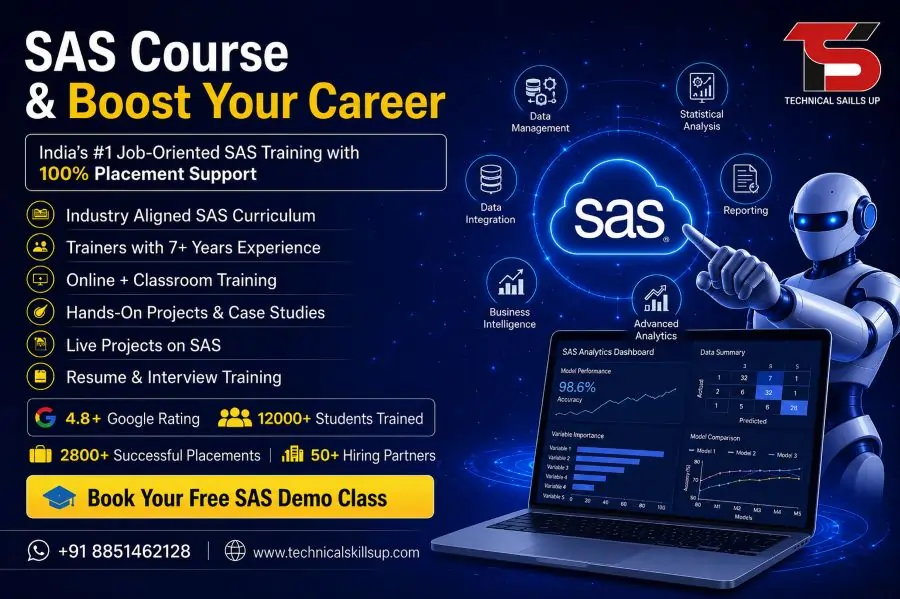
SAS Course

SAS Course in Delhi | SAS Training in Delhi

Data-driven decision-making has become a key part of modern business operations. Organizations across healthcare, banking, insurance, retail, pharmaceuticals, IT, and government sectors rely on analytics to understand trends, improve performance, and make informed decisions. Strong analytical skills combined with industry-recognized tools can help professionals secure rewarding career opportunities in this growing field. Technical Skills Up offers a comprehensive SAS Course in Delhi designed for students, graduates, working professionals, and career changers who want to develop practical analytics skills and gain confidence in handling real-world data. Learning analytics today goes beyond understanding theory. Employers prefer candidates who can work with data, create reports, perform statistical analysis, and generate business insights. This program focuses on practical learning, hands-on projects, and industry-oriented training that helps learners develop job-ready skills. Every module is structured to make complex concepts easy to understand while providing valuable exposure to real business scenarios. SAS Course Overview SAS is one of the most trusted analytics platforms used by organizations around the world. It helps professionals manage, analyze, and visualize large volumes of data efficiently. Companies use SAS for predictive analytics, reporting, business intelligence, risk management, forecasting, and statistical modeling. Technical Skills Up has designed this course to provide a strong foundation in SAS programming and data analytics. Training covers fundamental concepts as well as advanced techniques that employers actively seek. Learners gain practical experience through assignments, case studies, projects, and guided exercises. The curriculum is suitable for: Fresh graduates College students Working professionals Data analysts Business analysts IT professionals Healthcare professionals Finance professionals Researchers Career switchers Course content is regularly updated to align with industry requirements and emerging market trends. SAS Training in Delhi for Practical Learning Practical exposure plays a major role in building technical confidence. Classroom theory alone cannot prepare learners for real-world challenges. Technical Skills Up emphasizes hands-on training through industry-focused exercises and project-based learning. Every learner receives opportunities to: Work with real datasets Create analytical reports Perform data cleaning Build statistical models Generate business insights Develop programming skills Understand data visualization concepts Practice problem-solving techniques Guidance from experienced trainers helps students understand how SAS is used in actual business environments. Practical sessions ensure learners can apply concepts effectively after completing the course. Importance of SAS in Modern Industries Data continues to grow at an unprecedented rate. Organizations collect information from customers, operations, marketing campaigns, financial transactions, and digital platforms. Managing and analyzing this information requires powerful tools and skilled professionals. SAS remains highly valued because it offers: Advanced analytics capabilities Reliable data management Strong reporting features Statistical analysis tools Business intelligence functions Predictive modeling capabilities Enterprise-level scalability Industries that heavily depend on SAS include: Healthcare and Pharmaceuticals Healthcare organizations use SAS to analyze patient data, clinical trials, treatment effectiveness, and healthcare trends. Pharmaceutical companies depend on SAS for research and regulatory reporting. Banking and Financial Services Financial institutions utilize SAS for fraud detection, risk assessment, customer segmentation, and financial forecasting. Insurance Sector Insurance companies analyze customer behavior, claim patterns, and risk factors using SAS analytics solutions. Retail and E-commerce Retail businesses leverage data analytics to understand customer preferences, optimize inventory, and improve sales strategies. Government Organizations Public sector departments use analytics for planning, policy development, resource allocation, and performance measurement. Growing adoption across industries continues to create opportunities for trained SAS professionals. SAS Programming Course in Delhi with Industry-Focused Curriculum Programming skills form the foundation of successful analytics careers. Strong knowledge of SAS programming helps professionals manipulate data, automate tasks, and generate meaningful insights. Training modules include: Introduction to SAS Learners begin by understanding the SAS environment, architecture, and workflow. Foundational concepts help students develop confidence before moving to advanced topics. Key topics include: SAS basics Interface navigation Data processing concepts SAS libraries Data structures Project organization Data Management Concepts Organizations often work with large datasets from multiple sources. Data management skills help professionals organize and prepare information for analysis. Topics covered include: Importing data Exporting data Data cleaning Data transformation Data validation Data integration Data formatting SAS Programming Fundamentals Programming concepts help learners automate processes and perform complex data operations efficiently. Training includes: Variables and datasets Conditional statements Loops and iterations Functions and procedures Data step programming Error handling Code optimization Statistical Analysis Analytical professionals must understand statistical methods to generate accurate business insights. Coverage includes: Descriptive statistics Probability concepts Hypothesis testing Regression analysis Correlation analysis Statistical reporting Reporting and Visualization Decision-makers require clear reports and visual presentations. Reporting skills help professionals communicate findings effectively. Topics include: Report generation Summary reports Dashboard concepts Data visualization Charts and graphs Presentation techniques Skills Covered During the Program Technical knowledge alone does not guarantee career success. Employers look for professionals who combine technical expertise with analytical thinking and business understanding. Learners develop the following skills: Technical Skills SAS programming Data management Data transformation Data analysis Statistical modeling Report generation Data visualization Database concepts Analytical Skills Problem-solving Data interpretation Pattern recognition Trend analysis Business intelligence Decision support Professional Skills Communication Project execution Documentation Presentation skills Team collaboration Business understanding Balanced skill development prepares learners for diverse industry roles. Tools and Technologies Covered Modern analytics projects often require interaction with multiple technologies. Technical Skills Up introduces learners to tools commonly used alongside SAS. SAS Platform Components Students learn important SAS modules such as: Base SAS SAS Programming SAS Procedures SAS Macros SAS Reporting Tools SAS Analytics Features Database Concepts Exposure to database fundamentals helps learners work efficiently with enterprise data systems. Areas covered include: SQL basics Data extraction Query writing Data filtering Data joins Excel Integration Business environments frequently use Excel alongside analytics platforms. Training includes: Data import techniques Report exports Spreadsheet integration Data preparation workflows Business Analytics Concepts Understanding business objectives improves analytical decision-making. Topics include: Business metrics KPI analysis Data-driven strategies Performance measurement SAS Certification Course in Delhi for Career Growth Professional certification demonstrates technical competence and commitment to continuous learning. Employers often prefer candidates who have completed structured training programs from reputable institutions. Technical Skills Up provides comprehensive support to help learners prepare for certification-related

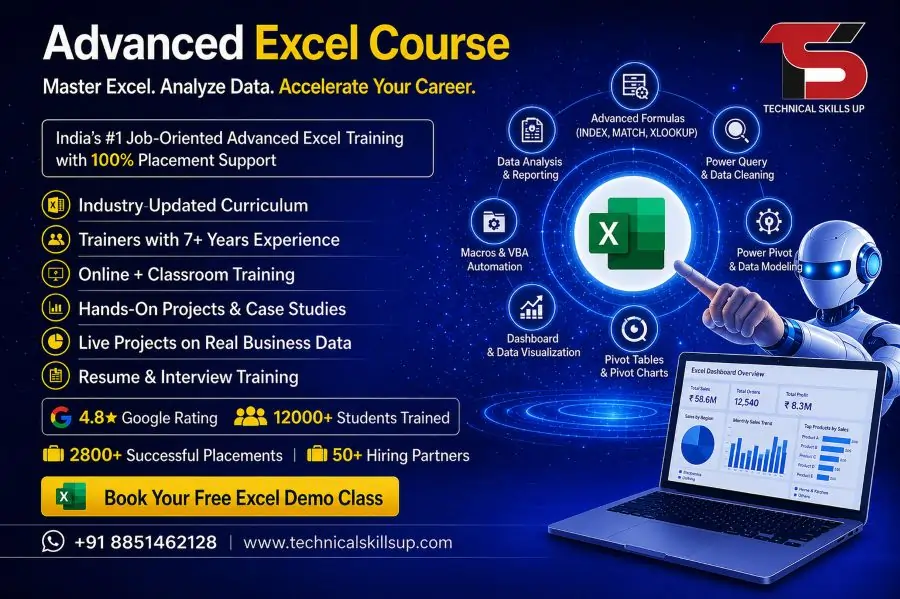
Advanced Excel Course

Advanced Excel Course in Delhi | Certification Training

Modern workplaces depend heavily on data management, reporting, and automation tools that improve speed and accuracy. Strong Excel skills have become a basic requirement in almost every industry such as finance, marketing, HR, operations, and administration. A well-structured Advanced Excel Course in Delhi helps learners build practical skills that go beyond basic spreadsheets and formulas. This training focuses on real business applications, dashboards, data analysis, and automation techniques used in professional environments. Learners gain confidence to handle complex data tasks efficiently while improving productivity in office work. Technical Skills Up designs this program to match industry needs, making it suitable for students, job seekers, and working professionals who want to upgrade their Excel expertise and improve career opportunities in competitive job markets. Importance of Advanced Excel in Today’s Workplace Data-driven decision-making has become a core part of every organization. Excel plays a major role in organizing and analyzing large datasets in a simple and structured way. Companies prefer candidates who can manage reports, create dashboards, and automate repetitive tasks using Excel tools. Excel knowledge helps in: Faster reporting and analysis Better data visualization Improved accuracy in calculations Time-saving automation techniques Professional reporting for management Organizations value employees who can convert raw data into meaningful insights. Strong Excel skills also increase chances of promotion and better job roles in corporate environments. What You Will Learn in Advanced Excel Training in Delhi Comprehensive learning modules ensure that students understand both basic and advanced concepts in a structured manner. The training focuses on practical implementation rather than only theory. Key learning areas include: Advanced formulas and functions (VLOOKUP, HLOOKUP, INDEX-MATCH) Data cleaning and validation techniques Pivot tables and pivot charts Conditional formatting for data analysis Dashboard creation and reporting tools Data visualization techniques Automation using macros and VBA basics Hands-on assignments help learners practice real-world scenarios that improve confidence and technical accuracy. Structured Learning Approach for Better Understanding Well-planned training modules help learners progress step by step from basic to advanced topics. Each session builds logical understanding of Excel features and their applications in real work environments. Training flow includes: Introduction to Excel environment and tools Formula building and logical functions Data analysis and reporting techniques Visualization using charts and dashboards Automation basics for productivity improvement This structured method ensures learners do not feel overwhelmed and can easily apply concepts in professional tasks. Tools and Features Covered in Advanced Excel Training in Delhi Modern Excel versions include powerful tools that simplify complex data tasks. Understanding these tools helps learners work efficiently in corporate environments. Important tools covered: Power Query for data transformation Power Pivot for advanced data modeling Charts and graph tools for visualization Data validation and error handling tools Macro recorder for automation tasks These tools are widely used in companies for business intelligence and reporting purposes. Practical Learning and Real-Time Projects Practical exposure plays a key role in building strong technical skills. Learners work on real-time projects that simulate office environments and business scenarios. Practical activities include: Creating financial reports Designing interactive dashboards Managing sales data reports Automating repetitive Excel tasks Preparing analytical business summaries Such exercises help students understand how Excel is used in real corporate situations, improving job readiness. Who Should Join Advanced Excel Classes in Delhi Excel training benefits a wide range of learners from different backgrounds. No advanced technical knowledge is required to start this course, making it accessible for beginners as well. Suitable for: Students preparing for job placements Working professionals seeking skill upgrades Accountants and finance professionals HR and administrative staff Business owners managing data Every learner gains practical knowledge that can be applied directly in professional work environments. Career Opportunities After Excel Training Strong Excel skills open multiple career paths in both private and corporate sectors. Companies actively look for candidates who can handle data efficiently and support decision-making processes. Career options include: Data Analyst Assistant MIS Executive Financial Analyst support roles HR Reporting Executive Office Administration Specialist Improved Excel knowledge also supports career growth in existing job roles, leading to promotions and salary increases. Advanced Excel Training Institute in Delhi – Why Choose Technical Skills Up Technical Skills Up focuses on delivering practical and job-oriented training programs designed according to industry standards. The institute ensures that learners gain both knowledge and real working skills. Key highlights include: Experienced trainers with industry background Practical sessions with real business examples Updated curriculum based on job market needs Interactive learning environment Personalized attention for every learner The training approach ensures that students become job-ready with strong technical confidence. Expertise and EEAT Standards in Training High-quality training depends on experienced instructors and structured learning material. Technical Skills Up follows EEAT principles to ensure credibility and trust in education delivery. Expertise focus: Trainers with real corporate experience Updated teaching methods based on industry requirements Step-by-step concept clarity for beginners Authority building: Industry-relevant curriculum design Practical exposure aligned with job roles Recognized certification support Trust factors: Transparent learning process Hands-on practice sessions Career guidance and mentoring support These elements help learners build confidence in their skills and career direction. Certification and Skill Validation Completion of training provides learners with certification that validates their Excel skills. This certification supports job applications and adds value to professional profiles. Certification benefits: Proof of practical Excel knowledge Support in job interviews Added advantage in corporate hiring Recognition of technical ability Employers often consider certified candidates more reliable for data-related roles. Teaching Methodology for Better Learning Experience Effective teaching methods ensure better understanding and long-term retention of concepts. The training uses simple explanations and practical demonstrations. Teaching approach includes: Live demonstrations of Excel tools Step-by-step formula explanations Interactive doubt-solving sessions Regular assignments for practice Real-world case studies This approach helps learners understand how Excel functions are used in daily office work. Placement and Career Support System Career guidance plays an important role in skill development programs. Technical Skills Up provides support to help learners move towards job opportunities. Support includes: Resume building assistance Interview preparation guidance Job referral support Career counseling sessions This