

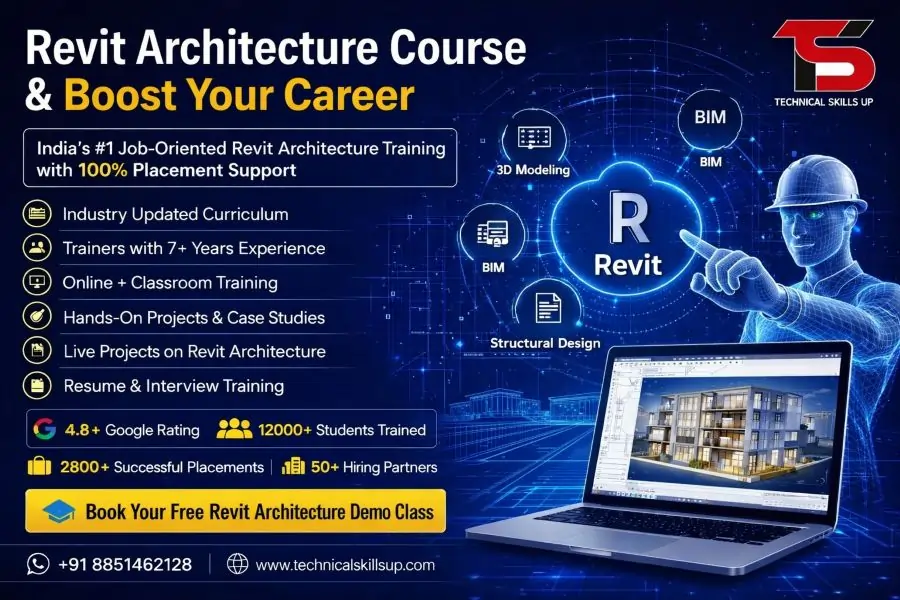
Modern construction projects demand smart planning, accurate drafting, and advanced 3D modeling skills. A professional Revit Architecture Course helps students and working professionals learn how to create intelligent building models with speed and accuracy. Technical Skills Up provides industry-focused training designed for beginners, civil engineers, architects, interior designers, and professionals who want practical BIM knowledge for real-world projects.
Training sessions focus on live projects, hands-on practice, and practical workflow understanding. Expert trainers explain every concept in simple language so learners can easily understand tools, commands, and project execution methods. Students also get exposure to industry standards used in architecture and construction companies. Career-focused guidance, project support, and certification preparation help learners build confidence for job opportunities in India and abroad.
Why Learn Revit Architecture?
Construction and architectural industries now prefer Building Information Modeling (BIM) tools for planning and execution. Revit Architecture helps professionals create accurate building models, construction drawings, schedules, and 3D visualizations from a single platform.
Learning this software provides many career benefits:
- Faster project creation and modification
- Improved accuracy in architectural drawings
- Better coordination between teams
- Smart 3D modeling skills
- High demand in architecture and construction companies
- Better job opportunities in BIM and design industries
- Time-saving documentation process
- Enhanced presentation and visualization quality
Professional knowledge of Revit also improves productivity and project management skills for large commercial and residential projects.
About Technical Skills Up
Technical Skills Up provides professional IT and design training with practical learning methods. Training programs are designed according to current industry requirements so students can gain job-oriented skills.
Key highlights of the institute include:
- Experienced industry trainers
- Practical project-based learning
- Online and classroom training options
- Flexible batch timings
- One-on-one doubt sessions
- Industry-standard curriculum
- Placement assistance support
- Certification preparation guidance
- Real project exposure
Learning sessions focus on practical implementation instead of only theoretical explanations. Students work on assignments and live models to gain confidence in real project environments.
Revit Architecture Training Designed for Beginners and Professionals
Many students hesitate to learn BIM software because they think the software is difficult. Simple teaching methods at Technical Skills Up make learning easier for freshers and experienced professionals.
Training starts from basic concepts and gradually moves toward advanced project work. Every module includes practical exercises that help students understand software tools step by step.
Suitable candidates for this program include:
- Architecture students
- Civil engineering students
- Interior designers
- Draftsmen
- Site engineers
- BIM professionals
- Construction professionals
- Working architects
- Freelancers
- Job seekers
Professional guidance from trainers helps learners improve both technical and practical understanding.
Industry-Focused Curriculum
Course modules are prepared according to current industry requirements. Training covers both beginner and advanced-level concepts used in real projects.
Introduction to BIM Concepts
Students first learn the fundamentals of Building Information Modeling and how BIM improves construction project management.
Topics covered:
- BIM workflow understanding
- Advantages of BIM technology
- Difference between CAD and BIM
- Construction documentation process
- Project coordination basics
Strong conceptual knowledge helps students understand modern construction workflows.
User Interface and Navigation
Software navigation becomes easier when students understand the interface properly.
Training includes:
- Revit workspace understanding
- Navigation tools
- Project browser
- Properties panel
- View control tools
- File management
Practical exercises help students become comfortable with software operations.
Architectural Modeling
Architectural modeling forms the core part of the training.
Students learn:
- Wall creation
- Doors and windows placement
- Floors and ceilings
- Roof creation
- Staircase design
- Curtain walls
- Railings
- Building components
Hands-on projects help learners understand complete architectural workflows.
Annotation and Documentation
Construction documentation plays an important role in project execution.
Modules include:
- Dimensions
- Text annotations
- Tags and symbols
- Sheet creation
- Legends
- Drafting views
- Callouts and sections
Students learn how to prepare professional architectural drawings used in construction companies.
Families and Components
Custom family creation improves flexibility in design projects.
Topics covered:
- Loadable families
- System families
- Parametric components
- Family editing
- Furniture modeling
- Custom component creation
Practical sessions help students create reusable project elements.
3D Visualization and Rendering
Presentation quality becomes more attractive with rendering and visualization skills.
Training covers:
- Camera views
- Lighting setup
- Material application
- Rendering settings
- Walkthrough creation
- Presentation views
Students learn how to create professional project presentations for clients and companies.
Project Work and Live Practice
Practical exposure improves confidence and technical skills.
Project activities include:
- Residential building projects
- Commercial building models
- Interior layouts
- Architectural detailing
- Sheet preparation
- Quantity schedules
Live practice sessions help learners understand actual project execution methods.
Benefits of Joining Revit Architecture Classes
Classroom and live online sessions provide interactive learning experiences. Trainers explain every tool with practical examples so students can easily apply concepts in projects.
Main benefits include:
- Step-by-step practical training
- Real project exposure
- Assignment support
- Interview preparation
- Portfolio guidance
- Flexible learning schedule
- Trainer support during projects
- Easy-to-understand teaching style
Small batch sizes also help trainers focus on individual student progress.
Revit Architecture Online Course with Practical Learning
Online learning has become a preferred option for students and working professionals. Technical Skills Up offers live interactive online classes that provide the same practical experience as classroom sessions.
Online training features include:
- Live trainer interaction
- Screen-sharing practical sessions
- Recorded class support
- Flexible timing options
- Real-time doubt clearing
- Project assignments
- Practical exercises
- Online project guidance
Students can learn from home without affecting work or college schedules.
Career Opportunities After Learning Revit
Demand for BIM professionals continues to grow in architecture, engineering, and construction industries. Companies prefer candidates who understand smart modeling and project coordination.
Popular job profiles include:
- BIM Modeler
- Revit Architect
- Architectural Draftsman
- BIM Coordinator
- Interior Designer
- Design Engineer
- CAD Technician
- Project Designer
Knowledge of Revit also helps freelancers work on international architectural projects remotely.
Skills Students Gain During Training
Professional training helps learners improve technical and project management skills.
Important skills developed during the course:
- 3D architectural modeling
- Construction documentation
- BIM workflow understanding
- Design coordination
- Visualization techniques
- Project presentation skills
- Parametric modeling
- Quantity scheduling
Practical assignments strengthen software efficiency and workflow understanding.
Importance of BIM in Modern Construction
Modern construction projects involve multiple teams working together. BIM technology improves communication, accuracy, and project management efficiency.
Major advantages of BIM include:
- Reduced project errors
- Better project coordination
- Improved visualization
- Faster construction documentation
- Better quantity estimation
- Efficient project management
- Reduced rework and delays
Learning BIM tools helps professionals stay updated with industry trends and modern construction methods.
Practical Learning Approach at Technical Skills Up
Practical training improves confidence faster than theory-only sessions. Trainers at Technical Skills Up focus on implementation-based learning methods.
Training methodology includes:
- Daily practical exercises
- Real project assignments
- Software practice sessions
- Project-based tasks
- Industry case studies
- Interactive doubt-solving sessions
Continuous practice helps students improve software speed and project accuracy.
Revit Architecture Certification Course for Career Growth
Professional certification helps candidates showcase their software skills during interviews and job applications. Technical Skills Up provides training support for certification preparation.
Certification advantages include:
- Better professional credibility
- Improved resume value
- Higher job opportunities
- Better industry recognition
- Stronger technical profile
- Increased confidence during interviews
Certified professionals often get preference in architecture and BIM-related hiring processes.
Advanced Topics Covered During Training
Advanced modules help learners handle complex architectural projects professionally.
Advance concepts include:
- Worksharing
- Phasing
- Design options
- Linked models
- Advanced schedules
- Template creation
- View templates
- Project collaboration
Understanding advanced workflows improves productivity in large-scale projects.
Placement Assistance Support
Career guidance forms an important part of professional training. Technical Skills Up supports students with placement preparation and interview guidance.
Placement support includes:
- Resume preparation
- Interview questions practice
- Portfolio guidance
- Job assistance
- Career counseling
- Professional profile improvement
Industry-oriented training improves employability for freshers and experienced professionals.
Flexible Learning Options
Different students have different schedules and learning preferences. Flexible batch options help learners manage studies with work or college responsibilities.
Available learning modes:
- Weekday batches
- Weekend batches
- Fast-track training
- Online classes
- Classroom training
Flexible schedules make learning easier for working professionals and college students.
Why Companies Prefer Revit Professionals
Architecture and construction firms prefer professionals who can handle BIM workflows efficiently. Revit helps companies improve project coordination and reduce drafting errors.
Companies value professionals who can:
- Create smart building models
- Manage architectural documentation
- Coordinate project data
- Improve workflow efficiency
- Produce accurate construction drawings
- Support BIM collaboration
Professional Revit skills increase job opportunities across architecture and engineering industries.
Real Project Exposure During Training
Real project practice helps students understand industry workflows better than theoretical learning.
Practical project activities include:
- Residential planning
- Commercial building design
- Floor plan development
- Elevation and section creation
- Quantity schedules
- Presentation sheets
Live project work improves technical understanding and portfolio quality.
Student Support and Guidance
Learning becomes easier when students receive proper support from trainers.
Support features include:
- Personal doubt sessions
- Assignment guidance
- Project troubleshooting
- Extra practice support
- Career guidance sessions
- Software installation help
Continuous mentorship helps students complete training confidently.
Future Scope of Revit Architecture
BIM adoption continues to increase globally in architecture, engineering, and infrastructure industries. Government and private projects increasingly require BIM-based workflows.
Future opportunities include:
- International BIM projects
- Remote freelancing work
- Architectural consultancy
- Construction management
- Interior visualization
- Smart city projects
Professional BIM skills can create long-term career growth opportunities.
Who Should Join This Program?
Training programs are suitable for learners from different educational and professional backgrounds.
Ideal candidates include:
- Fresh graduates
- Architecture students
- Diploma holders
- Civil engineers
- Interior designers
- Working professionals
- Freelancers
- Site supervisors
No advanced technical background is required to start learning the software.
Learning Environment at Technical Skills Up
Comfortable learning environments improve student engagement and understanding. Training sessions focus on interactive communication and practical implementation.
Learning advantages include:
- Easy explanations
- Friendly trainers
- Practical assignments
- Updated syllabus
- Career-oriented sessions
- Industry-relevant examples
Professional support throughout the course helps students achieve better learning outcomes.
Start Your Professional BIM Journey
Professional BIM skills can open doors to architecture, engineering, and construction careers. Quality training with practical exposure helps learners gain confidence and improve technical knowledge.
Technical Skills Up provides career-focused learning with practical assignments, industry-level projects, expert mentorship, and flexible training options. Students gain valuable architectural modeling skills that help them work on modern construction projects efficiently.
Strong software knowledge, practical project experience, and professional guidance together help students prepare for better job opportunities in the growing BIM industry.
Online Courses
Related Courses in Noida
- BIM Course in Noida
- Revit Architecture Course in Noida
- Revit MEP Course in Noida
- Revit Structure Course in Noida
- AutoCAD Course in Noida
- AutoCAD 2D Course in Noida
- AutoCAD 3D Course in Noida
Related Courses in Delhi
- BIM Course in Delhi
- Revit Architecture Course in Delhi
- Revit MEP Course in Delhi
- Revit Structure Course in Delhi
- AutoCAD Course in Delhi
- AutoCAD 2D Course in Delhi
- AutoCAD 3D Course in Delhi
FAQs:
Q1. What is the Revit Architecture Online Course?
Ans: The Revit Architecture Online Course is a professional training program that covers building design, 3D modeling, BIM (Building Information Modeling), floor plans, elevations, and construction documentation. This course is conducted through live online classes, enabling students to acquire industry-level skills from the comfort of their homes.
Q2. Is this course suitable for beginners?
Ans: Yes, this course is suitable for both beginners and working professionals. At Technical Skills Up, training is provided ranging from basic to advanced levels, ensuring that even students with no prior experience can learn with ease.
Q3. What job opportunities are available after completing the Revit Architecture Course?
Ans: Upon completing the course, you can apply for roles such as Revit Modeler, BIM Engineer, Architectural Designer, Draftsman, and BIM Coordinator. There is a significant demand for these profiles within the construction and architecture industries.
Q4. Does the Revit Architecture Online Course offer placement support?
Ans: Yes, Technical Skills Up provides placement assistance to its students. This includes services such as resume building, interview preparation, and job assistance to help students secure better career opportunities.
Q5. What are the prerequisites for learning Revit Architecture?
Ans: For this course, having a basic understanding of Civil Engineering, Architecture, Interior Design, or Drafting is beneficial. However, beginners can also easily master this course.
Q6. Are the online classes conducted live?
Ans: Yes, all online classes are conducted live. Students have the opportunity to ask questions directly to the trainer and work on practical projects.
Q7. What is the duration of the Revit Architecture Course?
Ans: The duration of the course may vary depending on the institute and the specific batch. Typically, the course is completed within a period of 2 to 4 months.
Q8. Does this course include practical training?
Ans: Yes, at Technical Skills Up, training is delivered through live projects and practical assignments, enabling students to understand real-world industry workflows.
Q9. Where is Revit Architecture software used?
Ans: This software is utilized in architecture firms, construction companies, interior design projects, and BIM-based engineering projects.
Q10. Is a certificate awarded upon completion of the course?
Ans: Yes, upon successfully completing the course, students are awarded a certificate, which proves beneficial when applying for jobs.
Q11. Can working professionals also take this course?
Ans: Yes, the Online Revit Architecture Course is highly beneficial for working professionals, as it offers features such as flexible timings and access to recorded sessions.
Q12. How does learning Revit Architecture benefit one’s career?
Ans: Learning Revit Architecture strengthens skills in 3D modeling, BIM workflows, and architectural design. This can lead to benefits in terms of both job opportunities and salary growth.
Q13. Do expert trainers teach at Technical Skills Up?
Ans: Yes, training at Technical Skills Up is provided by expert trainers with extensive industry experience, who share practical knowledge and insights gained from real-world projects.
Q14. What system requirements are necessary for the Revit Architecture Course?
Ans: For this course, a reliable internet connection and a laptop or desktop with medium to high specifications are required to ensure that the Revit software runs smoothly.
Q15. What is the demand for Revit Architecture professionals in India?
Ans: The demand for Revit Architecture professionals in India is growing rapidly due to the rise in BIM and smart construction projects. Many companies are actively hiring skilled Revit experts.