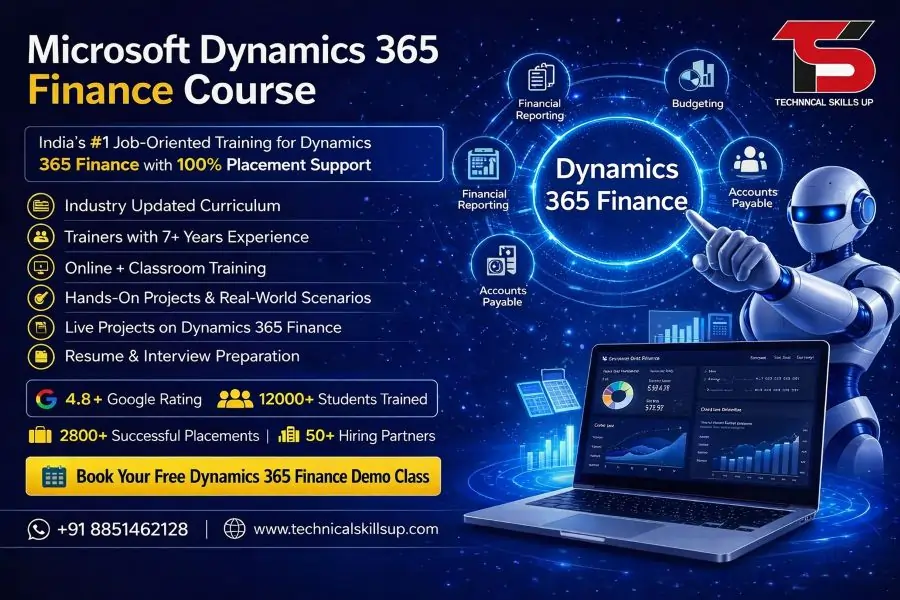
Microsoft Dynamics 365 Finance Course in Noida

Growing demand for ERP professionals has created excellent career opportunities in the corporate sector. Companies across finance, manufacturing, retail, supply chain, and banking industries depend on smart business management software to handle daily operations. Strong knowledge of finance modules, reporting systems, budgeting, taxation, and business processes helps professionals secure better career growth in India and abroad.

Technical Skills Up offers a practical learning environment for students, working professionals, and job seekers who want to build expertise in enterprise resource planning software. Training sessions focus on real business scenarios, industry-level projects, and hands-on practice. Expert trainers guide learners step by step so they can understand concepts easily without confusion.

Students searching for a reliable Microsoft Dynamics 365 Finance Course in Noida can gain industry-focused learning with practical assignments, interview preparation, and placement assistance. Course modules are designed according to current industry requirements so learners can develop both technical and functional skills in a professional environment.

Table of Contents

Why Learn Microsoft Dynamics 365 Finance

Modern businesses require advanced financial management systems to improve productivity and accuracy. Manual accounting processes consume time and increase the risk of errors. Cloud-based ERP platforms help organizations automate operations and improve business performance.

Learning finance management software provides multiple benefits:

  • Better understanding of financial operations
  • Knowledge of business automation tools
  • Strong career opportunities in ERP industries
  • High demand in multinational companies
  • Better salary packages for skilled professionals
  • Opportunities for global certifications
  • Career growth in finance and technology domains

Professional training also helps learners understand how large organizations manage accounting, reporting, budgeting, compliance, taxation, and procurement activities.

Industry Demand for ERP Finance Professionals

Large enterprises continuously search for trained ERP professionals who can manage financial operations efficiently. Demand for skilled candidates has increased in sectors like:

  • Manufacturing
  • Banking
  • Retail
  • Healthcare
  • IT companies
  • Logistics
  • E-commerce
  • Consulting firms

ERP finance specialists work on implementation, support, consulting, reporting, and process management roles. Growing digital transformation in businesses has also increased the need for cloud ERP experts.

Career Opportunities After Course Completion

Professional training opens multiple career paths for learners interested in finance and ERP technologies. Companies hire trained candidates for various positions based on their knowledge and practical experience.

Popular job roles include:

  • ERP Finance Consultant
  • Functional Consultant
  • Finance Executive
  • ERP Analyst
  • Support Consultant
  • Implementation Specialist
  • Business Analyst
  • Accounts Manager
  • Financial Reporting Executive
  • ERP Trainer

Career opportunities are available for freshers as well as experienced professionals who want to upgrade their skills.

Practical Learning Approach at Technical Skills Up

Strong practical knowledge creates better confidence during interviews and live projects. Technical Skills Up focuses on hands-on learning methods instead of only theoretical explanations.

Training sessions include:

  • Real-time project practice
  • Live server access
  • Business case studies
  • Practical assignments
  • Industry scenarios
  • Step-by-step demonstrations
  • Interactive classroom sessions

Trainers explain every module in simple language so students from technical and non-technical backgrounds can learn comfortably.

Key Features of the Training Program

Professional learning requires updated modules, practical exposure, and expert guidance. Training structure at Technical Skills Up helps learners build strong industry-ready skills.

Main Highlights

  • Experienced corporate trainers
  • Practical-oriented sessions
  • Updated course modules
  • Flexible class timing
  • Weekday and weekend batches
  • Online and classroom training
  • Interview preparation support
  • Resume building assistance
  • Placement guidance
  • Lifetime access to study materials

Skills You Will Learn During Training

Comprehensive learning helps students understand different business processes used in organizations. Training covers finance management concepts along with ERP implementation knowledge.

Important Skills Covered

  • Financial management
  • Ledger configuration
  • Budget planning
  • Tax management
  • Accounts payable
  • Accounts receivable
  • Cash and bank management
  • Financial reporting
  • Procurement process
  • Workflow management
  • Business process automation
  • ERP navigation skills

Practical exercises improve confidence and help learners understand real-world business environments.

Benefits of Joining Professional ERP Classes

Structured learning from industry experts saves time and improves understanding. Professional classes also help students avoid confusion while learning complex ERP concepts.

Major Advantages

  • Better understanding of finance operations
  • Guidance from experienced mentors
  • Practical project experience
  • Faster career growth
  • Improved interview performance
  • Access to updated industry knowledge
  • Learning through real business examples
  • Better confidence for client handling

Students receive proper support throughout the learning process.

Course Modules Covered During Training

Training structure includes important finance and ERP concepts required in the industry. Every module focuses on practical implementation and business usage.

Introduction to ERP and Finance Management

  • ERP fundamentals
  • Business process understanding
  • Finance module overview
  • Navigation and user interface
  • Organizational setup

Financial Management

  • General ledger
  • Chart of accounts
  • Fiscal calendar setup
  • Financial dimensions
  • Budget configuration

Accounts Payable

  • Vendor management
  • Purchase invoices
  • Payment journals
  • Vendor settlements
  • Procurement workflow

Accounts Receivable

  • Customer setup
  • Sales invoices
  • Customer payments
  • Collection management
  • Credit management

Cash and Bank Management

  • Bank configuration
  • Bank reconciliation
  • Payment processing
  • Cash flow handling

Fixed Assets Management

  • Asset creation
  • Asset depreciation
  • Asset transactions
  • Asset reporting

Budgeting and Forecasting

  • Budget planning
  • Budget control
  • Financial forecasting
  • Expense management

Financial Reporting

  • Report generation
  • Management reporting
  • Data analysis
  • Financial statements

Security and User Management

  • User roles
  • Permissions setup
  • Security configuration

Project and Practical Assignments

  • Live implementation scenarios
  • Business process execution
  • Case studies
  • Real-time practice

Who Can Join This Training Program

Learning ERP finance management does not require advanced technical expertise. Beginners and experienced professionals both can benefit from this course.

Suitable candidates include:

  • B.Com students
  • MBA students
  • M.Com graduates
  • Working accountants
  • Finance professionals
  • ERP beginners
  • Business analysts
  • Job seekers
  • IT professionals
  • Entrepreneurs

Basic computer knowledge helps students learn faster during practical sessions.

Professional Trainers with Industry Experience

Experienced mentors play an important role in professional learning. Corporate trainers at Technical Skills Up have strong industry knowledge and implementation experience.

Training sessions focus on:

  • Real-world business problems
  • Industry best practices
  • Practical demonstrations
  • Interactive learning methods
  • Interview-focused preparation

Students receive guidance directly from professionals who understand current market requirements.

Importance of Practical Projects

Practical exposure helps learners understand how companies use ERP software in real business operations. Project-based learning improves confidence and technical skills.

Training includes:

  • Real business workflow execution
  • Finance configuration practice
  • Report generation exercises
  • Transaction management
  • Implementation scenarios

Hands-on projects prepare students for corporate work environments.

Placement Assistance and Career Support

Professional training becomes more valuable when learners receive career guidance and placement support. Technical Skills Up helps students prepare for interviews and job opportunities.

Placement Support Includes

  • Resume preparation
  • Mock interviews
  • Personality development
  • Interview question practice
  • Career counseling
  • Job assistance

Guidance from trainers improves student confidence during recruitment processes.

Flexible Learning Options

Different learners require different schedules based on work and education commitments. Flexible batch timings help students learn comfortably.

Available options include:

  • Weekday classes
  • Weekend classes
  • Online training
  • Classroom sessions
  • Fast-track batches

Students can select learning modes according to their convenience.

Why Choose Technical Skills Up

Quality training and practical learning support help students build successful careers. Technical Skills Up focuses on delivering industry-relevant education with easy learning methods.

Reasons to Choose Us

  • Industry-focused curriculum
  • Expert trainers
  • Practical training sessions
  • Real-time project exposure
  • Affordable fee structure
  • Updated learning modules
  • Strong student support
  • Career guidance assistance
  • Comfortable learning environment

Professional mentoring helps learners achieve better career opportunities in ERP industries.

Learning Environment Designed for Better Understanding

Comfortable learning environments improve concentration and knowledge retention. Trainers explain complex finance concepts in easy language so students can understand topics without difficulty.

Learning process includes:

  • Simple explanations
  • Step-by-step guidance
  • Doubt-clearing sessions
  • Practical demonstrations
  • Interactive discussions

Students receive complete support during every stage of training.

Scope of ERP Finance Skills in Future

Digital transformation has increased the adoption of cloud ERP solutions worldwide. Organizations continue shifting from traditional accounting systems to advanced finance management platforms.

Future growth areas include:

  • Cloud ERP consulting
  • Financial automation
  • Business intelligence
  • ERP implementation
  • Process optimization
  • Digital finance operations

Skilled professionals with finance and ERP expertise can expect stable and rewarding career opportunities.

Professional Development for Working Professionals

Working professionals often upgrade their skills to secure promotions and better job opportunities. Advanced ERP training helps professionals improve technical knowledge and business process understanding.

Benefits for professionals include:

  • Better salary opportunities
  • Career transition support
  • Improved technical skills
  • Industry recognition
  • Better project handling capabilities
  • Global career opportunities

Corporate-focused learning helps professionals meet modern industry requirements.

Classroom and Online Training Experience

Modern learning methods allow students to choose flexible training options according to their comfort. Online and classroom sessions provide interactive learning experiences with trainer support.

Classroom Training Benefits

  • Face-to-face interaction
  • Direct trainer guidance
  • Group learning experience
  • Better practical monitoring

Online Training Benefits

  • Learn from any location
  • Flexible timing support
  • Recorded sessions access
  • Comfortable learning environment

Both learning modes focus on practical knowledge and industry preparation.

Importance of Certification Preparation

Professional certifications help learners validate their skills and improve career opportunities. Training sessions prepare students for industry-recognized certification exams through practical learning and structured guidance.

Certification preparation includes:

  • Module revision
  • Practical exercises
  • Mock tests
  • Interview preparation
  • Scenario-based learning

Certification knowledge improves professional credibility in the ERP industry.

Easy Learning for Beginners

Beginners often hesitate to learn ERP software because of technical terminology and finance concepts. Simple teaching methods at Technical Skills Up help students learn comfortably without pressure.

Training structure focuses on:

  • Basic-to-advanced learning
  • Simple explanations
  • Real-life examples
  • Regular practice sessions
  • Trainer support

Gradual learning methods improve confidence and help beginners understand concepts more effectively.

Advanced Business Process Understanding

ERP finance training also improves business process knowledge. Learners understand how organizations manage operations through integrated systems.

Business areas covered include:

  • Procurement management
  • Financial planning
  • Inventory coordination
  • Vendor management
  • Customer billing
  • Compliance processes

Strong business understanding helps candidates perform better during live projects and client interactions.

Supportive Training Environment

Positive learning environments encourage students to ask questions and improve their understanding. Trainers provide regular support and motivation during practical sessions.

Students receive:

  • Continuous guidance
  • Doubt-clearing assistance
  • Practical support
  • Career mentoring
  • Learning resources

Friendly teaching methods help learners build confidence and technical expertise.

Build a Successful Career with ERP Finance Skills

ERP finance professionals continue to remain in high demand because organizations require efficient financial management systems. Practical training and real-time exposure help learners become job-ready for modern business environments.

Students looking for quality Microsoft Dynamics 365 Finance Training in Noida can benefit from industry-oriented learning, expert mentorship, and practical project experience at Technical Skills Up. Professional guidance, structured modules, and career support help learners move toward successful opportunities in finance and ERP industries.

Growing competition in the job market makes skill development extremely important. Strong ERP finance knowledge combined with practical implementation skills can help candidates secure rewarding careers in leading companies across different industries.

FAQs:

Q1. What is the Microsoft Dynamics 365 Finance Course?

Ans: The Microsoft Dynamics 365 Finance Course is a professional ERP training program designed to teach the management of finance, accounting, budget planning, taxation, reporting, and business operations. At Technical Skills Up, this course is delivered by industry experts through hands-on, practical training.

Q2. Who is the Microsoft Dynamics 365 Finance Course in Noida best suited for?

Ans: This course is highly beneficial for B.Com, M.Com, and MBA graduates, as well as finance professionals, accountants, ERP users, and working professionals. It serves as an excellent option for anyone looking to build a career in the fields of finance and ERP software.

Q3. Why choose Technical Skills Up for Microsoft Dynamics 365 Finance Training in Noida?

Ans: Technical Skills Up offers live projects, practical sessions, expert trainers, interview preparation, and placement support. The training curriculum is designed in alignment with current industry requirements to ensure that students become job-ready.

Q4. What is the duration of the Microsoft Dynamics 365 Finance classes in Noida?

Ans: The duration of the course typically ranges from 2 to 4 months. The actual timeframe may vary depending on the training mode and the individual student’s learning pace.

Q5. Is programming knowledge required for this course?

Ans: No, programming knowledge is not a prerequisite for this course. Students can easily master the material provided they possess basic computer literacy and fundamental finance knowledge.

Q6. What topics are covered at the Microsoft Dynamics 365 Finance Training Institute in Noida?

Ans: This training covers a comprehensive range of topics, including General Ledger, Accounts Payable, Accounts Receivable, Budgeting, Financial Reporting, Cash Management, Fixed Assets, and ERP Implementation.

Q7. Is placement support provided after completing the Microsoft Dynamics 365 Finance Course?

Ans: Yes, Technical Skills Up provides students with resume building assistance, mock interviews, and placement support to help them secure a good job.

Q8. What are the benefits of obtaining Microsoft Dynamics 365 Finance Certification?

Ans: Certification enhances your professional value and credibility. It increases your job opportunities within MNCs and ERP-focused companies, and can also lead to better salary packages.

Q9. What is the fee structure for the Microsoft Dynamics 365 Finance Course?

Ans: Course fees may vary depending on the training mode, duration, and modules. It is best to contact the institute directly for precise information.

Q10. Is both online and offline training available?

Ans: Yes, Technical Skills Up offers both online and classroom-based training options, allowing students to learn according to their convenience.

Q11. What job roles can one pursue after learning Microsoft Dynamics 365 Finance?

Ans: Upon completing this course, one can secure job roles such as ERP Consultant, Finance Executive, Functional Consultant, Accounts Manager, ERP Analyst, and Business Analyst.

Q12. Can freshers also enroll in the Microsoft Dynamics 365 Finance course?

Ans: Yes, freshers are welcome to take this course. The training is designed to cover levels ranging from beginner to advanced, ensuring that new students can learn with ease.

Q13. Does the Microsoft Dynamics 365 Finance course include practical training?

Ans: Yes, students gain hands-on experience through practical labs, live projects, and real-time scenarios, thereby strengthening their practical skills.

Q14. What is the future outlook for Microsoft Dynamics 365 Finance?

Ans: Today, many large enterprises are utilizing Cloud ERP solutions. Consequently, the demand for Microsoft Dynamics 365 Finance professionals is rising rapidly, offering excellent career prospects.

Q15. How do I choose the right institute for Microsoft Dynamics 365 Finance training in Noida?

Ans: When selecting an institute, you should definitely consider factors such as trainer experience, practical training methodology, placement support, student reviews, and course content. Technical Skills Up is renowned for its industry-oriented training and career support.
Related Post

SQL Course

SQL Online Course in India | SQL Certification Course

Modern businesses rely heavily on data to make decisions, improve customer experiences, and streamline operations. Every application, website, and enterprise software solution stores valuable information in databases. Strong database management skills have become essential for professionals who want to build a successful career in technology. Technical Skills Up offers a comprehensive SQL Course designed to help students, graduates, and working professionals master database concepts through practical learning and real-world projects. The program focuses on developing strong knowledge of Structured Query Language, database design, data manipulation, reporting, and performance optimization. Practical exercises, industry-focused assignments, and expert guidance help learners gain confidence in handling databases used across various industries. Whether you are starting your career or planning to upgrade your technical skills, this course provides a structured learning path that aligns with current industry requirements. SQL Training Designed for Modern Industry Requirements Organizations across sectors generate massive amounts of data every day. Managing, analyzing, and retrieving that data efficiently requires professionals with strong database expertise. Technical Skills Up has created a curriculum that covers both fundamental and advanced concepts to ensure learners gain practical knowledge that can be applied immediately in real-world environments. The learning journey starts with database fundamentals and gradually moves toward advanced query writing, data analysis, joins, stored procedures, indexing, and database optimization techniques. Every topic is explained through practical examples that help learners understand how SQL is used in professional environments. Course Overview Technical Skills Up provides a structured training program that combines theoretical understanding with hands-on practice. Learners work on real database scenarios that simulate actual workplace challenges. Key highlights of the program include: Beginner to advanced learning path Live instructor-led sessions Practical database projects Real-world case studies Industry-relevant assignments Interview preparation support Flexible learning schedules Placement assistance guidance Certification preparation Every module has been designed to ensure learners gain confidence in writing queries, managing databases, and solving business-related data problems. Why SQL Skills Matter in Today’s Digital World Data has become one of the most valuable assets for organizations. Companies need professionals who can organize, access, and analyze information efficiently. SQL remains one of the most widely used database languages across industries. Business applications, banking systems, healthcare platforms, e-commerce websites, educational portals, and enterprise software solutions depend on databases for daily operations. Database professionals play an important role in maintaining data accuracy and supporting business intelligence initiatives. Strong SQL knowledge helps professionals: Access data quickly Generate meaningful reports Support business decisions Improve operational efficiency Maintain data quality Optimize database performance Work effectively with analytics teams Contribute to software development projects Growing dependence on data-driven decision-making continues to increase the demand for skilled database professionals worldwide. SQL Classes with Comprehensive Learning Modules Technical Skills Up follows a structured curriculum that ensures complete understanding of database concepts. Every topic is explained with practical demonstrations and hands-on exercises. Database Fundamentals Learners begin with the foundation of database management systems. Topics covered include: Introduction to databases Types of databases Relational database concepts Database architecture Data storage fundamentals Tables and relationships Primary and foreign keys Data integrity concepts Strong foundational knowledge makes it easier to understand advanced SQL concepts later in the course. Query Writing and Data Retrieval Database professionals spend a significant amount of time retrieving and analyzing data. Practical query-writing skills are therefore essential. Topics include: SELECT statements Filtering data Sorting records Aggregate functions Grouping data Conditional queries Data formatting Advanced search techniques Hands-on exercises help learners develop confidence in writing efficient queries. Working with Multiple Tables Real-world databases often contain hundreds of interconnected tables. Understanding relationships between tables is an important skill. Learners practice: Inner joins Left joins Right joins Full joins Self joins Cross joins Complex join conditions Data relationship management Practical examples demonstrate how businesses combine information from multiple sources for reporting and analysis. Data Manipulation Techniques Database management requires frequent updates and modifications. Important topics include: Insert operations Update commands Delete statements Data validation Transaction management Data consistency Rollback techniques Commit operations These concepts help learners manage information safely and efficiently. Skills Covered in the Program Technical Skills Up focuses on developing job-ready database skills that employers actively seek. Core Technical Skills Participants learn: Database management Query development Data extraction Data transformation Data validation Database troubleshooting Report generation Performance optimization Analytical Skills Practical assignments improve analytical capabilities such as: Data interpretation Trend identification Problem-solving Logical thinking Business reporting Decision support analysis Professional Skills Industry success requires more than technical knowledge. Learners also develop: Communication skills Documentation practices Project handling abilities Team collaboration Time management Interview confidence These skills help professionals perform effectively in workplace environments. Tools and Technologies Covered Practical exposure plays a major role in career development. Technical Skills Up introduces learners to commonly used database technologies and tools. Database Platforms Training includes exposure to: MySQL Microsoft SQL Server PostgreSQL Oracle Database concepts Cloud database fundamentals Understanding multiple database platforms increases career opportunities across different industries. Database Development Tools Participants gain practical experience with: Query editors Database management tools Reporting interfaces Data import utilities Export management tools Performance monitoring tools Hands-on practice helps learners understand real-world database environments. SQL Certification Course for Professional Growth Employers often prefer candidates who can demonstrate validated skills and practical expertise. Completing a professional SQL Certification Course helps learners showcase their database knowledge and commitment to career development. Certification benefits include: Enhanced professional credibility Improved resume strength Better interview opportunities Recognition of technical skills Increased confidence Competitive advantage in job applications Technical Skills Up prepares learners with the practical knowledge required to perform effectively in professional database roles. SQL Online Course in India for Flexible Learning Learning flexibility has become important for students and working professionals. Technical Skills Up offers a comprehensive SQL Online Course in India that enables learners to build database expertise from any location. Virtual training provides: Live interactive sessions Recorded classes for revision Online project work Digital study materials Trainer support Flexible schedules Practical demonstrations Remote learning convenience Professionals can upgrade their skills without disrupting their existing work commitments. Benefits of Online Learning Modern

Google Cloud Course

Google Cloud Course in Delhi | 100% Job Support

Modern businesses rely heavily on cloud technology to manage applications, store data, improve security, and scale operations efficiently. Organizations across industries are moving their infrastructure to cloud platforms because cloud computing offers flexibility, cost savings, and better performance. Professionals who understand cloud technologies are becoming valuable assets for companies that want to stay competitive in the digital era. Technical Skills Up offers a comprehensive Google Cloud Course in Delhi designed for students, IT professionals, system administrators, software developers, and anyone looking to build a successful career in cloud computing. The program focuses on practical learning, real-world projects, and industry-relevant skills that help learners gain confidence in working with cloud environments. Every module has been carefully structured to provide hands-on experience while building a strong foundation in cloud concepts. Cloud computing has transformed the way organizations operate. Businesses now require skilled professionals who can deploy, manage, secure, and optimize cloud infrastructure. Through expert-led sessions and practical training, learners gain valuable knowledge that prepares them for real-world challenges. The curriculum aligns with industry standards and helps participants understand how cloud technologies support modern digital transformation initiatives. Course Overview Cloud technology continues to reshape industries around the world. Organizations seek professionals who can manage cloud resources efficiently while maintaining security and performance. This program has been designed to help learners understand the complete Google Cloud ecosystem from basic concepts to advanced implementation strategies. The course covers essential cloud computing concepts, infrastructure management, networking, security, storage, virtualization, deployment strategies, and cloud architecture. Practical exercises and real-world use cases help learners understand how cloud services are used in professional environments. Participants receive training that combines theoretical understanding with hands-on implementation. Every topic is explained in simple language, making the learning experience suitable for beginners as well as experienced professionals. Key Highlights of the Program Industry-focused curriculum Practical lab sessions Real-world cloud projects Expert trainer guidance Live project implementation Flexible learning options Interview preparation support Certification assistance Placement guidance Updated course content Google Cloud Training in Delhi for Modern Careers Cloud adoption has increased significantly across industries. Companies require skilled professionals who can handle cloud infrastructure, optimize resources, and support business operations. Proper training helps learners develop technical expertise that employers actively seek. Technical Skills Up provides Google Cloud Training in Delhi with a practical approach that focuses on industry requirements. Learners gain experience in configuring cloud environments, deploying applications, managing virtual machines, and implementing cloud security practices. Professional training helps bridge the gap between academic learning and industry expectations. Hands-on exercises ensure participants understand how cloud solutions work in real business scenarios. Importance of Cloud Computing in Today’s Industry Digital transformation has become a priority for organizations of all sizes. Businesses use cloud platforms to reduce infrastructure costs, improve scalability, and enhance operational efficiency. Cloud technology supports innovation by enabling faster deployment and better resource management. Several industries rely heavily on cloud computing: Information Technology Software companies use cloud services to build, test, and deploy applications quickly. Development teams benefit from scalable resources and advanced cloud tools. Banking and Financial Services Financial institutions use cloud platforms to improve security, manage customer data, and support digital banking services. Healthcare Healthcare organizations utilize cloud infrastructure for patient records, data analytics, and secure information sharing. Retail and E-Commerce Online businesses depend on cloud services to handle customer traffic, manage inventory, and process transactions efficiently. Manufacturing Manufacturers leverage cloud technology for automation, data management, and operational monitoring. Growing adoption across these sectors has created a strong demand for cloud professionals with practical expertise. Skills Covered in the Program Learning cloud computing requires a combination of technical knowledge and practical implementation skills. The curriculum has been designed to help learners develop competencies that align with current industry requirements. Cloud Fundamentals Participants learn the basic concepts of cloud computing, including: Cloud architecture Service models Deployment models Cloud economics Resource management Infrastructure Management Understanding cloud infrastructure is essential for cloud professionals. Topics include: Virtual machine creation Instance management Resource allocation Infrastructure optimization Performance monitoring Cloud Networking Networking plays a crucial role in cloud environments. Learners gain knowledge of: Virtual private cloud configuration Subnets IP management Network security Load balancing Storage Management Modern organizations generate large amounts of data. Training includes: Cloud storage services Data lifecycle management Backup strategies Data recovery Storage optimization Security and Identity Management Security remains one of the most important aspects of cloud computing. Key topics include: Identity and access management Authentication methods Authorization controls Security best practices Compliance management Application Deployment Participants learn how applications are deployed and managed in cloud environments. Topics include: Application hosting Deployment strategies Containerization concepts Scaling applications Performance optimization Tools and Technologies Covered Practical exposure to industry-standard tools helps learners build confidence and technical proficiency. Compute Services Students learn how to create and manage virtual computing resources for various workloads. Cloud Storage Solutions Training includes different storage options used for structured and unstructured data.</p> Networking Services ass=”isSelectedEnd” style=”text-align: justify;”>Practical sessions focus on creating secure and scalable cloud networks. Database Services Participants gain knowledge of cloud-based database solutions and management techniques. Monitoring and Logging Tools Organizations require continuous monitoring of cloud resources. Learners understand: Performance monitoring System diagnostics Resource tracking Logging management Security Tools Security-focused modules help learners understand: Threat prevention Access management Data protection Compliance monitoring DevOps Integration Modern cloud environments often integrate DevOps practices. Training covers: Continuous integration Continuous deployment Automation principles Infrastructure management Google Cloud Classes in Delhi with Practical Learning Theoretical knowledge alone does not prepare professionals for cloud careers. Practical implementation helps learners understand real-world cloud operations and develop problem-solving skills. Technical Skills Up provides Google Cloud Classes in Delhi that focus heavily on hands-on learning. Each module includes practical exercises that simulate industry scenarios. Learners work on: Cloud infrastructure setup Application deployment Security implementation Resource optimization Troubleshooting tasks Practical sessions ensure participants gain confidence while working with cloud technologies. Real-World Projects Included Project-based learning helps students understand how cloud technologies are used in professional environments. Examples of project work include: Cloud Infrastructure Deployment Learners build complete cloud

Salesforce LWC Course

Salesforce LWC Online Course in India with Placement

Salesforce LWC Online Course helps learners build modern, fast, and scalable web components using Lightning Web Components (LWC) on the Salesforce platform. Technical Skills Up delivers a practical learning experience designed to match real industry needs and current hiring trends. Modern businesses depend on Salesforce for managing customers, sales, and operations. Skilled developers who can customize and extend Salesforce applications are in high demand. Lightning Web Components make development faster, cleaner, and more efficient compared to older frameworks. A well-structured course builds strong fundamentals and prepares learners for real projects. Technical Skills Up focuses on delivering quality education with a clear learning path. Every module is designed with industry standards, hands-on exercises, and real-time examples. Learners gain confidence by working on live scenarios instead of only theoretical concepts. Why Learn Lightning Web Components (LWC) Lightning Web Components represent the latest programming model for Salesforce UI development. Based on modern JavaScript standards, LWC provides better performance, improved security, and a smoother user experience. Strong demand for Salesforce developers continues to grow across industries like IT, finance, healthcare, and e-commerce. Companies prefer developers who understand modern frameworks like LWC because it improves application speed and maintainability. Learning LWC opens multiple career opportunities such as Salesforce Developer, Frontend Developer, and CRM Specialist. A structured learning approach ensures that beginners and experienced professionals can upgrade their skills effectively. Salesforce LWC Training Overview Salesforce LWC Training at Technical Skills Up covers everything from basics to advanced concepts. Course content is designed in a simple and easy-to-understand way so that learners can grasp concepts quickly. Training begins with an introduction to Salesforce and moves step-by-step towards Lightning Web Components development. Learners understand how to build reusable components, handle data, and integrate with backend systems. Hands-on practice remains a key part of the training. Real-world assignments and projects help learners apply concepts and gain practical knowledge. Guidance from experienced trainers ensures clarity at every stage. What You Will Learn Complete understanding of Lightning Web Components starts with core concepts and gradually moves to advanced topics. Basic concepts include understanding Salesforce architecture, development tools, and component-based frameworks. Learners explore how LWC differs from Aura components and why it is preferred. JavaScript plays a major role in LWC development. Training includes ES6 concepts, modules, events, and DOM manipulation. Strong JavaScript knowledge helps in building efficient components. Component creation and lifecycle management form an essential part of learning. Learners understand how components are structured, styled, and connected. Data handling techniques such as working with Apex, APIs, and wire services are covered in detail. Real-time data integration improves application functionality. Advanced topics include navigation, security, performance optimization, and testing. These concepts prepare learners for real-world development challenges. Salesforce LWC Online Training Benefits Salesforce LWC Online Training provides flexibility for learners who want to study from home or manage learning with a job. Technical Skills Up ensures a smooth and interactive online learning experience. Live classes help learners interact directly with trainers and ask questions in real time. Recorded sessions allow revision anytime, making learning more effective. Online training includes practical assignments, quizzes, and projects. Continuous practice ensures better understanding and skill development. Support from mentors helps learners solve doubts quickly. Guidance throughout the course ensures steady progress and confidence building. Salesforce LWC Online Course in India Growing demand for Salesforce professionals in India makes this course highly valuable. Companies across cities like Delhi, Noida, Bangalore, and Hyderabad actively hire skilled LWC developers. Salesforce LWC Online Course in India from Technical Skills Up focuses on industry-relevant skills. Course content is regularly updated based on current market trends. Learners get exposure to real-time use cases and business scenarios. This approach helps them understand how companies use Salesforce in daily operations. Affordable pricing and flexible learning options make this course accessible to students, freshers, and working professionals across India. Salesforce LWC Online Training in India Salesforce LWC Online Training in India offers a strong combination of theoretical knowledge and practical exposure. Technical Skills Up ensures that learners gain both technical and problem-solving skills. Trainers with industry experience share real insights and best practices. This helps learners understand how development works in real companies. Regular assessments track progress and highlight areas for improvement. Personalized feedback helps learners grow faster. Career-focused training ensures that learners are ready for job roles after course completion. Interview preparation and resume guidance add extra value. Course Curriculum Highlights Structured curriculum plays a key role in successful learning. Technical Skills Up follows a step-by-step approach to ensure clarity and depth. Introduction to Salesforce and CRM concepts builds the foundation. Learners understand how businesses use Salesforce. Development environment setup and tools introduction help learners start coding quickly. Lightning Web Components basics include component creation, HTML templates, CSS styling, and JavaScript integration. Advanced modules cover data handling, Apex integration, events, and communication between components. Real-time project work ensures practical implementation of all concepts. Learners build complete applications to showcase their skills. Practical Learning Approach Learning by doing creates better understanding compared to only reading or watching. Technical Skills Up focuses heavily on practical training. Assignments after each module help learners apply concepts immediately. Practice improves retention and confidence. Projects simulate real-world scenarios. Learners work on use cases like dashboards, forms, and data-driven applications. Code reviews and feedback from trainers improve coding standards and logic building. Who Can Join This Course Anyone interested in Salesforce development can join this course. No strict background requirement makes it beginner-friendly. Students looking to build a career in IT can start learning LWC. Step-by-step guidance ensures smooth learning. Working professionals can upgrade their skills and switch to Salesforce roles. Flexible timings support learning along with a job. Developers from other technologies can easily transition to Salesforce development by learning LWC. Career Opportunities After Course Career growth remains one of the main goals of learning new skills. Salesforce LWC skills open doors to multiple job roles. Salesforce Developer role focuses on building and customizing applications. Frontend Developer role uses LWC skills for UI development. CRM Developer role involves