

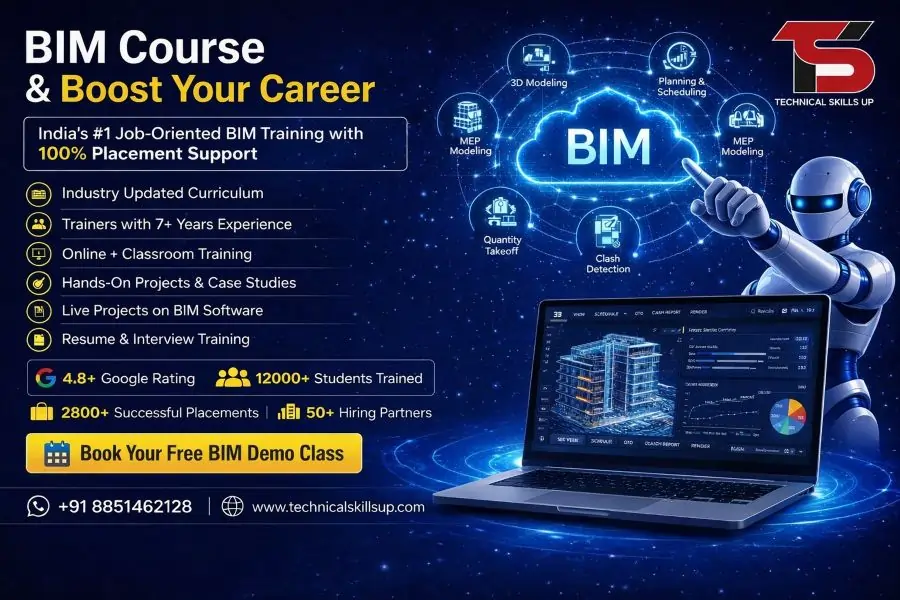
Modern construction projects need smart planning, accurate design, and better coordination between teams. A strong learning program helps students and professionals understand advanced tools used in architecture, engineering, and construction industries. Technical Skills Up offers industry-focused BIM Course programs that help learners gain practical knowledge with real project experience. Training sessions focus on design accuracy, project collaboration, and modern construction workflows. Students learn through simple methods that improve technical skills step by step.
Professional guidance from experienced trainers creates a better learning environment for beginners and working professionals. Live projects, practical assignments, and software-based training help learners understand industry standards in a simple way. Career-focused learning methods also improve confidence and job readiness for future opportunities in the AEC industry.
Why Choose Technical Skills Up for BIM Learning
Technical Skills Up focuses on practical education instead of only theoretical concepts. Every module follows industry requirements so learners can understand how real projects work in professional environments.
Industry Experienced Trainers
Expert trainers with real construction and design experience guide students during every module. Professional mentorship helps learners understand practical workflows used in modern projects.
Hands-On Project Practice
Real-time projects improve technical understanding and problem-solving abilities. Students work on project-based tasks that build confidence and practical exposure.
Updated Software Learning
Modern BIM software tools play an important role in architecture and construction industries. Training modules include updated techniques used by leading companies.
Placement Assistance Support
Career guidance sessions help learners prepare for interviews and professional opportunities. Resume support and interview preparation improve career growth chances.
Flexible Learning Modes
Online and classroom learning options provide convenience for students and working professionals. Flexible schedules help learners manage studies along with other responsibilities.
Professional Learning Environment for Better Growth
A positive learning atmosphere improves focus and skill development. Technical Skills Up provides practical sessions, live demonstrations, and guided assignments that make learning easier. Small batches allow trainers to provide personal attention to every student.
Modern lab facilities and project-based practice sessions help learners gain confidence with software tools and project coordination methods. Professional training methods also improve communication and teamwork skills required in the construction industry.
Career Opportunities After BIM Learning
Construction and infrastructure industries continue growing rapidly across the world. Skilled professionals with technical knowledge remain in high demand in architecture, engineering, and project management sectors.
Different career opportunities become available after completing professional training programs.
Popular Job Roles
- BIM Modeler
- BIM Coordinator
- Revit Designer
- Architectural Modeler
- Structural BIM Engineer
- MEP BIM Engineer
- CAD Technician
- Project Coordinator
- Design Engineer
Industries Hiring BIM Professionals
- Construction Companies
- Architecture Firms
- Engineering Consultancies
- Infrastructure Companies
- Interior Design Firms
- Real Estate Companies
- Manufacturing Industries
Growing demand for digital construction methods creates strong career opportunities for trained professionals. Companies prefer candidates with practical project understanding and software expertise.
Practical Skills Covered During Training
Technical Skills Up focuses on practical learning methods that improve industry readiness. Every topic includes project-based exercises for better understanding.
Important Learning Areas
Building Information Modeling Basics
Students learn core concepts related to digital construction workflows, project collaboration, and smart design systems.
Architectural Modeling
Training sessions help learners create accurate architectural models using industry-standard tools and techniques.
Structural Modeling
Practical exercises explain structural design coordination and project integration methods.
MEP Modeling
Mechanical, electrical, and plumbing workflows help students understand service coordination in construction projects.
Clash Detection
Coordination techniques help identify design conflicts before project execution. Proper planning reduces errors and project delays.
Project Documentation
Professional documentation methods improve drawing management and project communication.
Quantity Estimation
Digital quantity extraction methods improve project planning and cost estimation accuracy.
Project Collaboration
Collaborative workflows help multiple teams work together effectively using BIM environments.
Benefits of Joining BIM Classes
Professional skill development improves career opportunities and industry knowledge. Technical Skills Up focuses on practical growth that supports long-term success.
Key Advantages
- Better understanding of modern construction technology
- Improved project coordination knowledge
- Strong software handling skills
- Real project experience
- Industry-focused practical training
- Career support and guidance
- Portfolio development assistance
- Exposure to professional workflows
Practical sessions help learners understand how digital construction systems improve project efficiency and communication between teams.
Learning Process Designed for Beginners and Professionals
Simple teaching methods make technical concepts easier to understand. Beginners can start learning from basic concepts while experienced professionals can improve advanced project coordination skills.
Training modules follow a step-by-step structure that supports smooth learning progress. Visual demonstrations, assignments, and guided practice sessions help students understand workflows more effectively.
Training Methodology
Classroom Demonstrations
Live software demonstrations improve practical understanding and workflow clarity.
Practice Assignments
Regular assignments strengthen technical concepts and software handling abilities.
Project-Based Training
Real project simulations provide professional experience and confidence.
Trainer Support
Expert guidance helps learners solve technical doubts during practice sessions.
Performance Evaluation
Regular assessments improve learning progress and technical improvement.
Importance of BIM in Modern Construction Industry
Digital transformation continues changing the construction sector rapidly. Traditional project methods often create communication gaps and project delays. Smart project coordination systems improve accuracy, collaboration, and construction planning.
Modern companies use digital modeling systems to reduce project risks and improve productivity. Construction professionals with technical knowledge remain valuable because industries need efficient project execution methods.
Advanced project coordination also helps teams manage architecture, structure, and MEP services more effectively. Better communication between departments reduces design conflicts and construction errors.
Advanced Software Knowledge for Industry Growth
Software skills play a major role in professional success. Technical Skills Up provides practical exposure to tools commonly used in architecture and construction industries.
Software Exposure Included in Training
- Autodesk Revit
- Navisworks
- AutoCAD
- BIM Collaboration Tools
- Project Coordination Platforms
Software-based learning improves technical confidence and project execution abilities.
Special Features of BIM Certification Course
Professional certification helps learners validate their technical skills and practical understanding. Companies often prefer candidates with industry-relevant certifications because certified professionals demonstrate structured learning and project knowledge.
Certification Benefits
- Improved professional credibility
- Better job opportunities
- Industry recognition
- Stronger resume value
- Practical skill validation
Certification programs also support working professionals who want career growth in design and construction industries.
Flexible Learning Through Online Training Programs
Modern learners often prefer flexible study options because of work schedules and travel limitations. Technical Skills Up provides professional BIM Online Training programs that allow students to learn from any location.
Live interactive sessions create a classroom-like experience during online learning. Trainers guide students through software demonstrations, project exercises, and doubt-clearing sessions in real time.
Benefits of Online Learning
- Learn from home comfortably
- Flexible class timings
- Access to recorded sessions
- Interactive trainer support
- Practical project assignments
- Time-saving learning process
Professional online learning methods help students improve technical skills without affecting work or college schedules.
Strong Industry Demand Across India
Digital construction technology continues expanding rapidly across Indian cities. Architecture firms, engineering consultancies, and infrastructure companies require trained professionals who understand project coordination and digital modeling systems.
Technical Skills Up provides practical learning support for students looking for quality BIM Online Course in India programs. Industry-oriented training helps learners prepare for real project environments and future opportunities.
Growing urban development projects, smart city initiatives, and infrastructure expansion continue increasing the need for skilled professionals across multiple industries.
Communication and Team Coordination Skills
Technical knowledge alone does not guarantee professional success. Communication and teamwork skills also play a major role in project environments.
Training sessions at Technical Skills Up focus on collaborative workflows that improve coordination between teams. Students learn how architects, engineers, contractors, and project managers work together during project execution.
Professional coordination methods improve project accuracy and reduce misunderstandings during construction planning.
Support for Students and Working Professionals
Different learners have different goals and experience levels. Technical Skills Up provides learning support suitable for freshers, diploma holders, engineering students, architects, and working professionals.
Career-oriented modules help learners improve technical understanding according to their industry needs. Trainers provide guidance that supports both beginner-level learning and advanced project coordination skills.
Suitable for
- Civil Engineering Students
- Architecture Students
- Interior Designers
- Working Engineers
- Draftsmen
- Construction Professionals
- Project Coordinators
Professional learning methods help learners improve both technical and practical understanding.
Real Project Exposure Improves Confidence
Project-based learning creates better understanding than theoretical concepts alone. Students work on practical assignments that simulate real industry projects.
Exposure to project coordination methods improves confidence in handling professional tasks. Live projects also help learners understand design workflows, project planning, and documentation standards followed in modern industries.
Strong practical exposure increases job readiness and improves technical performance during interviews and workplace tasks.
Career Growth with Industry-Focused Learning
Professional industries continue adopting digital technologies for better construction management. Skilled professionals with software expertise and project coordination knowledge can explore strong career opportunities in India and international markets.
Technical Skills Up focuses on practical education methods that help learners become industry-ready professionals. Advanced learning support, expert guidance, and project-based training improve both technical and professional development.
Career-oriented training programs also help learners build long-term growth opportunities in architecture, engineering, and construction industries.
Modern Infrastructure and Learning Resources
Professional training facilities improve the overall learning experience. Technical Skills Up provides updated systems, practical labs, and structured training materials that support skill development.
Learning resources help students practice software workflows more effectively. Trainers also provide guidance on project standards, documentation methods, and professional coordination practices.
A supportive learning environment encourages students to improve their technical confidence and practical abilities step by step.
Future Scope in Digital Construction Industry
Technology-driven construction methods continue expanding rapidly across global markets. Smart buildings, infrastructure projects, and integrated design systems require skilled professionals who can manage digital workflows efficiently.
Demand for professionals with project coordination and digital modeling knowledge continues increasing because industries focus on accuracy, speed, and collaboration.
Technical Skills Up helps learners prepare for future industry requirements through structured learning methods and practical project experience. Professional development programs improve technical expertise and create better career opportunities in modern construction sectors.
Start Your Professional Learning Journey Today
Career-focused education helps learners build strong technical foundations and professional confidence. Technical Skills Up provides practical learning support, expert mentorship, and project-based exposure that help students prepare for modern industry requirements.
Professional guidance, live project practice, and structured learning methods make training programs suitable for beginners and experienced professionals alike. Students looking for skill development, career growth, and practical industry exposure can benefit from structured learning programs designed for real-world success.
Advanced learning opportunities, practical software training, and career support create a strong foundation for future growth in architecture, engineering, and construction industries.
Online Courses
- Revit Architecture Course
- Revit MEP Course
- Revit Structure Course
- AutoCAD Course
- AutoCAD 2D Course
- AutoCAD 3D Course
Related Courses in Noida
- BIM Course in Noida
- Revit Architecture Course in Noida
- Revit MEP Course in Noida
- Revit Structure Course in Noida
- AutoCAD Course in Noida
- AutoCAD 2D Course in Noida
- AutoCAD 3D Course in Noida
Related Courses in Delhi
- BIM Course in Delhi
- Revit Architecture Course in Delhi
- Revit MEP Course in Delhi
- Revit Structure Course in Delhi
- AutoCAD Course in Delhi
- AutoCAD 2D Course in Delhi
- AutoCAD 3D Course in Delhi
FAQs:
Q1. What is a BIM Online Course?
Ans: A BIM Online Course is a professional training program that teaches Building Information Modeling software and techniques online. In this course, students acquire skills such as 3D Modeling, Revit, Navisworks, AutoCAD, and Project Management. Technical Skills Up’s BIM Online Course has been designed to align with industry requirements.
Q2. Who is the BIM Online Course suitable for?
Ans: This course is beneficial for Civil Engineers, Architects, Interior Designers, Mechanical Engineers, Construction Professionals, and Students. Both Freshers and Working Professionals can leverage this course to enhance their careers.
Q3. What are the benefits of taking a BIM Online Course?
Ans: Completing a BIM Online Course significantly increases job opportunities within the Construction and Infrastructure industries. Students learn industry-standard software, which leads to better salaries and superior career growth. Additionally, the convenience of online learning saves both time and travel costs.
Q4. Why choose Technical Skills Up’s BIM Online Course?
Ans: Technical Skills Up offers experienced trainers, live projects, practical training, and placement assistance. Here, students receive training based on real-world industry workflows to ensure they become job-ready.
Q5. Which software tools are taught in the BIM Online Course?
Ans: Typically, this course covers Autodesk Revit, Navisworks, AutoCAD, BIM 360, and other essential BIM tools. The training is delivered through practical examples and real-life projects.
Q6. What is the duration of the BIM Online Course?
Ans: The duration of a BIM Online Course may vary depending on the institute and the specific modules included. At Technical Skills Up, the course is designed to enable students to acquire practical skills within a concise timeframe.
Q7. Is a certificate provided upon completion of the BIM Online Course?
Ans: Yes, students are awarded a certificate upon successful completion of the course. This certificate serves as a valuable credential for showcasing one’s skills and training during job applications.
Q8. Is the BIM Online Course suitable for beginners?
Ans: Yes, this course is suitable for beginners as well. At Technical Skills Up, training is provided in a step-by-step manner—ranging from basic to advanced levels—to ensure that new students can learn with ease.
Q9. What job roles can one pursue after completing the BIM Online Course?
Ans: Upon completing the course, you can find opportunities in job profiles such as BIM Modeler, BIM Engineer, Revit Modeler, BIM Coordinator, and Design Engineer.
Q10. Does the BIM Online Course include live classes?
Ans: Yes, live online classes are available at Technical Skills Up. Students can ask questions directly to the trainers and participate in practical sessions.
Q11. What is the fee for the BIM Online Course?
Ans: The course fee depends on the training modules, duration, and learning features included. For precise information, students should contact Technical Skills Up directly.
Q12. Is any prior technical knowledge required for the BIM Online Course?
Ans: Having basic computer knowledge is beneficial. However, since training at Technical Skills Up is provided starting from a foundational level, beginners can also learn with ease.
Q13. Does the BIM Online Course offer placement support?
Ans: Yes, Technical Skills Up provides students with placement assistance, resume guidance, and interview preparation support to help them secure better job opportunities.
Q14. What are the benefits of taking the BIM Online Course online?
Ans: Online BIM training allows students to learn from the comfort of their homes. Features such as flexible timings, recorded sessions, and live practical training make the learning process convenient and accessible.
Q15. What salary can one expect after completing the BIM Online Course?
Ans: Salary depends on one’s skills, experience, and the hiring company. The demand for BIM professionals is growing rapidly; therefore, skilled candidates can look forward to excellent career growth and attractive salary packages.