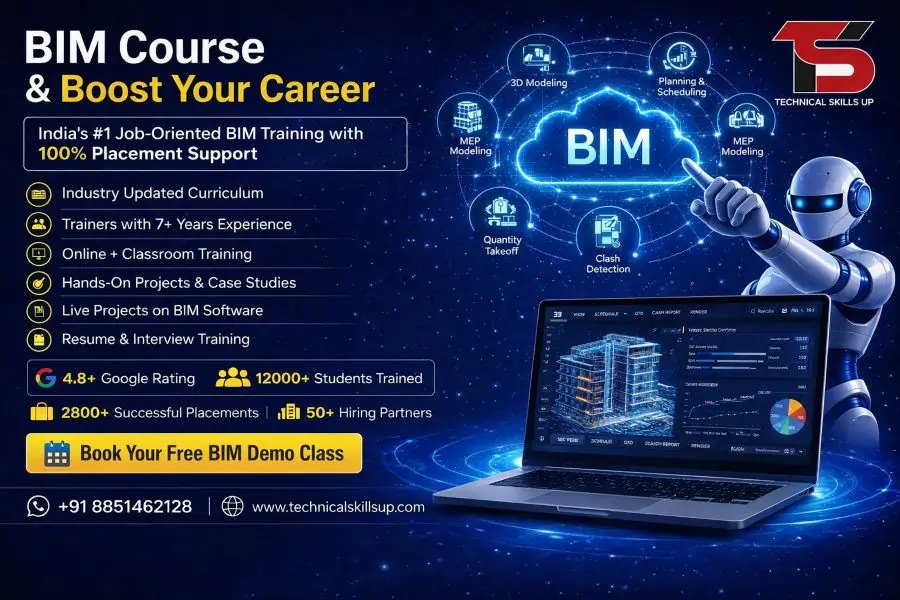
BIM Course in Delhi with Placement Support

Modern construction projects need smart planning, accurate design, and better coordination between teams. Building Information Modeling has changed the way architects, engineers, and construction professionals manage projects. A strong knowledge of BIM helps students and working professionals improve project quality, reduce errors, and increase job opportunities in the construction industry. Technical Skills Up provides industry-focused training that helps learners understand practical concepts with real project experience. Students gain hands-on learning, expert guidance, and career support that prepare them for real industry challenges.

Professionals looking to upgrade their technical skills can join the BIM Course in Delhi at Technical Skills Up to learn advanced tools, project workflows, and modern construction technologies in a simple and practical way. Training sessions focus on practical implementation so learners can work confidently on live projects after course completion.

Table of Contents

Why BIM Skills Are Important in Today’s Industry

Construction and infrastructure companies now prefer professionals who understand digital construction workflows. BIM technology improves collaboration between teams and helps companies complete projects with better accuracy and reduced costs. Knowledge of BIM software allows professionals to manage architectural, structural, and MEP projects more efficiently.

Growing demand for smart buildings and infrastructure development has created excellent career opportunities for BIM professionals. Companies in architecture, engineering, and construction sectors hire trained candidates for various technical roles. Learning BIM can help students build a stable and high-growth career in India and abroad.

Key benefits of learning BIM include:

  • Better understanding of construction workflows
  • Improved project coordination skills
  • Faster and accurate project execution
  • Reduced design and construction errors
  • Strong career opportunities in the AEC industry
  • Higher salary potential for skilled professionals
  • Better teamwork and communication abilities

Industry-Oriented Learning Environment

Technical Skills Up focuses on practical education instead of only theoretical concepts. Every module is designed according to current industry standards so students can learn the latest tools and technologies used in real projects. Trainers explain every concept in simple language, making the learning process easier for beginners and professionals.

Classroom sessions include:

  • Practical assignments
  • Real project examples
  • Software practice sessions
  • Project-based learning
  • Doubt-clearing classes
  • Industry case studies
  • Portfolio development guidance

Supportive trainers help students understand complex concepts step by step. Personalized attention during classes improves confidence and technical knowledge.

Comprehensive BIM Training Modules

Training modules cover all important aspects of BIM workflows. Students learn how to create intelligent models, manage project data, and improve coordination between teams. Every topic is explained with practical examples for better understanding.

Core Topics Covered

Introduction to BIM Concepts

  • Understanding BIM processes
  • BIM project lifecycle
  • Construction documentation
  • Digital project management
  • Coordination workflows

Architectural Modeling

  • Creating building models
  • Floor plans and elevations
  • Family creation
  • Detailing and annotations
  • Visualization techniques

Structural Modeling

  • Structural design workflows
  • Reinforcement detailing
  • Structural documentation
  • Clash management
  • Coordination processes

MEP Modeling

  • HVAC systems
  • Electrical layouts
  • Plumbing design
  • Ducting and piping
  • Coordination with other disciplines

Project Coordination

  • Clash detection
  • Model integration
  • Team collaboration
  • Reporting techniques
  • Quality control methods

Quantity Estimation

  • Material takeoff
  • Cost estimation basics
  • Scheduling concepts
  • Project planning support
  • Data extraction methods

Advanced Software Training for Better Career Growth

Modern BIM workflows require expertise in industry-standard software tools. Technical Skills Up provides detailed software training with practical exercises and live project tasks. Students get hands-on experience that improves technical confidence.

Software Included in Training

  • Autodesk Revit Architecture
  • Autodesk Revit Structure
  • Autodesk Revit MEP
  • Navisworks
  • AutoCAD
  • SketchUp
  • BIM collaboration tools
  • Project coordination software

Practical training helps students understand how these tools are used in real construction and infrastructure projects.

Expert Trainers with Industry Experience

Learning from experienced professionals improves practical understanding and industry exposure. Technical Skills Up has trainers who have worked on real projects and understand industry requirements. Students receive valuable insights about project workflows, coordination methods, and professional practices.

Trainer support includes:

  • Practical guidance
  • Career counseling
  • Software assistance
  • Portfolio improvement tips
  • Interview preparation support
  • Live project discussions

Professional mentorship helps students build strong technical foundations and improve industry readiness.

Hands-On Practical Sessions

Practical learning plays an important role in technical education. Training sessions include real-time exercises that help students apply concepts in actual project scenarios. Every module contains assignments and project work to improve practical skills.

Practical activities include:

  • Building model creation
  • Project documentation
  • Clash detection exercises
  • Team coordination tasks
  • Quantity takeoff practice
  • Live project workflows

Students gain confidence through regular software practice and guided project implementation.

Career Opportunities After BIM Training

Construction and infrastructure industries require skilled BIM professionals for different technical roles. Knowledge of BIM software and workflows can open multiple career paths for freshers and experienced professionals.

Popular Job Roles

  • BIM Modeler
  • BIM Coordinator
  • Revit Technician
  • BIM Engineer
  • Architectural Modeler
  • Structural BIM Engineer
  • MEP BIM Engineer
  • CAD and BIM Specialist
  • Project Coordinator

Many companies prefer candidates who understand digital project coordination and intelligent modeling processes. Strong BIM skills increase employability in both national and international markets.

Placement Support for Students

Technical Skills Up provides career assistance to help students start their professional journey successfully. Placement support activities focus on improving technical confidence and interview performance.

Placement Assistance Includes

  • Resume preparation
  • Interview practice sessions
  • Personality development guidance
  • Job interview scheduling
  • Career counseling support
  • Industry exposure sessions

Professional guidance helps students prepare for recruitment processes and industry expectations.

Learning Benefits for Students and Professionals

Students from civil engineering, architecture, interior design, mechanical engineering, and construction backgrounds can benefit from BIM education. Working professionals can also upgrade their technical skills to improve career growth opportunities.

Benefits for Freshers

  • Strong technical foundation
  • Practical software knowledge
  • Better career opportunities
  • Industry exposure
  • Improved confidence

Benefits for Working Professionals

  • Career advancement opportunities
  • Better salary potential
  • Updated industry skills
  • Improved project management understanding
  • Better technical expertise

Modern Training Infrastructure

Technical Skills Up provides a professional learning environment equipped with updated systems and software tools. Comfortable classrooms and practical labs improve the learning experience for students.

Training facilities include:

  • Modern computer labs
  • Updated software versions
  • Practical project support
  • Interactive classroom sessions
  • High-speed systems for design work
  • Dedicated practice environment

A professional environment helps students focus better on learning and practical implementation.

Flexible Learning Options

Every student has different learning requirements and schedules. Flexible training options help learners choose suitable timings according to their availability. Weekend and weekday batches make learning convenient for students and working professionals.

Available learning modes include:

  • Classroom training
  • Weekend batches
  • Fast-track sessions
  • Professional batches
  • Customized training support

Flexible schedules help learners continue education without affecting work or academic responsibilities.

Real Project Exposure During Training

Practical project exposure improves technical confidence and industry understanding. Students work on projects that simulate real construction workflows and coordination challenges.

Project-based learning helps students understand:

  • Real construction documentation
  • Team collaboration methods
  • Coordination between disciplines
  • Error management techniques
  • Project delivery standards

Practical exposure increases confidence during job interviews and workplace responsibilities.

Professional Development Support

Technical knowledge alone is not enough for long-term career success. Professional development activities improve communication, teamwork, and workplace confidence.

Development sessions focus on:

  • Communication skills
  • Interview preparation
  • Presentation techniques
  • Team collaboration
  • Industry professionalism
  • Time management

Soft skill improvement helps students perform better in professional environments.

Updated Curriculum According to Industry Standards

Construction technologies continue to evolve with modern digital processes. Technical Skills Up regularly updates training modules according to industry trends and software developments.

Updated curriculum benefits students through:

  • Latest software knowledge
  • Current project workflows
  • Industry-relevant concepts
  • Advanced coordination methods
  • Better job readiness

Continuous improvements in training quality help students stay aligned with market requirements.

Supportive Learning Approach

Beginners often face difficulties while learning technical software and construction workflows. Trainers at Technical Skills Up explain concepts in a simple and easy-to-understand manner so every learner can progress comfortably.

Student support includes:

  • Individual attention
  • Regular practice guidance
  • Assignment support
  • Concept revision sessions
  • Technical problem-solving help

A supportive environment encourages students to learn confidently without hesitation.

Importance of BIM in Future Construction Projects

Digital construction technology continues to grow rapidly across the world. Smart cities, sustainable infrastructure, and modern construction methods have increased the importance of BIM professionals in the industry.

Future benefits of BIM technology include:

  • Better project planning
  • Faster construction processes
  • Improved sustainability
  • Reduced project risks
  • Better resource management
  • Enhanced project communication

Professionals with BIM expertise will continue to remain valuable in the global construction market.

Why Choose Technical Skills Up

Choosing the right training institute is important for skill development and career growth. Technical Skills Up focuses on quality education, practical implementation, and professional support to help students achieve career goals.

Key Highlights

  • Experienced trainers
  • Practical project training
  • Industry-focused curriculum
  • Placement support assistance
  • Modern software learning
  • Flexible batch timings
  • Professional learning environment
  • Career-oriented guidance

Strong focus on practical learning helps students become industry-ready professionals.

Practical Learning Through BIM Classes

Interactive learning sessions improve understanding and make technical concepts easier to apply in real projects. Students attending BIM Classes in Delhi at Technical Skills Up receive hands-on training that strengthens modeling and coordination skills. Every session focuses on practical implementation instead of only theoretical explanations.

Classroom activities include:

  • Live software demonstrations
  • Guided project work
  • Coordination exercises
  • Error detection practice
  • Technical documentation tasks

Regular practice sessions help students improve speed, accuracy, and project handling abilities.

Career-Focused BIM Education

Professional education should help learners achieve real career growth. Technical Skills Up designs training programs according to industry hiring requirements and project expectations. Students gain technical confidence that supports long-term professional success.

Learners searching for quality BIM Training in Delhi can benefit from expert guidance, practical sessions, and industry exposure provided by Technical Skills Up. Training modules help students understand both software operations and construction workflows in a structured manner.

Career-focused learning advantages include:

  • Better technical expertise
  • Improved project understanding
  • Strong portfolio development
  • Higher employability
  • Better workplace performance

Professional Institute for Advanced Technical Skills

Construction companies prefer candidates who have practical experience and software knowledge. Technical Skills Up provides detailed training support that helps learners build industry-ready skills for modern project environments.

Students looking for a trusted BIM Training Institute in Delhi can join Technical Skills Up for practical education, live project learning, and career guidance. Professional training support helps learners become confident BIM professionals prepared for real industry challenges.

Dedicated learning support, updated curriculum, and practical implementation make Technical Skills Up a reliable choice for students and working professionals aiming to build successful careers in the construction and design industry.

Online Courses

Related Courses in Noida

Related Courses in Delhi

FAQs:

Q1. What is a BIM Course?

Ans: A BIM Course is a professional training program that provides knowledge regarding Building Information Modeling (BIM) software and project management. This course covers 3D modeling, design, clash detection, and project coordination. Technical Skills Up’s BIM Course in Delhi has been designed to align with current industry requirements.

Q2. Who is the BIM Course in Delhi best suited for?

Ans: This course is highly beneficial for Civil Engineers, Architects, Mechanical Engineers, Electrical Engineers, Interior Designers, and Diploma students. Both freshers and working professionals can leverage this course to enhance their careers.

Q3. What job opportunities are available after completing a BIM Course?

Ans: Upon completing the BIM Course, individuals gain opportunities to work in job profiles such as BIM Modeler, BIM Engineer, Revit Designer, BIM Coordinator, and CAD Designer. The demand for BIM professionals in construction and infrastructure companies is growing rapidly.

Q4. Why choose Technical Skills Up’s BIM Course in Delhi?

Ans: Technical Skills Up offers training led by industry experts, hands-on experience with live projects, practical training, and placement assistance. Here, students gain real-world project experience, which helps them strengthen their skills.

Q5. What software is taught during the BIM training in Delhi?

Ans: This training covers software such as Autodesk Revit, Navisworks, AutoCAD, BIM 360, and other industry-standard tools. A strong emphasis is placed on practical learning to ensure that students can perform their professional duties with ease.

Q6. What is the duration of the BIM Course?

Ans: The duration of the BIM Course may vary depending on the institute and the specific modules selected. Typically, the course duration ranges from 3 to 12 months. Technical Skills Up also offers flexible timing options for students.

Q7. Is coding knowledge required for the BIM Course?

Ans: No, coding knowledge is not a prerequisite for learning the BIM Course. Any student with basic computer literacy and an interest in design can easily master this course.

Q8. What is the fee for the BIM Course in Delhi?

Ans: The course fee depends on the specific modules, duration, and the software training included. Technical Skills Up offers students an affordable fee structure along with convenient payment options.

Q9. Is placement support provided after the BIM course?

Ans: Yes, Technical Skills Up provides placement assistance to students. Facilities such as resume building, interview preparation, and job support are also offered.

Q10. Are BIM classes in Delhi available in both online and offline modes?

Ans: Yes, both online and offline classes are available for the convenience of students. Working professionals can choose a batch that suits their schedule.

Q11. What are the benefits of learning a BIM course?

Ans: Learning BIM opens up better opportunities for career growth within the construction and design industries. This skill is in high demand both in India and abroad. It can lead to better salary packages and professional advancement.

Q12. Why is practical training essential at a BIM training institute in Delhi?

Ans: Practical training enables students to learn by working on real-world projects. This enhances their software handling, coordination, and problem-solving skills—attributes that are considered highly critical within the industry.

Q13. Can freshers enroll in the BIM course?

Ans: Yes, freshers can easily enroll in the BIM course. Technical Skills Up provides training ranging from a foundational level to an advanced level, making it easy for new students to grasp the concepts.

Q14. What kind of salary can one expect after completing the BIM course?

Ans: At the entry level, BIM professionals can expect to receive a competitive salary package. As experience and skills grow, the salary increases rapidly. There is also significant demand for BIM experts in Gulf countries and international companies.

Q15. How do I choose the right institute for a BIM course in Delhi?

Ans: When selecting an institute, be sure to look for experienced trainers, practical training, live projects, placement support, and student reviews. Technical Skills Up provides students with industry-oriented training and career support, making the learning process both easy and effective.
Related Post

Microsoft Dynamics 365 Finance Course

Microsoft Dynamics 365 Finance Course in Delhi

Modern companies need finance professionals who can manage accounting, reporting, budgeting, taxation, and financial operations with smart ERP tools. A professional course helps students and working professionals understand how large organizations manage their financial processes using cloud-based business applications. Technical Skills Up provides practical learning, expert guidance, live projects, and career-focused training for learners who want to build strong ERP and finance management skills. Training sessions focus on real business scenarios so learners can understand implementation, configuration, reporting, and workflow management in an easy way. Practical assignments, lab sessions, and project-based learning help students gain confidence for real-time job roles in the ERP industry. Why Learn Microsoft Dynamics 365 Finance? Businesses across industries use ERP software to manage finance and operations efficiently. Knowledge of finance automation tools increases career opportunities in accounting, business management, auditing, taxation, and ERP consulting. Companies prefer trained professionals who can handle financial modules, automate workflows, and generate accurate reports. Major Benefits of Learning ERP Finance Skills Better understanding of financial operations High demand in multinational companies Strong career growth opportunities Better salary packages for skilled professionals Knowledge of cloud-based business applications Hands-on experience with real-time projects Practical exposure to accounting and reporting tools Skills suitable for finance and ERP consulting roles Professional Learning Environment at Technical Skills Up Training quality plays an important role in skill development. Technical Skills Up focuses on practical knowledge instead of only theoretical learning. Students receive complete support from trainers during the learning process. Training sessions remain easy to understand, even for beginners. Key Features of the Training Program Industry-experienced trainers Updated course curriculum Live project training Practical lab sessions Interview preparation support Resume-building guidance Flexible class timings Certification preparation assistance Small batch size for better learning Placement support for students Microsoft Dynamics 365 Finance Training in Delhi for Career Growth Professional ERP training opens doors to multiple career opportunities in the finance and technology sectors. Many organizations require professionals who understand finance processes and ERP systems together. Technical Skills Up provides career-oriented training that helps learners prepare for industry requirements. Career Roles After Completing Training ERP Finance Consultant Financial Analyst Business Process Associate Finance Executive ERP Support Consultant Accounts Manager Functional Consultant Financial Reporting Specialist ERP Implementation Associate Easy-to-Understand Learning Approach Many students hesitate to join ERP training because they think the software is difficult to learn. Technical Skills Up follows a simple teaching method that helps beginners understand concepts step by step. Trainers explain every module with examples and practical demonstrations. Training Methodology Includes Concept-based learning Real business examples Practical assignments Interactive classroom sessions Case-study discussions Live software practice Doubt-clearing sessions Project implementation practice Core Modules Covered During Training Course modules are designed according to current industry requirements. Every topic focuses on practical implementation and business usage. Financial Management Students learn financial operations such as: General ledger management Accounts payable Accounts receivable Budgeting process Bank reconciliation Fixed asset management Financial reporting Procurement and Vendor Management Training also covers procurement-related processes including: Purchase orders Vendor management Invoice processing Procurement workflows Expense management Budget Planning and Reporting Learners understand budgeting techniques and reporting methods used by organizations. Budget configuration Financial planning Reporting dashboards Data analysis Business intelligence reports Practical Learning Through Live Projects Practical exposure helps students understand real business workflows. Technical Skills Up includes live projects during the training program so learners can apply concepts in real scenarios. Real-time implementation practice improves confidence and technical understanding. Benefits of Live Project Training Better practical understanding Real-time workflow exposure Improved problem-solving skills Confidence in ERP implementation Experience with business scenarios Microsoft Dynamics 365 Finance Classes in Delhi with Expert Trainers Experienced trainers make learning more effective and industry-focused. Technical Skills Up provides guidance from professionals who have real implementation experience in ERP projects. Trainers explain how companies use ERP solutions to manage daily financial activities. Advantages of Learning from Experts Real industry exposure Practical implementation knowledge Better understanding of workflows Guidance for certification preparation Support for interview questions Career counseling sessions Training for Freshers and Working Professionals Different learners have different career goals. Some students want to start their careers, while working professionals want skill upgrades. Technical Skills Up offers training suitable for both categories. Suitable for Commerce students MBA finance students BBA graduates Working accountants ERP professionals Finance executives Business analysts Job seekers in ERP domain Industry-Relevant Curriculum Technology changes continuously, so updated training is necessary for career success. Course content at Technical Skills Up follows current industry standards and practical business requirements. Curriculum Highlights Cloud ERP concepts Financial operations management Automation workflows Reporting and analytics User role management Business process configuration ERP implementation basics Placement Support for Students Career support helps learners prepare for job opportunities after training completion. Technical Skills Up provides placement assistance to improve student confidence during the hiring process. Placement Assistance Includes Resume preparation Mock interview sessions Interview question practice Communication skill guidance Job opportunity updates Career counseling support Microsoft Dynamics 365 Finance Training Institute in Delhi with Hands-On Practice Practical software exposure improves learning quality and helps students understand ERP systems more effectively. Technical Skills Up focuses heavily on hands-on practice because employers prefer candidates with practical implementation knowledge. Hands-On Training Benefits Better software understanding Real-time implementation experience Improved technical confidence Faster problem-solving ability Better interview performance Flexible Learning Options Students and working professionals often need flexible training schedules. Technical Skills Up offers convenient learning options for different learners. Available Training Modes Classroom training Online instructor-led sessions Weekend batches Weekday batches Fast-track training programs Importance of ERP Skills in Modern Businesses ERP systems help organizations improve productivity and reduce manual work. Finance departments use ERP platforms to manage accounting, reporting, taxation, and business operations efficiently. Why Companies Prefer ERP Professionals Better financial control Accurate business reporting Process automation Improved operational efficiency Faster decision-making Reduced manual errors Learning Business Processes Along with Software Practical ERP knowledge becomes more valuable when learners understand business workflows. Technical Skills Up trains students on both software usage and business operations. Business Concepts Covered Financial workflows Invoice management Purchase

Workday Integration Course

Workday Integration Course in Delhi with Placement

Growing demand for cloud-based HR and finance solutions has created excellent career opportunities for skilled professionals. Workday stands out as one of the most widely used enterprise platforms, and integration expertise has become a high-value skill in the IT industry. A Workday Integration Course in Delhi helps learners understand how different systems connect, exchange data, and automate business processes efficiently. Technical Skills Up focuses on practical learning, real-time scenarios, and industry-relevant tools so that learners gain confidence and job-ready skills. Strong training combined with guided projects supports career growth and prepares candidates for real-world challenges in top organizations. Why Choose Workday Integration as a Career High Demand in the Job Market Companies across industries rely on Workday for HR, payroll, and financial operations. Skilled integration professionals help organizations connect Workday with other systems like SAP, Oracle, and third-party applications. Attractive Salary Packages Integration specialists earn competitive salaries due to their technical expertise and problem-solving abilities. Career growth remains strong with experience. Global Career Opportunities Workday professionals find opportunities not only in India but also in international markets where Workday adoption is high. Continuous Learning Scope Technology keeps evolving, and Workday regularly updates its features. Professionals continue to learn and upgrade their skills over time. About Technical Skills Up Industry-Focused Training Approach Technical Skills Up delivers training that matches current industry requirements. Practical sessions and real-time use cases help learners understand concepts clearly. Experienced Trainers Certified trainers with real project experience guide students step by step. Learning becomes easier with proper mentorship and doubt-solving sessions. Hands-On Practice Practical exposure remains the core focus of the training. Students work on live projects to gain real-world experience. Career Support Placement assistance, resume building, and interview preparation sessions help students secure job opportunities after course completion. Workday Integration Training in Delhi – Course Overview Comprehensive Curriculum The course covers all essential topics required to become a skilled Workday Integration professional. Learning starts from basic concepts and gradually moves to advanced topics. Beginner to Advanced Level Structured modules help both freshers and experienced professionals understand Workday integration from scratch. Real-Time Projects Project-based learning ensures practical understanding of integration concepts and tools. Flexible Learning Options Both online and classroom training options allow learners to choose according to their schedule. Key Modules Covered in the Course Introduction to Workday Overview of Workday architecture Understanding Workday modules Basics of cloud computing Integration Fundamentals Introduction to integrations Types of integrations in Workday Data flow and transformation Workday Studio Overview of Workday Studio Building integrations using Studio Handling errors and debugging Core Connectors Pre-built connectors in Workday Configuration and usage Data mapping techniques EIB (Enterprise Interface Builder) Creating inbound and outbound integrations File-based integrations Data upload and extraction Web Services and APIs SOAP and REST APIs Consuming web services Security and authentication XSLT and XML Basics of XML structure Transforming data using XSLT Real-time transformation examples Integration Security Understanding Workday security model Securing integrations Role-based access control Testing and Deployment Integration testing strategies Migration to production Monitoring integrations Workday Integration Classes in Delhi – Learning Benefits Practical Learning Experience Hands-on training allows students to work on real integration scenarios and understand workflows. Live Projects Real-time projects simulate actual industry challenges and improve problem-solving skills. Updated Study Material Latest course content ensures learners stay updated with current Workday trends. Interactive Sessions Live classes and doubt-clearing sessions improve understanding and confidence. Who Can Join This Course Fresh Graduates Students from IT, Computer Science, or related fields can start their career in Workday integration. Working Professionals Professionals from HR, finance, or IT domains can upgrade their skills and switch to Workday roles. Career Switchers Individuals looking to move into cloud-based technologies can benefit from this course. Developers and Analysts People with technical backgrounds can easily understand integration concepts and tools. Skills You Will Gain Technical Skills Workday integration tools XML and XSLT Web services and APIs Data transformation Analytical Skills Problem-solving techniques Data mapping and validation Troubleshooting integrations Professional Skills Project handling Communication Time management Workday Integration Training Institute in Delhi – Key Features Structured Learning Path Step-by-step training ensures proper understanding of each concept before moving ahead. Expert Guidance Trainers provide continuous support and mentorship throughout the course. Project-Based Learning Real-world projects enhance practical knowledge and build confidence. Placement Assistance Dedicated support helps students prepare for interviews and secure jobs. Career Opportunities After Course Completion Workday Integration Consultant Responsible for designing and managing integrations between Workday and other systems. Workday Developer Builds custom integrations and enhances system functionality. Integration Analyst Analyzes business requirements and designs integration solutions. Technical Consultant Provides technical expertise in Workday implementation and integration. Salary Expectations Entry-Level Professionals Freshers can expect a good starting salary with opportunities to grow quickly. Mid-Level Professionals Experienced professionals earn higher salaries based on skills and project experience. Senior-Level Roles Senior consultants and architects earn premium packages in top companies. Tools and Technologies Covered Workday Studio Enterprise Interface Builder (EIB) Core Connectors XML & XSLT SOAP & REST APIs Learning Methodology Instructor-Led Training Expert trainers guide students through every module with practical examples. Hands-On Assignments Assignments help reinforce concepts learned during training sessions. Case Studies Real-world scenarios help students understand industry challenges. Continuous Evaluation Regular assessments track progress and improve learning outcomes. Certification Preparation Industry-Recognized Knowledge Course prepares students with skills aligned to industry standards. Practical Understanding Hands-on training ensures better performance in certification exams. Mock Tests Practice tests help students evaluate their knowledge and improve performance. Placement Support Resume Building Professional resume creation helps highlight skills and projects effectively. Interview Preparation Mock interviews and guidance improve confidence and communication skills. Job Assistance Support team connects students with job opportunities in top companies. Why Delhi is a Good Place to Learn Workday IT Hub Growth Delhi offers strong career opportunities in IT and cloud technologies. Access to Companies Many organizations in Delhi-NCR use Workday, increasing job prospects. Networking Opportunities Students can connect with professionals and industry experts. Advantages of Learning with Technical Skills Up Quality Education Focus on delivering practical and industry-relevant knowledge.

SAP MM Course

SAP MM Online Course in India with Placement

If you want to build a strong career in SAP, enrolling in a SAP MM Course is one of the best choices. SAP MM (Material Management) is a highly in-demand SAP module used by organizations to manage procurement, inventory, and material planning. This training is designed for beginners, professionals, and graduates who want to enter the SAP domain and secure high-paying jobs. Our industry-focused SAP MM Training helps you learn real-time business scenarios, hands-on practice, and implementation-level knowledge. With expert-led sessions, live projects, and interview preparation, you gain the confidence to work as an SAP MM Consultant. Whether you are looking for classroom learning or flexible online classes, our SAP MM Online Course provides complete training with practical exposure, certification, and placement support. What is SAP MM? SAP MM (Material Management) is a core module of SAP ERP that manages procurement processes, vendor management, inventory control, and material planning. It is widely used across industries like manufacturing, retail, pharma, logistics, and IT services. SAP MM integrates with other modules such as: SAP FICO (Finance) SAP SD (Sales and Distribution) SAP PP (Production Planning) SAP WM (Warehouse Management) Learning SAP MM helps you understand end-to-end procurement lifecycle including purchase requisition, purchase order, goods receipt, and invoice verification. Why Choose SAP MM Training? There is huge demand for SAP MM professionals because companies need efficient procurement and inventory management systems. Our practical SAP MM Training is designed to make you job-ready with real-time skills. Key benefits: Industry expert trainers Real-time project training Hands-on SAP server access Interview preparation Resume building Placement assistance Certification after course completion Live and recorded sessions This training is suitable for freshers as well as working professionals. SAP MM Online Course – Learn from Anywhere Our flexible SAP MM Online Course allows you to learn from anywhere in India. The course is delivered through live instructor-led sessions with practical demonstrations. Features: Live online classes Weekend & weekday batches Real-time case studies SAP practice system access Doubt clearing sessions Lifetime study material access Recorded sessions available This course helps you gain practical exposure without attending classroom sessions. SAP MM Online Training in India – Course Highlights Our industry-oriented SAP MM Online Training in India is designed to match current industry requirements. You will learn configuration, end-user activities, and implementation steps. Course Highlights: Complete SAP MM Module Coverage Real-Time Business Scenarios Implementation Training Configuration Knowledge End User Activities Mock Interviews Resume Preparation Placement Support This training helps you become job-ready and confident. SAP MM Course Syllabus The SAP MM Course syllabus is structured to cover beginner to advanced level topics. Introduction to SAP SAP Overview SAP Architecture SAP Modules Overview Navigation in SAP SAP GUI Introduction Enterprise Structure Company Code Plant Storage Location Purchasing Organization Purchasing Group Assignment of Enterprise Structure Master Data Material Master Vendor Master Purchasing Info Record Source List Quota Arrangement Procurement Process Purchase Requisition Request for Quotation (RFQ) Quotation Comparison Purchase Order Contract Management Scheduling Agreement Inventory Management Goods Receipt Goods Issue Transfer Posting Stock Overview Physical Inventory Invoice Verification Invoice Posting Credit Memo Blocking Invoice Invoice Release Pricing Procedure Condition Types Calculation Schema Access Sequence Pricing Determination Special Procurement Subcontracting Consignment Third Party Processing Pipeline Procurement Reporting Standard Reports Inventory Reports Purchase Reports Who Should Join SAP MM Online Course? The SAP MM Online Course in India is suitable for: B.Com / BBA / MBA Students Supply Chain Professionals Procurement Executives Warehouse Professionals Inventory Managers Freshers looking for SAP career Working professionals switching career Logistics professionals No programming knowledge is required for SAP MM. SAP MM Training Duration Course duration depends on the batch type: Fast Track Batch – 4 Weeks Regular Batch – 6 to 8 Weeks Weekend Batch – 8 Weeks Corporate Training – Custom Duration Each session includes theory + practical training. SAP MM Online Training Features Our SAP MM Online Training provides complete learning support: Live instructor-led sessions Practical assignments Real-time project work SAP server access Interview preparation Resume preparation Placement assistance Certification You also get recordings for revision. Real-Time Project in SAP MM Course During the SAP MM Course, you will work on real-time project scenarios such as: Creating enterprise structure Vendor creation Material master configuration Purchase requisition process Purchase order creation Goods receipt posting Invoice verification Inventory management This hands-on practice improves your confidence. SAP MM Career Opportunities After completing SAP MM Training, you can apply for: SAP MM Consultant SAP MM End User SAP Support Consultant Procurement Analyst Inventory Analyst Purchase Executive SAP Functional Consultant SAP MM professionals are hired in IT companies, manufacturing companies, and consulting firms. SAP MM Salary in India Average salary after SAP MM Online Course in India: Freshers: ₹3 LPA – ₹5 LPA 1–3 Years Experience: ₹5 LPA – ₹8 LPA 3+ Years Experience: ₹8 LPA – ₹15 LPA SAP professionals earn high salaries compared to other roles. Why Choose Our SAP MM Online Training in India? We provide industry-focused training with placement support. Reasons to choose us: Experienced SAP Trainers Live Practical Training Real-Time Project Flexible Batch Timing Affordable Fees Placement Assistance Interview Preparation Resume Building Certification We focus on job-oriented training. SAP MM Course Certification After completing the SAP MM Course, you will receive: Training Completion Certificate Project Experience Certificate Interview Preparation Support This certification helps you apply for jobs confidently. SAP MM Training Mode We offer multiple training modes: Online Live Training Weekend Training Fast Track Training Corporate Training One-to-One Training Choose the mode that fits your schedule. Tools Covered in SAP MM Online Course During the SAP MM Online Training, you will learn: SAP GUI SAP ERP System Procurement Cycle Inventory Management Vendor Management Pricing Procedure Invoice Verification Hands-on practice is included. Placement Support for SAP MM Course We provide complete placement support: Resume Building Mock Interviews Interview Questions Job Assistance Career Guidance LinkedIn Profile Optimization Our goal is to help you get placed quickly. SAP MM Course Eligibility Anyone can join SAP MM Course: Graduates Freshers Working Professionals Non-technical background Commerce background Supply chain professionals No coding