
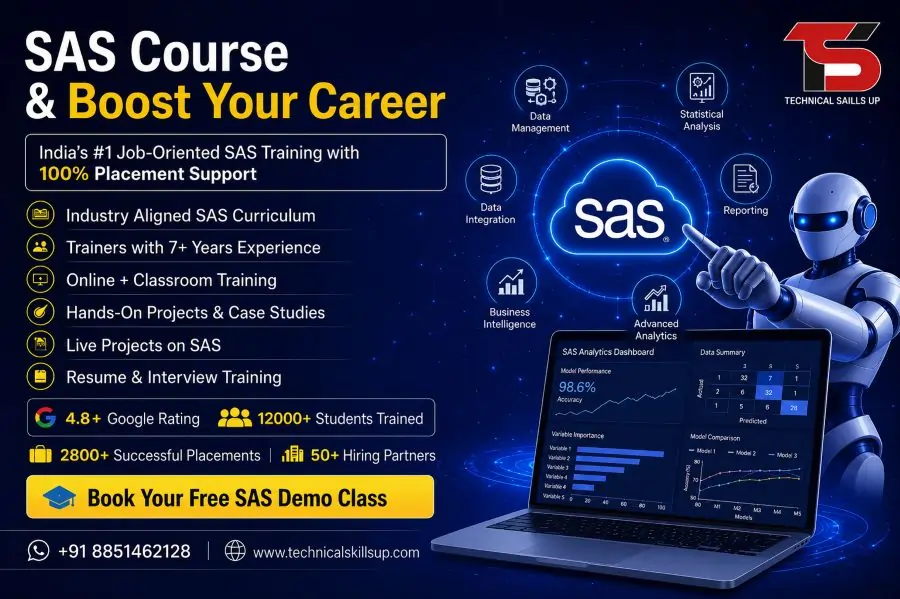
Data drives modern business decisions. Organizations across healthcare, banking, insurance, pharmaceuticals, retail, manufacturing, and government sectors depend on data analysis to improve performance and make informed choices. Strong analytical skills have become essential for professionals who want to grow in a competitive job market. A well-structured SAS Course helps learners understand data management, statistical analysis, reporting, and predictive modeling through practical applications.
Technical Skills Up offers industry-focused training designed for students, graduates, working professionals, and career changers who want to gain valuable analytical skills. The program combines theoretical concepts with hands-on projects to create a strong learning experience. Real-world examples help learners understand how organizations use SAS for business intelligence, research, compliance reporting, and advanced analytics.
Growing demand for data-driven decision-making has increased the need for professionals who can work with large datasets and generate meaningful insights. This training program focuses on practical learning so participants can develop confidence while working on industry-relevant tasks. Expert trainers, structured modules, and project-based learning make the course suitable for beginners as well as professionals looking to upgrade their skills.
SAS Training Designed for Modern Industry Requirements
Businesses collect massive amounts of information every day. Valuable insights remain hidden within that data until skilled professionals analyze it properly. Organizations therefore rely on trained analysts who can manage, process, and interpret data effectively.
SAS Training provides a systematic approach to learning data analysis and statistical programming. Learners gain knowledge of data handling techniques, reporting methods, analytics processes, and business applications. Practical exercises help participants understand how to solve real-world business problems using SAS tools.
Key objectives of the training include:
- Understanding data management concepts
- Learning statistical analysis techniques
- Developing programming skills
- Creating reports and dashboards
- Working with real datasets
- Building industry-relevant projects
- Improving analytical thinking
- Preparing for professional certification
Structured learning ensures that every participant develops both technical knowledge and practical expertise.
Course Overview
Technical Skills Up has designed this program to help learners gain comprehensive knowledge of SAS from fundamental concepts to advanced applications.
Program Highlights
- Beginner-friendly curriculum
- Industry-oriented learning modules
- Practical assignments
- Live instructor-led sessions
- Hands-on project work
- Interview preparation support
- Certification guidance
- Placement assistance
- Flexible learning schedules
- Online learning accessibility
Comprehensive course coverage enables learners to understand the complete workflow used by industry professionals.
Who Can Join This Program?
Many professionals from different educational backgrounds can benefit from this course.
Suitable candidates include:
- Graduates seeking job opportunities
- College students planning analytics careers
- Data analysts looking to improve skills
- IT professionals entering analytics
- Healthcare researchers
- Banking professionals
- Finance analysts
- Business intelligence professionals
- Market research specialists
- Working professionals seeking career growth
No advanced programming background is required to start learning.
Importance of SAS in Today’s Industry
Organizations across the world use SAS for data analysis, forecasting, reporting, and predictive modeling. Reliable analytical results help businesses make strategic decisions based on evidence rather than assumptions.
Several industries depend heavily on SAS because of its accuracy, security, and advanced analytical capabilities.
Healthcare and Pharmaceuticals
Healthcare companies use SAS for:
- Clinical trial analysis
- Drug development research
- Patient data management
- Medical reporting
- Regulatory compliance
Pharmaceutical organizations often require professionals who understand statistical analysis and data validation processes.
Banking and Financial Services
Financial institutions rely on SAS for:
- Risk analysis
- Fraud detection
- Customer analytics
- Credit scoring
- Financial reporting
Accurate analysis helps organizations reduce risks and improve operational efficiency.
Insurance Industry
Insurance companies utilize SAS for:
- Claim analysis
- Risk assessment
- Customer segmentation
- Pricing strategies
- Predictive analytics
Analytical insights support better decision-making and improved customer service.
Retail and E-Commerce
Retail organizations use SAS to:
- Analyze customer behavior
- Forecast sales
- Improve inventory planning
- Track marketing performance
- Enhance customer experience
Data-driven strategies help businesses remain competitive in fast-changing markets.
SAS Classes with Practical Learning Approach
Learning becomes more effective when theory and practice work together. Technical Skills Up focuses on practical skill development through guided exercises and real-world projects.
Interactive Learning Environment
Experienced trainers explain concepts using:
- Live demonstrations
- Case studies
- Real business scenarios
- Industry datasets
- Interactive discussions
- Practical assignments
Active participation improves understanding and knowledge retention.
Project-Based Learning
Hands-on projects help learners apply concepts in practical situations.
Project activities may include:
- Data cleaning
- Data transformation
- Statistical analysis
- Business reporting
- Dashboard creation
- Predictive modeling
Project experience strengthens resumes and prepares learners for professional responsibilities.
Skills Covered in the Program
A successful analytics professional requires multiple technical and analytical skills. The curriculum covers a wide range of topics to support career growth.
Data Management Skills
Participants learn how to:
- Import data
- Export data
- Clean datasets
- Transform information
- Merge files
- Validate records
Strong data management skills form the foundation of effective analytics.
Programming Skills
The program introduces essential programming concepts used within SAS environments.
Topics include:
- Syntax fundamentals
- Data step programming
- Conditional statements
- Loops and iterations
- Functions
- Error handling
Practical exercises help learners build confidence while writing code.
Statistical Analysis Skills
Analytical expertise plays a critical role in modern organizations.
Learners understand:
- Descriptive statistics
- Hypothesis testing
- Regression analysis
- Correlation analysis
- Variance analysis
- Predictive analytics
Knowledge of statistical methods supports informed business decisions.
Reporting Skills
Organizations require clear and accurate reports for decision-making.
Participants learn:
- Report generation
- Data visualization
- Automated reporting
- Summary creation
- Business presentation techniques
Reporting capabilities improve communication of analytical findings.
Tools and Technologies Covered
Modern analytics environments often involve multiple tools and technologies. Technical Skills Up introduces learners to important concepts that complement SAS knowledge.
SAS Programming Environment
Learners gain practical experience with:
- Data libraries
- Procedures
- Functions
- Macros
- Reporting tools
- Analytical modules
Hands-on exposure helps learners understand professional workflows.
Data Analysis Techniques
Important analytical techniques include:
- Data exploration
- Trend analysis
- Forecasting
- Pattern recognition
- Segmentation
- Predictive modeling
These skills remain valuable across industries.
Data Visualization Concepts
Visualization supports effective communication of analytical insights.
Topics include:
- Charts
- Graphs
- Dashboards
- Trend reports
- Comparative analysis
Visual reporting improves business understanding and decision-making.
SAS Programming Course for Career-Focused Learning
Technical knowledge alone does not guarantee career success. Employers prefer candidates who can solve business problems using analytical skills.
A professional SAS Programming Course focuses on practical implementation rather than theoretical learning alone. Participants learn how to work on projects similar to those encountered in real job roles.
Real-World Applications
Examples of practical applications include:
- Customer behavior analysis
- Healthcare research projects
- Financial risk evaluation
- Sales performance reporting
- Business forecasting
Industry-oriented learning prepares candidates for professional environments.
Job-Ready Skill Development
Training modules help participants:
- Build analytical thinking
- Improve problem-solving abilities
- Develop technical expertise
- Understand industry workflows
- Gain practical experience
Employers value candidates who can contribute from the first day of employment.
Career Opportunities After Course Completion
Demand for analytics professionals continues to grow across multiple industries. Organizations seek individuals who can transform data into actionable insights.
Career opportunities include:
Data Analyst
Responsibilities include:
- Data collection
- Data analysis
- Reporting
- Trend identification
- Business recommendations
SAS Developer
Professionals in this role work on:
- Programming tasks
- Data processing
- Automation
- Reporting solutions
- System optimization
Statistical Analyst
Common responsibilities include:
- Statistical modeling
- Research analysis
- Data interpretation
- Forecast development
Business Analyst
Business analysts use data to support:
- Strategic planning
- Performance measurement
- Process improvement
- Business decision-making
Clinical Data Analyst
Healthcare organizations hire professionals for:
- Clinical research
- Trial data analysis
- Compliance reporting
- Medical data management
Data Management Specialist
Responsibilities often involve:
- Data quality control
- Data integration
- Data governance
- Database support
Industry Demand and Future Scope
Digital transformation continues to generate enormous volumes of data. Organizations increasingly depend on analytics professionals who can interpret information and support business decisions.
Expanding Analytics Market
Several factors contribute to growing demand:
- Increased data generation
- Digital business expansion
- Artificial intelligence adoption
- Regulatory reporting requirements
- Business intelligence initiatives
Analytics remains a critical function in modern enterprises.
Long-Term Career Stability
Professionals with analytical skills often enjoy:
- Diverse career options
- Competitive salaries
- Global opportunities
- Continuous learning paths
- Industry flexibility
Strong demand across sectors provides long-term career advantages.
Opportunities Across Multiple Domains
Analytics skills remain valuable in:
- Healthcare
- Banking
- Insurance
- Retail
- Manufacturing
- Government
- Telecommunications
- Education
Industry diversity increases employment possibilities.
SAS Certification Course for Professional Recognition
Professional credentials help learners demonstrate their knowledge and commitment to career development.
A structured SAS Certification Course prepares participants with the skills required for certification-oriented learning and professional growth.
Benefits of Certification Preparation
Certification support helps learners:
- Validate technical skills
- Enhance professional credibility
- Improve job prospects
- Strengthen resumes
- Increase employer confidence
Recognized credentials often create additional career opportunities.
Exam-Oriented Guidance
Training support may include:
- Concept revision
- Practice exercises
- Mock assessments
- Performance evaluation
- Trainer guidance
Preparation strategies improve confidence and readiness.
Why Choose Technical Skills Up
Selecting the right training provider plays a major role in career success. Technical Skills Up focuses on quality education, practical learning, and student support.
Experienced Trainers
Industry professionals deliver training based on practical experience and current market requirements.
Benefits include:
- Real-world insights
- Practical examples
- Career guidance
- Industry knowledge
- Problem-solving support
Comprehensive Curriculum
Every module is designed to provide relevant skills that employers seek in analytics professionals.
Practical Learning Focus
Hands-on exercises ensure learners understand concepts through implementation rather than memorization.
Flexible Learning Options
Training schedules accommodate:
- Students
- Working professionals
- Career switchers
- Fresh graduates
Convenient learning improves accessibility and participation.
Student-Centric Approach
Dedicated support helps learners throughout their educational journey.
Areas of support include:
- Academic guidance
- Technical assistance
- Project mentoring
- Career counseling
Training Methodology: Online Learning with Practical Experience
Modern learners require flexibility without compromising quality. Technical Skills Up combines online education with practical learning methods.
Instructor-Led Sessions
Expert trainers conduct sessions that focus on:
- Concept clarity
- Practical implementation
- Industry examples
- Interactive learning
Direct trainer interaction improves understanding.
Hands-On Assignments
Assignments reinforce learning by encouraging participants to apply concepts independently.
Real Industry Projects
Project work provides exposure to:
- Business scenarios
- Data analysis workflows
- Reporting requirements
- Analytical problem-solving
Practical experience strengthens professional readiness.
Continuous Assessment
Regular evaluations help learners:
- Measure progress
- Identify improvement areas
- Build confidence
- Enhance performance
Consistent feedback supports skill development.
SAS Online Course in India for Flexible Learning
Many learners prefer flexible education options that fit around academic or professional commitments. A well-designed SAS Online Course in India allows participants to learn from any location while receiving expert guidance.
Benefits of Online Learning
Online learning offers:
- Schedule flexibility
- Location independence
- Live interaction
- Recorded sessions
- Continuous support
- Cost-effective learning
Convenient access helps learners balance education with other responsibilities.
Suitable for Working Professionals
Career-focused professionals can upgrade their skills without interrupting their current jobs.
Learning flexibility supports:
- Weekend study
- Evening classes
- Self-paced revision
- Practical project completion
Professional development becomes more manageable through structured online learning.
Placement Support and Career Assistance
Career growth remains a primary objective for many learners. Technical Skills Up supports students through various career development initiatives.
Resume Building Support
Professional resumes help candidates present their skills effectively.
Guidance includes:
- Resume formatting
- Project presentation
- Skill highlighting
- Professional profile improvement
Interview Preparation
Interview readiness support covers:
- Technical questions
- Scenario-based discussions
- Communication skills
- Confidence building
Preparation improves performance during recruitment processes.
Career Counseling
Career experts help learners understand:
- Industry expectations
- Job opportunities
- Skill requirements
- Career pathways
Personalized guidance supports informed career decisions.
Placement Assistance
Placement-focused support helps connect learners with relevant opportunities and industry requirements.
Learning Outcomes
After completing the program, learners can:
- Understand SAS fundamentals
- Manage and analyze data effectively
- Create professional reports
- Apply statistical techniques
- Develop analytical solutions
- Work on industry projects
- Prepare for certification pathways
- Pursue analytics-related career opportunities
Practical skills gained during training help learners contribute confidently in professional environments.
Build a Future in Analytics with Technical Skills Up
Successful careers increasingly depend on the ability to understand and utilize data. Organizations need professionals who can transform information into meaningful insights that support growth and decision-making. Technical Skills Up provides industry-focused learning that combines theoretical knowledge with practical implementation, helping learners develop job-ready analytical skills. Expert guidance, project-based learning, flexible training options, certification preparation, and career support create a strong foundation for long-term success. Students, graduates, and working professionals looking to enter the analytics field can benefit from structured learning that aligns with current industry needs. Strong analytical capabilities, practical experience, and professional confidence gained through this program can open doors to rewarding opportunities across multiple industries and help learners build a successful future in data analytics and business intelligence.
FAQs:
Q1. What is the SAS Online Course in India?
Ans: The SAS Online Course in India is a professional training program that trains students in data analysis, reporting, data management, and business intelligence using SAS (Statistical Analysis System) software. This course is beneficial for both beginners and experienced professionals.
Q2. Who is the SAS Online Course in India with Placement suitable for?
Ans: This course is suitable for freshers, IT professionals, data analysts, and students pursuing or holding degrees like BSc, BTech, MCA, MBA, or those with a background in statistics. It is highly beneficial for candidates aspiring to build a career in data analytics.
Q3. Is prior programming knowledge required to learn SAS?
Ans: No, advanced programming knowledge is not required to learn SAS. Students can easily learn SAS with basic computer knowledge and an understanding of data.
Q4. How is Technical Skills Up’s SAS Online Course in India different from other institutes?
Ans: Technical Skills Up offers live training by industry experts, practical projects, recorded sessions, interview preparation, and placement assistance. This helps students gain real-world industry experience.
Q5. What is the duration of the SAS Online Course?
Ans: The duration of the SAS Online Course typically ranges from 2 to 4 months. The exact duration depends on the course modules, batch timings, and the student’s learning pace.
Q6. What job roles can one get after completing the SAS Online Course?
Ans: After completing the course, candidates can apply for roles such as SAS Programmer, Data Analyst, Clinical SAS Programmer, Business Analyst, Data Management Executive, and Reporting Analyst.
Q7. What is the significance of SAS Certification?
Ans: SAS Certification validates a candidate’s technical proficiency. It strengthens the resume and helps increase the chances of securing a job.
Q8. How is placement assistance provided in the SAS Online Course in India with Placement?
Ans: Technical Skills Up provides services such as resume building, mock interviews, job referrals, interview guidance, and career support to help students secure better job opportunities.
Q9. In which industries is SAS used?
Ans: SAS is used in various industries such as healthcare, pharmaceuticals, banking, finance, insurance, retail, telecommunications, and data analytics.
Q10. Are practical projects included in the SAS online training?
Ans: Yes, students get the opportunity to work on real-time case studies and industry-based projects, which strengthens their practical understanding.
Q11. What is the expected starting salary after learning SAS?
Ans: The starting salary for freshers can vary based on the company, location, and skills. Candidates with strong skills and certifications can secure attractive salary packages.
Q12. Are live classes available for the SAS online course?
Ans: Yes, Technical Skills Up offers live online classes, recorded videos, and instructor support, allowing students to learn at their own convenience.
Q13. What is the relationship between SAS and data analytics?
Ans: SAS is a powerful data analytics tool used for processing data, performing analysis, and generating reports. Therefore, SAS skills are considered crucial for a career in data analytics.
Q14. Do I receive a certificate after completing the SAS online course?
Ans: Yes, upon successful completion of the course, students are awarded a course completion certificate, which they can include in their professional profiles and resumes.
Q15. How can I enroll in the SAS online course in India?
Ans: Candidates can complete the enrollment process through the Technical Skills Up website or by contacting the counseling team directly. Information regarding course modules, batch timings, and career guidance can also be obtained prior to enrollment.