SQL Online Course in India | SQL Certification Course

Modern businesses rely heavily on data to make decisions, improve customer experiences, and streamline operations. Every application, website, and enterprise software solution stores valuable information in databases. Strong database management skills have become essential for professionals who want to build a successful career in technology. Technical Skills Up offers a comprehensive SQL Course designed to help students, graduates, and working professionals master database concepts through practical learning and real-world projects.

The program focuses on developing strong knowledge of Structured Query Language, database design, data manipulation, reporting, and performance optimization. Practical exercises, industry-focused assignments, and expert guidance help learners gain confidence in handling databases used across various industries. Whether you are starting your career or planning to upgrade your technical skills, this course provides a structured learning path that aligns with current industry requirements.

Table of Contents

SQL Training Designed for Modern Industry Requirements

Organizations across sectors generate massive amounts of data every day. Managing, analyzing, and retrieving that data efficiently requires professionals with strong database expertise. Technical Skills Up has created a curriculum that covers both fundamental and advanced concepts to ensure learners gain practical knowledge that can be applied immediately in real-world environments.

The learning journey starts with database fundamentals and gradually moves toward advanced query writing, data analysis, joins, stored procedures, indexing, and database optimization techniques. Every topic is explained through practical examples that help learners understand how SQL is used in professional environments.

Course Overview

Technical Skills Up provides a structured training program that combines theoretical understanding with hands-on practice. Learners work on real database scenarios that simulate actual workplace challenges.

Key highlights of the program include:

  • Beginner to advanced learning path
  • Live instructor-led sessions
  • Practical database projects
  • Real-world case studies
  • Industry-relevant assignments
  • Interview preparation support
  • Flexible learning schedules
  • Placement assistance guidance
  • Certification preparation

Every module has been designed to ensure learners gain confidence in writing queries, managing databases, and solving business-related data problems.

Why SQL Skills Matter in Today’s Digital World

Data has become one of the most valuable assets for organizations. Companies need professionals who can organize, access, and analyze information efficiently. SQL remains one of the most widely used database languages across industries.

Business applications, banking systems, healthcare platforms, e-commerce websites, educational portals, and enterprise software solutions depend on databases for daily operations. Database professionals play an important role in maintaining data accuracy and supporting business intelligence initiatives.

Strong SQL knowledge helps professionals:

  • Access data quickly
  • Generate meaningful reports
  • Support business decisions
  • Improve operational efficiency
  • Maintain data quality
  • Optimize database performance
  • Work effectively with analytics teams
  • Contribute to software development projects

Growing dependence on data-driven decision-making continues to increase the demand for skilled database professionals worldwide.

SQL Classes with Comprehensive Learning Modules

Technical Skills Up follows a structured curriculum that ensures complete understanding of database concepts. Every topic is explained with practical demonstrations and hands-on exercises.

Database Fundamentals

Learners begin with the foundation of database management systems.

Topics covered include:

  • Introduction to databases
  • Types of databases
  • Relational database concepts
  • Database architecture
  • Data storage fundamentals
  • Tables and relationships
  • Primary and foreign keys
  • Data integrity concepts

Strong foundational knowledge makes it easier to understand advanced SQL concepts later in the course.

Query Writing and Data Retrieval

Database professionals spend a significant amount of time retrieving and analyzing data. Practical query-writing skills are therefore essential.

Topics include:

  • SELECT statements
  • Filtering data
  • Sorting records
  • Aggregate functions
  • Grouping data
  • Conditional queries
  • Data formatting
  • Advanced search techniques

Hands-on exercises help learners develop confidence in writing efficient queries.

Working with Multiple Tables

Real-world databases often contain hundreds of interconnected tables. Understanding relationships between tables is an important skill.

Learners practice:

  • Inner joins
  • Left joins
  • Right joins
  • Full joins
  • Self joins
  • Cross joins
  • Complex join conditions
  • Data relationship management

Practical examples demonstrate how businesses combine information from multiple sources for reporting and analysis.

Data Manipulation Techniques

Database management requires frequent updates and modifications.

Important topics include:

  • Insert operations
  • Update commands
  • Delete statements
  • Data validation
  • Transaction management
  • Data consistency
  • Rollback techniques
  • Commit operations

These concepts help learners manage information safely and efficiently.

Skills Covered in the Program

Technical Skills Up focuses on developing job-ready database skills that employers actively seek.

Core Technical Skills

Participants learn:

  • Database management
  • Query development
  • Data extraction
  • Data transformation
  • Data validation
  • Database troubleshooting
  • Report generation
  • Performance optimization

Analytical Skills

Practical assignments improve analytical capabilities such as:

  • Data interpretation
  • Trend identification
  • Problem-solving
  • Logical thinking
  • Business reporting
  • Decision support analysis

Professional Skills

Industry success requires more than technical knowledge.

Learners also develop:

  • Communication skills
  • Documentation practices
  • Project handling abilities
  • Team collaboration
  • Time management
  • Interview confidence

These skills help professionals perform effectively in workplace environments.

Tools and Technologies Covered

Practical exposure plays a major role in career development. Technical Skills Up introduces learners to commonly used database technologies and tools.

Database Platforms

Training includes exposure to:

  • MySQL
  • Microsoft SQL Server
  • PostgreSQL
  • Oracle Database concepts
  • Cloud database fundamentals

Understanding multiple database platforms increases career opportunities across different industries.

Database Development Tools

Participants gain practical experience with:

  • Query editors
  • Database management tools
  • Reporting interfaces
  • Data import utilities
  • Export management tools
  • Performance monitoring tools

Hands-on practice helps learners understand real-world database environments.

SQL Certification Course for Professional Growth

Employers often prefer candidates who can demonstrate validated skills and practical expertise. Completing a professional SQL Certification Course helps learners showcase their database knowledge and commitment to career development.

Certification benefits include:

  • Enhanced professional credibility
  • Improved resume strength
  • Better interview opportunities
  • Recognition of technical skills
  • Increased confidence
  • Competitive advantage in job applications

Technical Skills Up prepares learners with the practical knowledge required to perform effectively in professional database roles.

SQL Online Course in India for Flexible Learning

Learning flexibility has become important for students and working professionals. Technical Skills Up offers a comprehensive SQL Online Course in India that enables learners to build database expertise from any location.

Virtual training provides:

  • Live interactive sessions
  • Recorded classes for revision
  • Online project work
  • Digital study materials
  • Trainer support
  • Flexible schedules
  • Practical demonstrations
  • Remote learning convenience

Professionals can upgrade their skills without disrupting their existing work commitments.

Benefits of Online Learning

Modern learning platforms make skill development more accessible.

Advantages include:

  • Learning from home
  • Reduced travel time
  • Flexible batch options
  • Access to recorded lectures
  • Consistent trainer interaction
  • Better work-study balance

Online learning allows individuals from different cities and backgrounds to access quality technical education.

SQL Developer Course for Future-Focused Careers

Database development continues to be a critical component of software applications. A specialized SQL Developer Course helps learners understand how databases interact with applications and business systems.

Key development-focused concepts include:

  • Stored procedures
  • Functions
  • Triggers
  • Views
  • Indexing
  • Database security
  • Query optimization
  • Performance tuning

These advanced skills help learners prepare for database development and administration responsibilities.

Real-World Project Experience

Practical implementation strengthens learning outcomes.

Project-based training includes:

  • Database design projects
  • Customer management systems
  • Sales reporting databases
  • Inventory tracking systems
  • Employee management solutions
  • Data analysis scenarios

Project work helps learners build portfolios that demonstrate practical capabilities to employers.

Career Opportunities After Completing SQL Training

Database expertise opens doors to various technology and business-related roles. Organizations across industries actively hire professionals with database management skills.

Popular career opportunities include:

  • SQL Developer
  • Database Administrator
  • Data Analyst
  • Business Intelligence Analyst
  • Reporting Analyst
  • Database Engineer
  • Application Support Analyst
  • Data Management Specialist
  • ETL Developer
  • Junior Data Engineer

Career growth opportunities expand further when SQL knowledge is combined with analytics, cloud computing, or programming skills.

Industries Hiring Database Professionals

Many sectors require database experts.

Examples include:

  • Information Technology
  • Banking and Finance
  • Healthcare
  • Insurance
  • Telecommunications
  • Manufacturing
  • Retail
  • E-commerce
  • Education
  • Government Organizations

Demand remains strong because data management is essential for business operations.

Industry Demand and Future Scope

Digital transformation initiatives continue to increase the importance of database management. Organizations collect and process large volumes of information every day. Skilled professionals who can organize and analyze that data remain valuable assets.

Emerging technologies such as:

  • Artificial Intelligence
  • Machine Learning
  • Business Intelligence
  • Cloud Computing
  • Big Data Analytics

all depend on well-structured databases.

Future opportunities continue to grow because businesses require reliable systems for storing and retrieving information. SQL remains one of the most important skills for professionals entering data-related careers.

Market demand shows consistent growth for database specialists who can combine technical expertise with business understanding. Professionals with strong SQL skills often enjoy stable career paths and attractive growth opportunities.

Why Choose Technical Skills Up

Choosing the right training provider plays an important role in career success. Technical Skills Up focuses on practical learning, industry relevance, and student support.

Experienced Trainers

Industry professionals with practical experience guide learners through every stage of the training journey. Real-world examples help simplify complex concepts.

Practical Learning Environment

Hands-on assignments ensure learners gain practical exposure rather than relying only on theoretical knowledge.

Updated Curriculum

Course content aligns with current industry standards and employer expectations.

Personalized Support

Dedicated mentors assist learners with technical questions, projects, and career guidance.

Career-Oriented Approach

Training focuses on developing job-ready skills that employers actively seek.

Student-Centered Learning

Flexible learning options help students and professionals balance education with other responsibilities.

Training Methodology – Online and Practical Learning

Technical Skills Up follows a structured approach that combines theory with practical implementation.

Learning methods include:

  • Live instructor-led training
  • Hands-on exercises
  • Practical assignments
  • Case study discussions
  • Industry-based projects
  • Interactive doubt-clearing sessions
  • Performance assessments
  • Interview preparation sessions

Every module includes practical exercises to reinforce learning and improve retention.

Project-Based Learning Approach

Projects provide valuable exposure to real workplace scenarios.

Benefits include:

  • Better concept understanding
  • Practical problem-solving experience
  • Portfolio development
  • Increased confidence
  • Improved employability

Project work bridges the gap between classroom learning and professional responsibilities.

Certification and Placement Support

Career development remains a key focus at Technical Skills Up. Training programs are designed to help learners become job-ready and confident during recruitment processes.

Placement support includes:

  • Resume building assistance
  • Mock interview sessions
  • Technical interview preparation
  • Career guidance
  • Professional profile improvement
  • Job opportunity updates

Dedicated support helps learners prepare effectively for job applications and interviews.

Certification Benefits

Completing the program demonstrates dedication to professional growth and technical excellence.

Certification advantages include:

  • Industry recognition
  • Better career prospects
  • Enhanced confidence
  • Stronger professional profile
  • Improved employment opportunities

Practical knowledge combined with certification creates a strong foundation for long-term career success.

Build a Strong Future with SQL Skills

Database management continues to be one of the most valuable technical skills in today’s digital economy. Organizations across industries depend on professionals who can manage, analyze, and optimize data efficiently. Technical Skills Up provides a comprehensive learning experience that combines expert instruction, practical projects, industry-focused curriculum, and career guidance. Learners gain the confidence to work with databases, solve real business challenges, and pursue rewarding career opportunities. Anyone looking to strengthen technical expertise, improve employability, and enter the growing world of data management can benefit from joining this professional training program and taking the next step toward a successful technology career.

FAQs:

Q1. What is the SQL Online Course in India with Placement?

Ans: The SQL Online Course in India with Placement is a professional training program that offers online training in SQL Database Management, Query Writing, Data Analysis, and Database Administration. Placement assistance is also provided to students upon completion of the course.

Q2. Who is eligible to take the SQL course?

Ans: Graduates, engineering students, and students pursuing BCA, MCA, BSc IT, or Computer Science, as well as IT professionals, can take this course. Beginners can also enroll in this course.

Q3. How long does it take to learn SQL?

Ans: Basic SQL concepts can usually be learned in 4 to 6 weeks. The full course, including advanced SQL and real-time projects, can be completed in 2 to 3 months.

Q4. What topics are covered during the SQL course?

Ans: The course covers key topics such as Database Fundamentals, SQL Queries, Joins, Subqueries, Functions, Views, Stored Procedures, Triggers, Indexes, and Performance Optimization.

Q5. Is coding experience required for the SQL online course?

Ans: No, prior experience with any programming language is not required to learn SQL. Beginners can also learn SQL easily.

Q6. What are the benefits of taking an SQL certification course?

Ans: An SQL certification course validates a candidate’s technical proficiency. It enhances job prospects and makes the resume more impressive.

Q7. What job profiles can one get after completing the SQL course?

Ans: Upon course completion, opportunities are available for roles such as SQL Developer, Database Administrator, Data Analyst, Business Intelligence Analyst, Reporting Analyst, and ETL Developer.

Q8. Does Technical Skills Up provide placement assistance?

Ans: Yes, Technical Skills Up provides placement assistance to students, including interview preparation, resume building, mock interviews, and job referrals.

Q9. Does the SQL online training include live classes?

Ans: Yes, the SQL online training includes live instructor-led sessions, practical labs, and doubt-clearing sessions to enhance the learning experience.

Q10. What is the expected starting salary after learning SQL?

Ans: The starting salary can vary based on the candidate’s skills, location, and the company. Generally, freshers can secure competitive salary packages.

Q11. Does the SQL course include practical projects?

Ans: Yes, students work on industry-based projects and case studies to gain experience in a real-world work environment.

Q12. Is a laptop or computer required for the SQL online course?

Ans: Yes, a laptop or desktop with an internet connection is required for online training so that students can perform practical exercises.

Q13. What is the difference between SQL and MySQL?

Ans: SQL is a Standard Query Language, whereas MySQL is a popular Relational Database Management System (RDBMS) that utilizes the SQL language.

Q14. Can one build a career in Data Analytics after the SQL course?

Ans: Yes, SQL is one of the most crucial skills in Data Analytics. After learning SQL, one can pursue a career in roles such as Data Analyst, Business Analyst, and Reporting Analyst.

Q15. Why choose Technical Skills Up’s SQL online course?

Ans: Technical Skills Up offers industry-oriented SQL training featuring experienced trainers, live projects, practical training, recorded sessions, certification support, and placement assistance, helping students develop the skills necessary for employment.
Related Post

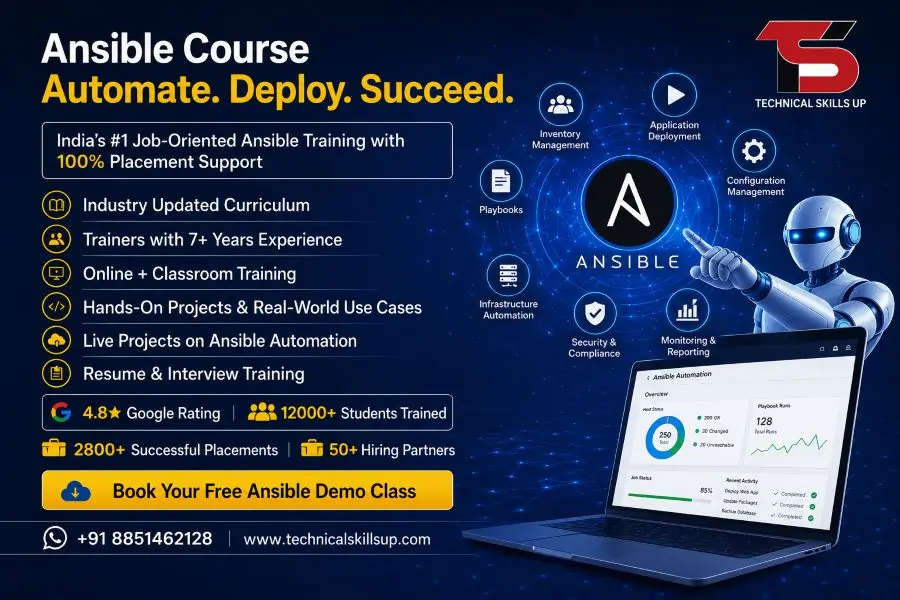
Ansible Course

Ansible Course in Delhi | Ansible Training in Delhi

Technology continues to change the way organizations manage servers, applications, cloud platforms, and IT infrastructure. Companies now prefer automation over manual processes because automation reduces errors, saves time, and improves efficiency. Modern businesses need professionals who can automate deployment, configuration management, application provisioning, and infrastructure tasks.

Technical Skills Up offers an industry-focused Ansible Course in Delhi designed for students, working professionals, system administrators, cloud engineers, and DevOps enthusiasts who want to gain practical automation skills. The program combines theoretical concepts with hands-on training to help learners understand real-world automation workflows used across industries.

Learning automation has become an important step for professionals who want to advance their careers in cloud computing, DevOps, infrastructure management, and software deployment. Practical exposure, project-based learning, and expert guidance help learners gain confidence while working on enterprise-level environments.

Strong automation knowledge not only improves technical skills but also opens doors to exciting career opportunities in leading organizations. Through structured learning, practical assignments, and expert mentorship, learners can develop the expertise required to work confidently with modern IT infrastructure and automation platforms.

Ansible Training in Delhi – Course Overview

Organizations across industries use automation tools to simplify repetitive IT tasks and improve operational efficiency. Ansible has emerged as one of the most popular automation platforms because of its simplicity, flexibility, and agentless architecture.

This training program has been carefully designed to help learners understand automation concepts from beginner to advanced levels. Every topic follows a step-by-step approach so that students can build a strong foundation before moving toward advanced automation scenarios.

Key Highlights of the Program

  • Instructor-led live sessions
  • Practical lab environment
  • Real-world automation projects
  • Industry-relevant curriculum
  • Cloud and DevOps integration concepts
  • Resume preparation guidance
  • Interview preparation support
  • Certification assistance
  • Placement support
  • Flexible learning options

Practical implementation remains the core focus throughout the training program. Learners work on multiple automation scenarios to understand how automation improves operational efficiency in enterprise environments.

Why Automation Skills Matter in Modern IT

Businesses manage hundreds or even thousands of servers, applications, and cloud resources. Manual management consumes significant time and increases the possibility of configuration errors.

Automation helps organizations:

  • Reduce operational costs
  • Improve deployment speed
  • Maintain consistency
  • Increase productivity
  • Minimize human errors
  • Enhance infrastructure reliability
  • Accelerate software delivery

Modern DevOps practices rely heavily on automation tools. Employers actively seek professionals who can automate infrastructure and deployment processes to improve business outcomes.

Growing digital transformation initiatives have increased the demand for automation specialists across industries such as banking, healthcare, e-commerce, telecommunications, education, manufacturing, and IT services.

Ansible Classes in Delhi with Practical Learning

Learning becomes more effective when theoretical knowledge is supported by hands-on practice. Technical Skills Up focuses heavily on practical training to ensure learners gain real implementation experience.

Dedicated lab sessions allow participants to work on automation tasks that closely resemble industry environments. Every concept is demonstrated through practical examples before learners perform the same tasks independently.

Practical Activities Included

  • Server configuration automation
  • Application deployment automation
  • User management automation
  • Package installation automation
  • Infrastructure provisioning
  • Configuration management
  • Security automation tasks
  • Multi-server orchestration
  • Cloud automation exercises
  • DevOps workflow implementation

Hands-on exposure helps learners understand how automation works in real business scenarios rather than only learning theoretical concepts.

Skills Covered in the Program

Successful automation professionals require both technical understanding and practical implementation skills. The curriculum covers a wide range of topics to prepare learners for real-world job roles.

Fundamentals of Automation

Understanding automation concepts forms the foundation of successful implementation. Learners explore automation principles, benefits, workflows, and business applications.

Topics include:

  • Introduction to automation
  • Infrastructure automation concepts
  • Configuration management basics
  • Automation architecture
  • IT operations automation
  • Enterprise automation practices

Ansible Architecture

A clear understanding of architecture helps learners design efficient automation workflows.

Coverage includes:

  • Control node concepts
  • Managed node communication
  • Inventory management
  • SSH communication
  • Agentless architecture
  • Configuration files

Playbooks and YAML

Playbooks are the heart of automation workflows.

Students learn:

  • YAML fundamentals
  • Playbook structure
  • Tasks and modules
  • Variables
  • Conditions
  • Loops
  • Handlers
  • Tags

Inventory Management

Efficient inventory management enables organizations to manage multiple systems easily.

Topics include:

  • Static inventory
  • Dynamic inventory
  • Inventory groups
  • Host variables
  • Group variables
  • Environment management

Advanced Automation Concepts

Advanced topics help learners build enterprise-level automation solutions.

Coverage includes:

  • Roles
  • Templates
  • Jinja2
  • Vault
  • Collections
  • Reusable automation components

Tools and Technologies Covered

Modern automation environments involve multiple technologies. Learners gain exposure to tools commonly used in enterprise environments.

Linux Administration

Strong Linux knowledge supports automation implementation.

Topics include:

  • File management
  • User management
  • Package management
  • Permissions
  • Services
  • Networking basics

Version Control

Automation projects often require collaboration and version tracking.

Coverage includes:

  • Git fundamentals
  • Repository management
  • Branching concepts
  • Version control workflows

Cloud Platforms

Cloud automation skills are highly valuable in today’s market.

Learners understand automation concepts related to:

  • Amazon Web Services
  • Microsoft Azure
  • Google Cloud Platform

DevOps Integration

Automation plays a critical role within DevOps workflows.

Topics include:

  • Continuous Integration
  • Continuous Deployment
  • Infrastructure as Code
  • Release automation
  • Configuration management

Container Technologies

Modern deployment environments often use containers.

Exposure includes:

  • Docker fundamentals
  • Container automation concepts
  • Deployment workflows

Ansible Certification Course in Delhi for Career Growth

Professional certifications help validate technical skills and improve credibility in the job market.

Training at Technical Skills Up prepares learners with the knowledge required to understand certification objectives and industry expectations.

Certification preparation support includes:

  • Concept revision sessions
  • Practice exercises
  • Mock assessments
  • Project implementation
  • Interview-oriented discussions

Employers often value certified professionals because certifications demonstrate commitment to professional development and continuous learning.

Real-World Projects Included

Project-based learning helps bridge the gap between training and industry requirements.

Participants work on practical projects such as:

Infrastructure Automation Project

Learners automate server configuration and infrastructure deployment processes.

Application Deployment Project

Projects focus on automating application installation and deployment across multiple servers.

Configuration Management Project

Students implement configuration consistency across large environments.

Cloud Automation Project

Practical exercises demonstrate automation workflows in cloud-based environments.

Enterprise Automation Project

Complex automation scenarios help learners understand enterprise implementation strategies.

Project experience strengthens practical understanding and enhances resume quality.

Career Opportunities After Training

Automation skills are highly valued across various technology domains. Organizations actively hire professionals who can manage automated environments efficiently.

Popular job roles include:

DevOps Engineer

DevOps professionals automate software delivery pipelines and infrastructure management processes.

Automation Engineer

Automation engineers design, develop, and maintain automated workflows across enterprise environments.

System Administrator

System administrators use automation tools to manage servers and operating systems efficiently.

Cloud Engineer

Cloud engineers automate resource provisioning and cloud infrastructure management.

Infrastructure Engineer

Infrastructure professionals use automation to improve operational efficiency and scalability.

Site Reliability Engineer

Reliability engineers automate monitoring, deployment, and operational tasks to maintain system performance.

Platform Engineer

Platform engineers create scalable infrastructure solutions using automation technologies.

Growing demand across industries provides excellent career opportunities for skilled professionals.

Industry Demand and Future Scope

Digital transformation continues to drive automation adoption worldwide. Organizations seek faster deployment cycles, improved operational efficiency, and reduced infrastructure complexity.

Automation has become an essential part of:

  • Cloud computing
  • DevOps practices
  • Infrastructure management
  • Security operations
  • Application deployment
  • Enterprise IT operations

Businesses increasingly invest in automation initiatives to improve productivity and maintain competitiveness.

Future trends indicate strong growth in:

  • Infrastructure as Code
  • Cloud-native automation
  • AI-assisted operations
  • Hybrid cloud management
  • Enterprise automation platforms
  • DevOps automation solutions

Professionals with automation expertise are expected to remain in high demand for years to come.

Ansible Training Institute in Delhi with Experienced Mentors

Learning from industry professionals helps students understand practical implementation challenges and best practices.

Technical Skills Up focuses on delivering quality education through experienced trainers who bring real-world industry exposure into the classroom.

Benefits of expert mentorship include:

  • Practical insights
  • Industry best practices
  • Real project guidance
  • Career counseling
  • Technical problem-solving support
  • Interview preparation assistance

Mentors help learners understand how automation solutions are implemented in enterprise environments, making training more relevant and valuable.

Why Choose Technical Skills Up

Selecting the right training provider plays an important role in career development. Technical Skills Up focuses on skill-building, practical exposure, and industry readiness.

Industry-Relevant Curriculum

Course content aligns with current market requirements and employer expectations.

Practical Training Approach

Every major topic includes practical implementation exercises.

Experienced Trainers

Industry professionals guide learners throughout the training journey.

Flexible Learning Options

Students can choose learning modes that suit their schedules.

Project-Based Learning

Real-world projects improve practical understanding and confidence.

Career Support

Resume building, interview preparation, and placement assistance help learners pursue better career opportunities.

Updated Learning Material

Training resources remain aligned with evolving industry trends and technologies.

Personalized Attention

Small batch sizes allow trainers to provide focused guidance to learners.

Training Methodology – Online and Practical Learning

Modern learners require flexibility without compromising learning quality. Technical Skills Up combines instructor-led sessions with practical implementation to deliver an effective learning experience.

Live Interactive Classes

Interactive sessions encourage active participation and improve concept clarity.

Hands-On Labs

Practical labs help learners implement concepts immediately after learning them.

Assignments and Exercises

Regular assignments strengthen understanding and improve retention.

Case Studies

Industry-based case studies provide practical insights into real-world automation challenges.

Project Work

Projects help learners apply concepts in realistic business scenarios.

Continuous Assessment

Regular evaluations help track progress and identify improvement areas.

Flexible learning methods ensure learners gain both theoretical knowledge and practical expertise.

Certification and Placement Support

Professional training becomes more valuable when combined with career support services. Technical Skills Up assists learners throughout their career development journey.

Placement support services include:

  • Resume creation assistance
  • LinkedIn profile guidance
  • Mock interviews
  • Technical interview preparation
  • Career counseling
  • Job opportunity updates
  • Soft skills guidance

Dedicated support helps learners prepare confidently for job opportunities in the automation and DevOps domain.

Certification guidance further strengthens professional credibility and enhances employability.

Who Should Join This Program?

The course is suitable for individuals from different educational and professional backgrounds.

Ideal participants include:

  • Fresh graduates
  • IT professionals
  • System administrators
  • Network engineers
  • Cloud engineers
  • DevOps enthusiasts
  • Technical support professionals
  • Infrastructure engineers
  • Software professionals
  • Career switchers

Previous automation experience is not mandatory. Structured learning enables beginners to build skills gradually while helping experienced professionals enhance their expertise.

Learning Outcomes

After completing the program, learners will be able to:

  • Understand automation concepts confidently
  • Create automation playbooks
  • Manage inventories efficiently
  • Automate server configurations
  • Deploy applications automatically
  • Integrate automation with DevOps workflows
  • Implement cloud automation tasks
  • Manage enterprise automation projects
  • Troubleshoot automation issues
  • Apply best practices in real environments

Practical experience gained during training prepares learners for professional responsibilities and industry challenges.

Conclusion

Technology-driven organizations continue to invest heavily in automation to improve efficiency, reduce operational complexity, and accelerate business growth. Strong automation skills have become essential for professionals working in cloud computing, DevOps, infrastructure management, and modern IT operations. Technical Skills Up delivers comprehensive training that combines expert instruction, practical labs, real-world projects, certification guidance, and placement support to help learners become industry-ready professionals. A structured curriculum, hands-on experience, and continuous mentorship create an ideal learning environment for both beginners and experienced professionals. Students who develop automation expertise today position themselves for rewarding career opportunities in a rapidly growing technology landscape. Choosing the right training program can make a significant difference, and Technical Skills Up provides the knowledge, practical exposure, and career support needed to achieve long-term professional success.

FAQs:

Q1. What is Ansible and what is it used for?

Ans: Ansible is a popular IT automation tool used for server management, application deployment, configuration management, and cloud automation. It operates on agentless technology, making system management easier. Today, many major companies use Ansible for their DevOps and infrastructure automation tasks.

Q2. Who is the Ansible course in Delhi (with placement) suitable for?

Ans: This course is suitable for students and professionals aspiring to build a career in DevOps, Cloud Computing, Linux Administration, or IT Infrastructure. The following individuals can benefit from this course:

  • B.Tech and BCA students
  • System Administrators
  • DevOps Engineers
  • Cloud Professionals
  • IT Support Engineers
Q3. How is Technical Skills Up’s Ansible course in Delhi different from other institutes?

Ans: Technical Skills Up provides industry-oriented training that includes live projects, practical labs, experienced trainers, and placement assistance. Students get the opportunity to work on real-world industry projects, which enhances their technical proficiency.

Q4. What are the prerequisites for learning Ansible?

Ans: Having basic knowledge of Linux is beneficial for learning Ansible, though it is not mandatory. Trainers begin with fundamental concepts during the course. However, if a student has some prior knowledge of Linux, networking, or cloud computing, they can grasp the subject matter more easily.

Q5. What topics are covered in the Ansible course?

Ans: This course includes several key modules, such as:

  • Introduction to Ansible
  • Inventory Management
  • Playbook Creation
  • Roles and Modules
  • Variables and Templates
  • Ansible Galaxy
  • Configuration Management
  • Cloud Automation
  • Real-Time Projects

All these topics are taught with current industry requirements in mind.

Q6. What job profiles can one secure after completing the Ansible course?

Ans: Upon course completion, candidates can apply for the following roles:

  • DevOps Engineer
  • Automation Engineer
  • Linux Administrator
  • Cloud Engineer
  • Site Reliability Engineer (SRE)
  • Infrastructure Engineer

The demand for these roles is growing rapidly in the current market.

Q7. Is practical training provided in the Ansible course in Delhi (with placement)?

Ans: Yes, Technical Skills Up places special emphasis on practical-based training. Students get the opportunity to work on live servers, real-time automation tasks, and industry projects. This helps develop both their problem-solving abilities and technical confidence.

Q8. What is the expected starting salary after learning Ansible?

Ans: Candidates with Ansible skills can secure a good salary package at the entry level, depending on the company, location, and experience. The demand for skilled professionals in the DevOps and automation sectors is constantly rising, offering excellent prospects for career growth.

Q9. Does Technical Skills Up provide placement assistance?

Ans: Yes, Technical Skills Up provides placement support to students. This includes:

  • Resume Building Assistance
  • Mock Interviews
  • Technical Interview Preparation
  • Job Referral Support
  • Career Guidance Sessions

The aim of these services is to prepare students effectively for job opportunities.

Q10. What is the relationship between Ansible and DevOps?

Ans: Ansible is a crucial tool within the DevOps ecosystem. The primary objective of DevOps is to foster collaboration between development and operations teams and to automate processes. Ansible makes DevOps processes faster, more secure, and more effective by automating various tasks.

Q11. Do students work on live projects during the Ansible course?

Ans: Yes, students are assigned live projects based on real-world industry scenarios. Through these projects, they gain an understanding of automation workflows, server configuration, and deployment processes. This experience proves to be highly beneficial when securing a job.

Q12. What is the significance of Ansible Certification for one’s career?

Ans: Ansible Certification validates a candidate’s technical proficiency and automation skills. Many companies prioritize certified candidates because the certification demonstrates their expertise and practical knowledge. It can also play a vital role in career advancement.

Q13. Can freshers take the Ansible course?

Ans: Absolutely; freshers can easily undertake this course. The training is designed so that even entry-level students can grasp the concepts. Through regular practice and projects, freshers can build a strong technical foundation.

Q14. How long does it take to learn Ansible?

Ans: The time required depends on the individual’s learning pace and technical background. With regular practice and project work, one can understand the core concepts of Ansible within a few weeks. Continuous practice is essential to achieve advanced-level expertise.

Q15. Why choose Technical Skills Up for an Ansible course in Delhi with placement?

Ans: Technical Skills Up provides training that is updated according to industry requirements. Key benefits include:

  • Experienced trainers
  • Live projects
  • Practical lab access
  • Interview preparation
  • Placement assistance
  • Industry-focused curriculum

These features enable students to be better prepared for jobs and give a new direction to their careers.

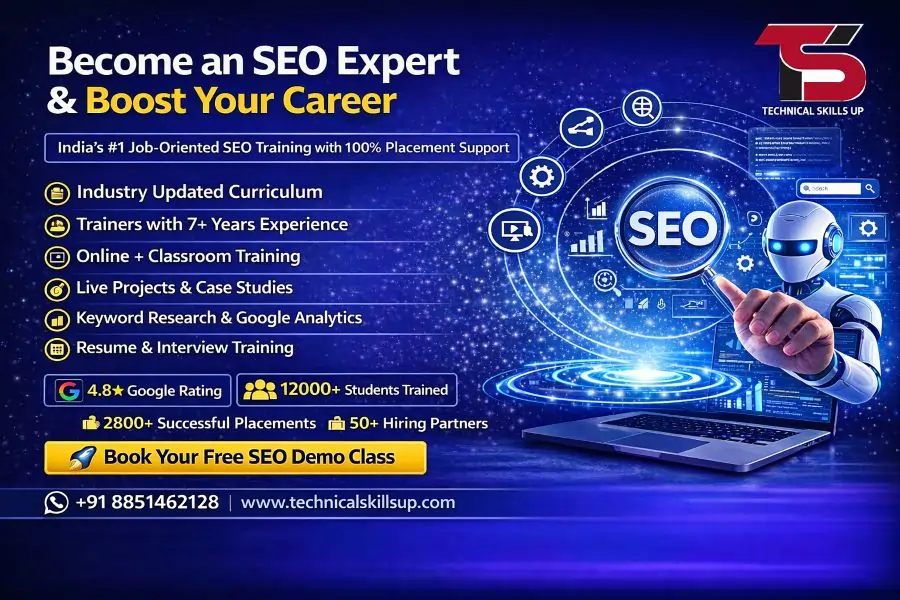
SEO Course

SEO Course in Hyderabad with Placement

Technical Skills Up offers one of the best SEO courses in Hyderabad, which is specially designed for students and professionals who want to make a career in the world of digital marketing. In this course, all the important things of SEO are taught from basic to advanced level.

Here you are given information about important techniques like keyword research, on-page SEO, off-page SEO, Google’s algorithm and website optimization. The most special thing about this course is that it emphasizes not only theory but also practical knowledge. You get a chance to work on real projects, so that you can understand the techniques used in the industry well.

Under the guidance of experienced trainers, you learn every aspect of SEO and build a strong foundation. This course not only enhances your skills but also takes you towards becoming a successful SEO expert. If you want to make a career in digital marketing, then this course can be a great start for you.

What is SEO?

SEO (Search Engine Optimization) is a digital marketing technique that helps a website rank higher in search engines. When a user searches for something in a search engine like Google, SEO ensures that your website appears in those top results. SEO has three main parts: on-page SEO, off-page SEO and technical SEO. On-page involves optimizing content, keywords and website structure, while off-page SEO includes backlinks, guest posting, etc. Technical SEO includes technical things like site speed, mobile friendliness and crawling.

The aim of SEO Course in Hyderabad is to give students complete information about all these topics so that they can improve both website traffic and ranking. This is the most effective way to increase online visibility in the digital age.

SEO Course Objectives

The aim of SEO Training in Hyderabad is to give complete information about SEO to students and professionals so that they can get better ranking of websites in search engines. During the course, students learn:

  • How to do keyword research and where to include them in the website
  • What are the strategies of on-page and off-page SEO
  • How Google algorithm and SERP works
  • How to fix technical flaws of the website
  • Proper use of Google Analytics and Search Console

The aim of SEO Classes in Hyderabad is not only to teach theory but also to make students work on real projects so that they get practical knowledge. After this course, students can either do a job or become a freelancer.

Salary Expectations for Freshers After Complete SEO Course in Hyderabad

After completing SEO Course in Hyderabad, freshers are expected to get a starting salary of ₹15,000 to ₹25,000 per month. If you have experience of practical projects and have worked with SEO tools like Ahrefs, SEMrush, Ubersuggest, etc., then your starting salary can be up to ₹30,000.

According to the experience of SEO Training Institute in Hyderabad, the growth in the SEO industry is very fast. In just a few years, you can earn ₹50,000 or even more, especially if you also learn other areas of digital marketing like PPC, Content Marketing or Analytics. SEO Freelancing also gives good income.

Who Can Join This SEO Course in Hyderabad?

SEO Training in Hyderabad can be done by anyone who wants to make a career in digital marketing. This includes:

  • Graduate and postgraduate students
  • Working professionals who want to learn digital skills
  • Bloggers and YouTubers who want to increase the ranking of their content
  • Freelancers who want to provide SEO services
  • Business owners who want to increase their brand’s online presence

SEO Classes in Hyderabad are designed in such a way that students can easily understand it even if they do not have a technical background and become SEO experts.

Career Opportunities After Complete the SEO Course in Hyderabad

After completing the SEO Course in Hyderabad, many career options open up for you, such as:

  • SEO Executive
  • SEO Analyst
  • Digital Marketing Executive
  • SEO Specialist
  • Link Building Expert
  • Content Strategist

Making a career in SEO is a smart choice in today’s time as every company wants an online presence. Students certified from SEO Training Institute in Hyderabad can also start freelancing, blogging, affiliate marketing or their own digital agency business. The demand for SEO is constantly increasing not only in India but also abroad.

Key Features of Our SEO Course in Hyderabad

Technical Skills Up’s SEO Classes in Hyderabad have the following features:

  • Training by industry experts
  • Course content as per the latest Google updates
  • Opportunity to work on live projects
  • Interview preparation and resume building support
  • 100% practical training
  • Free SEO Tools access
  • Google Certification preparation

Our SEO Training Institute in Hyderabad not only teaches students the theory of SEO but also makes them industry ready. Students are made to practice SEO tools so that they can perform immediately on the job.

How to Book a Free Demo Class?

It is very easy to book a Free Demo Class for SEO Course in Hyderabad. You can visit our website and click on the ‘Book Free Demo’ button and fill in your details. You can also book via WhatsApp or call.

Our team will contact you and confirm the time and date of the class. This demo class of SEO Classes in Hyderabad will help you understand the level of training, how experienced the trainers are and what kind of skills you are going to learn.

This is free of cost and helps you decide if you are suitable for this SEO Training in Hyderabad.

Why Choose Technical Skills Up for SEO Training in Hyderabad?

There are many reasons to choose Technical Skills Up as your SEO Training Institute in Hyderabad:

  • 10+ years of industry experience
  • Certified and Professional Trainers
  • 100% Practical Training with Real Projects
  • Affordable Fees with Easy EMI Options
  • Preparation for certifications like Google and HubSpot
  • Interview and Placement Assistance

Our SEO Course in Hyderabad teaches students the skills that are most in demand in today’s digital industry. Also, we provide personalized guidance so that every student can move forward confidently in their career.

Why SEO is a Game-Changer in Future?

In today’s digital world, SEO is proving to be a game-changer as every company wants to create its own online identity. As the number of internet users is increasing, the demand for SEO is also constantly increasing.

With SEO, you can not only increase website traffic, but also increase brand credibility, leads and sales. Through SEO Training in Hyderabad, you can learn all the necessary skills of this field and acquire a high demand skill set.

SEO will remain important even in the age of AI and automation because understanding user behavior and quality content comes only through SEO.

Our Placement Process

The placement process of Technical Skills Up is very structured and student friendly. After completing SEO Course in Hyderabad, students are given the following placement support:

  • Resume Building – Creating an SEO-friendly profile
  • Interview Preparation – Mock Interviews and HR Sessions
  • Job Alerts – Information about new jobs related to SEO
  • Company Referrals – Referrals in tie-up companies
  • Internship Opportunities – Internship on live projects

Under SEO Training Institute in Hyderabad, we not only teach students but also help them get employment. Our aim is that every student gets a good job after the course and moves forward in his career.

SEO Courses in Major Cities

FAQs:

Q1. What is an SEO Course?

Ans: An SEO course teaches you how to get a website to rank at the top of search engines like Google. It includes On-Page SEO, Off-Page SEO, Technical SEO, and Content Optimization.

Q2. What is the full form of SEO?

Ans: The full form of SEO is Search Engine Optimization.

Q3. What qualifications are required to do an SEO Course?

Ans: No specific degree is required to learn SEO.

  • 10th/12th pass
  • Basic computer knowledge
  • Understanding of the internet
    is sufficient.
Q4. What is the duration of an SEO Course?

Ans: An SEO course typically lasts from 1 to 3 months. Some advanced courses can be up to 6 months long.

Q5. What is taught in an SEO Course?

Ans: All of this is taught in the SEO course:

  • Keyword Research
  • On-Page SEO
  • Off-Page SEO
  • Technical SEO
  • Google Search Console
  • Google Analytics
  • Link Building
  • Local SEO
  • SEO Tools (Ahrefs, SEMrush, etc.)
Q6. Can I get a job after learning SEO?

Ans: Yes, after learning SEO, you can work in jobs such as:

  • SEO Executive
  • Digital Marketing Executive
  • SEO Analyst
  • Content Marketer

They can do jobs like these.

Q7. What is the salary in SEO?

Ans: The salary for a fresher is ₹15,000 – ₹25,000 per month.
With experience, it can go up to ₹50,000+ per month.

Q8. Can SEO be learned from home?

Ans: Yes, you can learn SEO from home through online courses, YouTube, and practice websites.

Q9. How much time does it take to learn SEO?

Ans: A basic understanding of SEO can be gained in 30-45 days, but becoming an expert requires 6-12 months of practical experience.

Q10. What is the difference between SEO and Digital Marketing?

Ans: SEO is a part of Digital Marketing.
Besides SEO, Digital Marketing includes:

  • SMO
  • Google Ads
  • Social Media Marketing
  • Email Marketing
Q11. Is it a good idea to take an SEO course in Hindi?

Ans: Yes, taking an SEO course in Hindi is very beneficial for beginners because the concepts are easy to understand.

Q12. Which tools are essential for SEO?

Ans: These are Some Essential Tools for SEO:

  • Google Search Console
  • Google Analytics
  • Ahrefs
  • SEMrush
  • Ubersuggest
  • Screaming Frog
Q13. Is freelancing possible in SEO?

Ans: Yes, after learning SEO, you can earn a good income through freelancing, blogging, and affiliate marketing.

Q14. What is the fee for an SEO course?

Ans: The fee for an SEO course ranges from ₹5,000 to ₹40,000, depending on the institute and the course content.

Q15. Who can take an SEO course?

Ans: These people can take SEO Course:

  • Students
  • Job seekers
  • Business owners
  • Bloggers
  • Freelancers
    Anyone can take an SEO course.
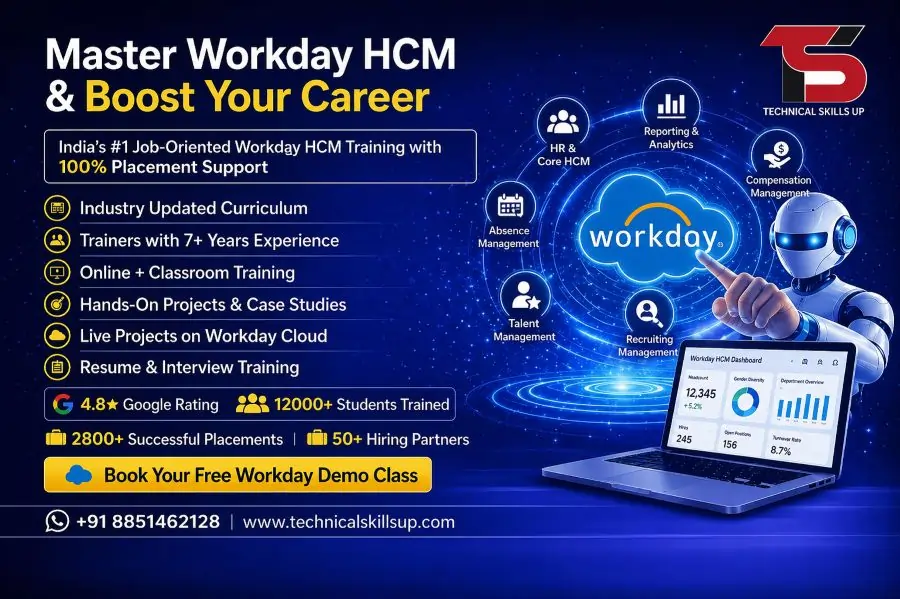
Workday HCM Course

Workday HCM Online Course in India with Placement

Career growth in today’s digital economy depends on learning platforms that power global organizations. Workday has become a leading cloud-based solution for Human Capital Management, helping companies manage employees, payroll, recruitment, and performance in one system. A structured Workday HCM Course from Technical Skills Up gives learners practical knowledge, real-time exposure, and industry-relevant skills. Strong guidance from experts, combined with hands-on projects, helps students understand concepts clearly and apply them confidently in real job roles. This program focuses on building both technical and functional expertise so that learners can succeed in competitive IT and HR domains.

Why Choose Workday HCM as a Career?

Modern businesses prefer cloud-based HR systems to improve efficiency and decision-making. Workday stands out due to its user-friendly interface, real-time data processing, and strong reporting capabilities.

Key Reasons to Learn Workday HCM

  • High demand for Workday professionals in global companies
  • Attractive salary packages for skilled candidates
  • Opportunities in HR, IT, and consulting domains
  • Continuous growth with new Workday updates
  • Suitable for both freshers and experienced professionals

Growing adoption of Workday across industries creates long-term career stability. Professionals with Workday expertise often work with multinational companies, consulting firms, and enterprise-level organizations.

About Technical Skills Up

Technical Skills Up focuses on delivering quality education that aligns with industry requirements. Practical learning methods, expert trainers, and real-world projects help students gain confidence and job-ready skills.

What Makes Technical Skills Up Different?

  • Industry-experienced trainers
  • Job-oriented curriculum
  • Live project-based learning
  • Flexible learning modes
  • Placement support assistance

Learning environment encourages students to ask questions, practice regularly, and build strong concepts.

Workday HCM Training Overview

Workday HCM Training provides a complete understanding of Human Capital Management processes within the Workday environment. Course structure covers core modules, business processes, and system configuration.

Training Highlights

  • Introduction to Workday and cloud ERP
  • Navigation and user interface understanding
  • Core HCM concepts
  • Business process frameworks
  • Security roles and permissions
  • Reports and analytics

Step-by-step learning approach ensures clarity from basic to advanced topics.

Workday HCM Online Course – Flexible Learning

Busy schedules often make classroom learning difficult. Workday HCM Online Course offers flexibility to learn from anywhere while maintaining quality training standards.

Benefits of Online Learning

  • Access to live and recorded sessions
  • Learn at your own pace
  • Doubt-clearing sessions with trainers
  • Practical assignments and projects
  • Easy accessibility from any location

Online training helps working professionals upgrade skills without leaving their current job.

Workday HCM Online Training in India – Growing Demand

India has become a major hub for IT and HR services. Companies across sectors are implementing Workday solutions, increasing demand for trained professionals.

Career Opportunities in India

  • Workday HCM Consultant
  • HRIS Analyst
  • Functional Consultant
  • Workday Business Analyst
  • Implementation Specialist

Strong demand in cities like Delhi, Noida, Bangalore, and Hyderabad creates excellent job prospects.

Course Curriculum – Step-by-Step Learning

Well-structured curriculum helps learners understand each concept clearly and apply it practically.

1. Introduction to Workday

  • Overview of cloud ERP
  • Workday architecture
  • Navigation basics

2. Core HCM Concepts

  • Employee data management
  • Organizational structure
  • Job profiles and positions

3. Business Process Framework

  • Workflow configuration
  • Approval processes
  • Event-driven actions

4. Security Configuration

  • User roles
  • Domain security
  • Data protection

5. Compensation and Benefits

  • Salary structure
  • Bonus and incentives
  • Benefits management

6. Reports and Dashboards

  • Custom report creation
  • Data analysis
  • Real-time reporting

7. Integration Basics

  • Introduction to Workday integrations
  • Data flow concepts
  • API basics

Each module includes practical exercises to improve understanding.

Skills You Will Gain

Workday training helps develop both technical and functional skills required in real-world scenarios.

Core Skills

  • HR process understanding
  • Workday system navigation
  • Data management techniques
  • Business process configuration

Advanced Skills

  • Report generation
  • Security management
  • System customization
  • Problem-solving approach

Hands-on practice ensures learners can perform tasks independently.

Practical Learning Approach

Learning without practice often leads to confusion. Technical Skills Up focuses on real-time projects and assignments.

Practical Training Features

  • Live project implementation
  • Case study-based learning
  • Scenario-based exercises
  • Regular assessments

Practical exposure helps learners gain confidence and prepare for job roles effectively.

Placement Support and Career Guidance

Getting a job after training remains a top priority for most learners. Technical Skills Up provides dedicated support to help students achieve their career goals.

Placement Assistance Includes

  • Resume building sessions
  • Interview preparation
  • Mock interviews
  • Job referrals

Guidance from industry experts helps students perform well in interviews.

Who Can Join This Course?

Workday HCM Course suits a wide range of learners.

Suitable Candidates

  • Fresh graduates
  • HR professionals
  • IT professionals
  • MBA students
  • Career switchers

No advanced technical background required to start learning.

Learning Modes Available

Different learners have different preferences. Flexible options make learning convenient.

Available Modes

  • Online live classes
  • Recorded sessions
  • Weekend batches
  • Fast-track programs

Students can choose a mode that fits their schedule.

Advantages of Workday HCM Online Training

Online training provides several advantages compared to traditional classroom learning.

Key Advantages

  • Time-saving and cost-effective
  • Learn from expert trainers remotely
  • Access to updated course materials
  • Continuous learning support

Flexibility helps maintain balance between learning and personal commitments.

Real-World Applications of Workday HCM

Organizations use Workday for managing various HR functions efficiently.

Key Applications

  • Employee lifecycle management
  • Payroll processing
  • Recruitment and onboarding
  • Performance tracking
  • Workforce planning

Understanding real-world applications helps learners relate concepts with practical use.

Certification Guidance

Certification adds value to your profile and increases job opportunities. Training includes guidance to help learners prepare effectively.

Certification Benefits

  • Industry recognition
  • Better job opportunities
  • Higher salary potential
  • Strong professional profile

Preparation tips and mock tests help students clear certification exams confidently.

Career Growth After Training

Workday HCM offers long-term career growth with continuous learning opportunities.

Career Path

  • Entry-level analyst
  • Functional consultant
  • Senior consultant
  • Project manager

Experience and skills lead to higher positions and better salary packages.

Why Workday HCM Training Matters Today

Digital transformation has changed the way companies manage employees. Workday helps organizations make data-driven decisions and improve productivity.

Importance of Learning Workday

  • Growing demand in global market
  • Cloud-based future technology
  • Better career opportunities
  • Continuous innovation

Learning Workday today prepares you for future job roles.

Support and Learning Environment

Strong support system helps learners stay motivated and focused.

Support Features

  • Trainer guidance
  • Doubt-solving sessions
  • Peer interaction
  • Learning resources

Positive environment improves learning experience and results.

How to Get Started

Starting your learning journey becomes easy with proper guidance and structure.

Simple Steps to Begin

  • Enroll in the course
  • Attend demo sessions
  • Start learning modules
  • Practice regularly
  • Prepare for interviews

Consistency plays a key role in achieving success.

Conclusion

Workday HCM skills open doors to high-growth opportunities in both IT and HR industries. Technical Skills Up provides a structured learning path, practical exposure, and expert guidance to help learners build strong careers. Continuous practice, real-world projects, and placement support create a complete learning experience. Strong demand for Workday professionals ensures long-term career stability and growth. Choosing the right training program can make a significant difference in achieving your professional goals.

Online Courses

Related Courses in Noida

Related Courses in Delhi

FAQs:

Q1. What is the Workday HCM Online Course?

Ans: The Workday HCM Online Course is a professional training program that covers all modules related to Human Capital Management (HCM), such as HR, Payroll, Recruitment, and more. This course equips you with the necessary skills to manage HR systems within organizations.

Q2. Who is the Workday HCM Course suitable for?

Ans: This course is ideal for HR professionals, freshers, MBA students, and individuals with an IT background. It is an excellent option for anyone looking to build a career in HR and ERP systems.

Q3. What are the benefits of taking the Workday HCM Online Course?

Ans: This course enables you to acquire a high-demand skill, enhances your opportunities for securing a good salary, and significantly increases your chances of landing a job at multinational corporations (MNCs).

Q4. What are the prerequisites for learning Workday HCM?

Ans: A bachelor’s degree (Graduation) is required. While having a background in HR or IT makes it easier to grasp the concepts, beginners can also successfully learn this course.

Q5. What is the duration of the Workday HCM Course?

Ans: Typically, this course is completed within 2 to 4 months, and it includes both live classes and practical training sessions.

Q6. What is taught in the Workday HCM Online Training?

Ans: This training covers modules such as Core HCM, Compensation, Payroll, Absence Management, Recruitment, and Reporting.

Q7. Does the Workday HCM Course lead to job placement?

Ans: Yes, provided you undergo proper training and acquire practical knowledge, the likelihood of securing a job—often with the assistance of placement support—increases significantly.

Q8. How much does the Workday HCM Online Course cost?

Ans: The course fee varies depending on the training institute, but it generally ranges between ₹25,000 and ₹60,000.

Q9. Does the Workday HCM Course offer certification?

Ans: Yes, upon successful completion of the course, you receive a certificate that validates your skills and aids you in your job search.

Q10. What job roles can one pursue after learning Workday HCM?

Ans: You can work in various roles such as Workday Consultant, HR Analyst, HR Executive, or Payroll Specialist.

Q11. Does the Workday HCM Online Course include live classes?

Ans: Yes, institutes like Technical Skills Up provide training that includes live classes, recorded sessions, and practical projects.

Q12. Is the Workday HCM course suitable for beginners?

Ans: Yes, provided the training is delivered effectively and starts from the basics, even beginners can learn it with ease.

Q13. What is the demand for Workday HCM in India?

Ans: The demand for Workday professionals in India is growing rapidly, with a particularly high need for them within IT and MNCs.

Q14. Does the Workday HCM Online Course come with placement support?

Ans: Reputable training institutes offer placement support services, such as resume building, interview preparation, and job assistance.

Q15. Why should one take the Workday HCM Online Course from Technical Skills Up?

Ans: Technical Skills Up offers practical training led by industry experts, along with live projects and placement support, thereby enabling students to achieve superior career growth.