
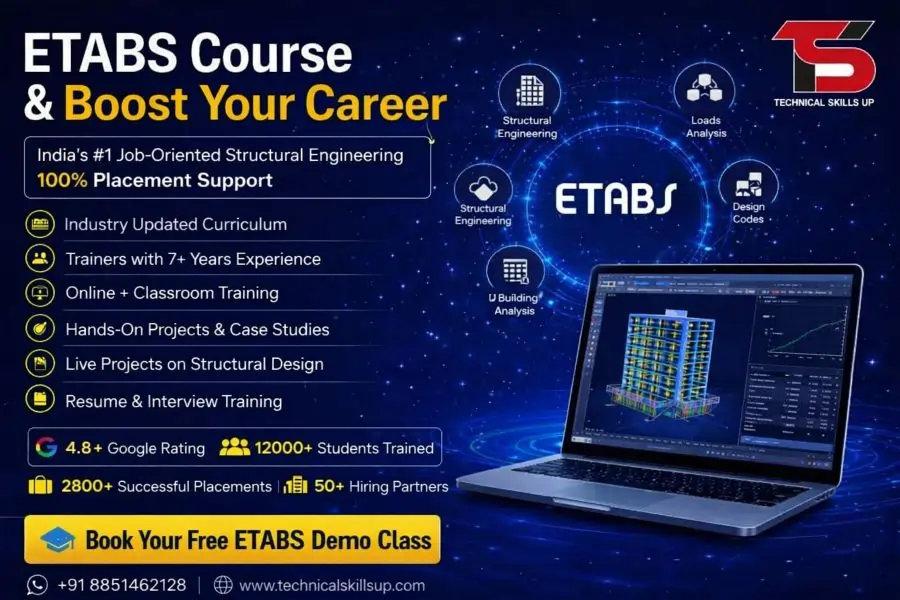
Modern construction projects require safe, strong, and cost-effective structures. Structural engineers need advanced software skills to design and analyze buildings accurately. ETABS has become one of the most trusted tools for structural analysis and building design across the construction industry. Technical Skills Up offers a professional ETABS Course in Delhi designed to help students, civil engineers, architects, and working professionals gain practical expertise in structural design.
Training is delivered by experienced industry experts who focus on real-world applications, live projects, and hands-on practice. Every module is designed to help learners understand structural concepts and software operations step by step. The course combines theoretical knowledge with practical implementation so that learners can confidently work on residential, commercial, and industrial projects.
Why Learn ETABS?
Building design has become more complex due to modern construction techniques and safety requirements. Companies prefer professionals who can perform structural analysis efficiently and accurately.
Benefits of learning ETABS include:
- Strong understanding of structural behavior
- Better job opportunities in the construction sector
- Ability to design multi-storey buildings
- Improved project planning and analysis skills
- Enhanced career growth in civil engineering
- Industry-recognized software expertise
- Higher chances of securing engineering roles
About Technical Skills Up
Technical Skills Up is committed to providing practical and career-oriented training programs. The institute focuses on developing job-ready skills through industry-based learning methods. Students receive guidance from trainers who possess real project experience in structural engineering and construction.
Key highlights include:
- Experienced trainers
- Practical learning approach
- Industry-oriented curriculum
- Live project exposure
- Flexible learning schedules
- Certification support
- Placement assistance
- Interview preparation sessions
ETABS Training Program Overview
The training program covers all major concepts required for structural analysis and design. Learners begin with the fundamentals and gradually move toward advanced topics.
Course modules are designed to help participants understand:
- Structural modeling
- Load calculations
- Seismic analysis
- Wind load analysis
- Reinforced concrete design
- Steel structure design
- Building performance evaluation
- Project documentation
Practical exercises help students gain confidence while working on real engineering scenarios.
Who Should Join This Course?
The program is suitable for individuals looking to improve their structural engineering skills and career prospects.
Ideal candidates include:
- Civil Engineering students
- Structural Engineering students
- Diploma holders
- Site engineers
- Design engineers
- Architects
- Project engineers
- Working professionals
- Fresh graduates
Previous ETABS experience is not mandatory because training starts from the basics.
ETABS Classes in Delhi for Practical Learning
Classroom sessions focus on practical implementation rather than only theoretical concepts. Trainers explain every topic with examples taken from real construction projects.
Learning activities include:
- Software demonstrations
- Building modeling exercises
- Structural analysis tasks
- Design calculations
- Case studies
- Project-based assignments
- Industry discussions
Interactive learning methods make it easier for students to understand complex engineering concepts.
Learning Environment
A productive learning environment helps students gain maximum benefits from training.
Students receive:
- Individual attention
- Doubt-clearing sessions
- Practice assignments
- Recorded learning support
- Project guidance
- Career counseling
Structured learning ensures better knowledge retention and practical understanding.
Course Curriculum
The curriculum has been developed according to current industry requirements.
Module 1: Introduction to Structural Engineering
Topics covered:
- Basics of structural engineering
- Building components
- Structural systems
- Design standards
- Engineering principles
Module 2: Introduction to ETABS Interface
Topics covered:
- Software navigation
- User interface overview
- Project setup
- Grid creation
- Model initialization
Module 3: Structural Modeling
Topics covered:
- Beam modeling
- Column modeling
- Slab modeling
- Wall modeling
- Foundation concepts
Module 4: Material Properties
Topics covered:
- Concrete properties
- Steel properties
- Material definitions
- Design parameters
- Material assignments
Module 5: Load Application
Topics covered:
- Dead loads
- Live loads
- Wind loads
- Earthquake loads
- Load combinations
Module 6: Structural Analysis
Topics covered:
- Static analysis
- Dynamic analysis
- Response spectrum analysis
- Structural behavior assessment
- Result interpretation
Module 7: Design Procedures
Topics covered:
- Reinforced concrete design
- Beam design
- Column design
- Slab design
- Structural optimization
Module 8: Project Work
Topics covered:
- Real project execution
- Building analysis
- Design validation
- Documentation
- Final presentation
Industry-Relevant Skills You Will Learn
Construction companies seek professionals who can handle design software confidently. The course helps learners develop practical skills required in real engineering projects.
Skills gained include:
- Structural modeling
- Building analysis
- Design optimization
- Load calculations
- Seismic design
- Wind analysis
- Report generation
- Project management support
These competencies improve employability and professional growth.
ETABS Certification Course in Delhi
Certification plays an important role in demonstrating technical competency. After successful completion of training, learners receive a certificate that validates their ETABS knowledge and practical skills.
Benefits of certification:
- Professional recognition
- Enhanced resume value
- Better interview opportunities
- Improved career credibility
- Stronger industry profile
Employers often prefer candidates who possess verified software skills and practical project experience.
Real Project-Based Training
Practical exposure helps students understand industry workflows more effectively. Training includes project-based learning where participants work on actual building structures.
Project activities include:
- Building modeling
- Structural analysis
- Design validation
- Load calculations
- Safety checks
- Report preparation
Hands-on learning bridges the gap between academic knowledge and professional requirements.
ETABS Training Institute in Delhi with Expert Mentorship
Professional mentorship can significantly improve learning outcomes. Trainers guide students through every stage of the learning process and share valuable industry insights.
Mentorship support includes:
- Technical guidance
- Career advice
- Project reviews
- Interview preparation
- Resume assistance
- Industry best practices
Experienced mentors help learners understand practical engineering challenges and solutions.
Placement Assistance Support
Career support is an important part of the training program. Technical Skills Up provides assistance to help students prepare for employment opportunities.
Placement support includes:
- Resume building
- Interview preparation
- Technical assessments
- Mock interviews
- Career guidance
- Job opportunity updates
Focused preparation helps learners approach interviews with confidence.
Common Job Roles After ETABS Training
Career opportunities may include:
- Structural Design Engineer
- Civil Design Engineer
- Structural Analyst
- Site Engineer
- Project Engineer
- Design Consultant
- BIM Coordinator
- Construction Engineer
Growing infrastructure development has increased demand for skilled structural professionals across various sectors.
Advantages of Learning Through Practical Projects
Project-based learning offers several benefits compared to traditional classroom training.
Advantages include:
- Better understanding of concepts
- Improved problem-solving ability
- Real-world exposure
- Enhanced software proficiency
- Stronger portfolio development
- Increased confidence
Practical experience prepares students for workplace challenges more effectively.
Tools and Concepts Covered Alongside ETABS
Structural engineering projects often require knowledge of multiple concepts and workflows.
Additional learning areas may include:
- Engineering drawing interpretation
- Structural detailing concepts
- Design standards
- Building codes
- Construction practices
- Project documentation
Understanding these areas creates a stronger foundation for professional success.
Career Opportunities in Structural Engineering
Rapid urbanization and infrastructure growth continue to create demand for qualified structural professionals. Organizations involved in construction, infrastructure, industrial projects, and real estate development regularly hire engineers with software expertise.
Industries hiring ETABS professionals include:
- Construction companies
- Infrastructure firms
- Real estate developers
- Engineering consultancies
- Design firms
- Government projects
- Industrial construction companies
Strong software skills combined with engineering knowledge can create long-term career opportunities.
Why Choose Technical Skills Up?
Selecting the right training provider is important for skill development and career growth.
Reasons learners choose Technical Skills Up:
- Industry-experienced trainers
- Practical learning methodology
- Updated curriculum
- Live project training
- Flexible batch timings
- Career-focused approach
- Certification support
- Placement assistance
Every aspect of the training program is designed to help students become confident professionals.
Conclusion
A successful structural engineering career requires both theoretical knowledge and practical software expertise. Professional training helps learners understand real-world design processes and industry standards. The ETABS Training in Delhi offered by Technical Skills Up focuses on practical implementation, project-based learning, and career development. Students gain valuable experience in structural modeling, analysis, design, and project execution while learning from industry experts. With comprehensive training, certification support, and placement assistance, learners can build the skills needed to pursue rewarding opportunities in the construction and structural engineering industry.
Online Courses
Related Courses in Noida
- ETABS Course in Noida
- STAAD.Pro Course in Noida
- Primavera P6 Course in Noida
- BIM Course in Noida
- Structural Design Course in Noida
Related Courses in Delhi
- STAAD.Pro Course in Delhi
- Primavera P6 Course in Delhi
- BIM Course in Delhi
- Structural Design Course in Delhi
FAQs:
Q1. What is the ETABS Course?
The ETABS Course is a professional civil engineering training program that teaches the structural analysis and design of buildings. This course provides practical training in the design, load analysis, and modeling of steel and RCC (Reinforced Cement Concrete) structures.
Q2. Who is eligible for the ETABS Course?
This course is suitable for Civil Engineering students, diploma holders, B.Tech/B.E. graduates, structural engineers, and professionals working in the construction industry.
Q3. What are the benefits of learning ETABS?
Learning ETABS helps develop critical skills such as building design, structural analysis, earthquake analysis, and project design. It enhances job opportunities and facilitates career growth.
Q4. What is the duration of the ETABS Course at Technical Skills Up?
The duration of the ETABS Course may vary depending on the specific batch and training modules. Generally, the course runs for a period ranging from a few weeks to a few months, encompassing both theoretical and practical sessions.
Q5. Does the ETABS Course involve working on live projects?
Yes, at Technical Skills Up, students are given the opportunity to work on industry-based live projects, thereby gaining real-world project experience.
Q6. In which fields is ETABS software used?
ETABS is widely used in structural engineering, building design, construction companies, infrastructure projects, and consultancy firms.
Q7. Is placement assistance provided after completing the ETABS Course?
Yes, Technical Skills Up offers students facilities such as placement assistance, resume building, interview preparation, and job support.
Q8. What subjects are taught in the ETABS Course?
This course covers subjects such as structural modeling, load calculation, RCC design, steel structure design, seismic analysis, wind analysis, and project design.
Q9. Is coding knowledge required for the ETABS Course?
No, prior knowledge of coding is not required to learn the ETABS Course. It is a course primarily focused on structural design and analysis software.
Q10. What job profiles can one pursue after completing the ETABS Course?
Upon completing the course, opportunities may arise in roles such as Structural Engineer, Design Engineer, Site Engineer, Project Engineer, BIM Engineer, and Construction Consultant.
Q11. Is ETABS Certification beneficial for one’s career?
Yes, ETABS Certification validates your technical skills and significantly strengthens your professional profile when applying for jobs.
Q12. Can freshers take the ETABS course?
Yes, freshers in Civil Engineering, as well as final-year students, can enroll in the ETABS course. It can prove to be highly beneficial for kickstarting their careers.
Q13. Does the ETABS course include practical training?
Yes, at Technical Skills Up, special emphasis is placed on hands-on practical training, real-time exercises, and project-based learning.
Q14. What are the salary prospects after learning ETABS?
Salary prospects depend on the candidate’s skills, experience, location, and the specific company. Candidates possessing a strong command of ETABS may find access to superior career opportunities.
Q15. Why choose the ETABS course at Technical Skills Up?
Technical Skills Up offers features such as training by experienced instructors, live projects, practical learning, an industry-oriented curriculum, certification, and placement assistance—all designed to ensure that students become job-ready.