
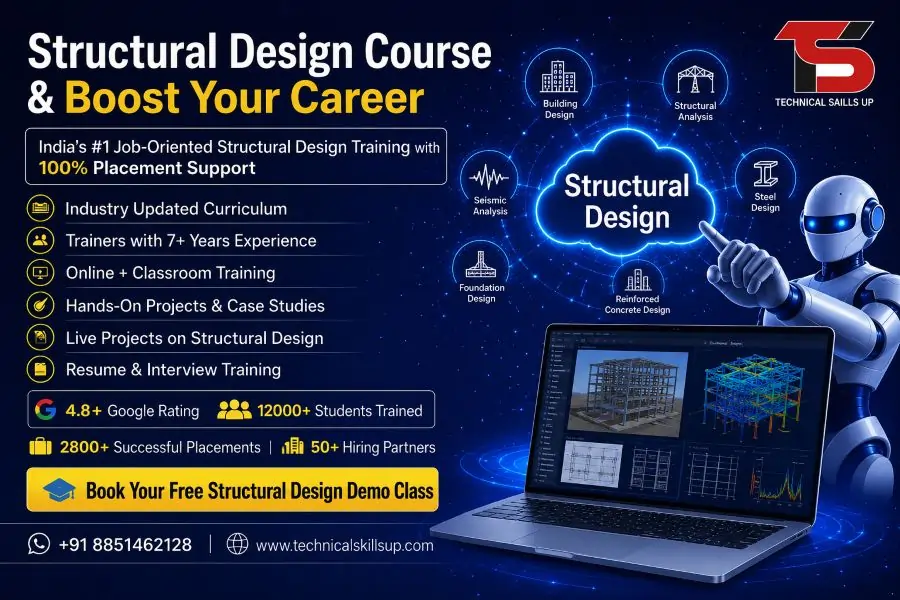
Modern construction and infrastructure development require strong technical knowledge, practical design skills, and a deep understanding of engineering principles. A career-focused Structural Design Course plays a crucial role in shaping skilled professionals who can design safe, durable, and efficient structures for real-world projects. At Technical Skills Up, the learning approach focuses on building strong fundamentals along with advanced practical exposure so that students and working professionals can confidently enter the structural engineering field.
Growing demand in construction, real estate, and industrial projects has made structural design one of the most valuable career paths in engineering. Learners gain both theoretical understanding and software-based design experience that helps them work on real-time projects. This program is designed to bridge the gap between academic knowledge and industry expectations, making it highly beneficial for fresh graduates and experienced engineers looking to upgrade their skills.
Table of Contents
ToggleCourse Overview – Structural Design Training Program
The Structural Design Training program at Technical Skills Up is structured to provide complete knowledge of design principles used in civil and structural engineering. The course covers everything from basic load calculations to advanced structural analysis and modeling techniques.
Students begin with core engineering concepts and gradually move toward practical applications using industry-standard software tools. The training focuses on real-life construction scenarios so learners understand how structures behave under different conditions.
Key highlights of the program include:
- Step-by-step learning from fundamentals to advanced design concepts
- Practical exposure to real-world structural projects
- Industry-relevant assignments and case studies
- Hands-on software training for design and analysis
- Guidance from experienced industry professionals
This structured approach helps learners build confidence and become job-ready by the end of the course.
Importance of Structural Design in the Industry
The construction industry depends heavily on accurate structural planning and execution. Even a small design error can lead to safety risks or financial losses. That is why trained structural designers are always in demand.
A professional with knowledge gained from Structural Design Classes can contribute to safe building designs, bridges, industrial structures, and infrastructure projects. Structural design ensures that every construction can withstand environmental forces such as wind, earthquakes, and load pressure.
Industry importance includes:
- Ensuring safety and durability of buildings
- Reducing construction risks and design failures
- Improving cost efficiency in projects
- Supporting sustainable and smart construction methods
- Meeting global engineering standards
Construction companies, architecture firms, and infrastructure developers actively hire skilled structural designers to maintain quality and safety standards in their projects.
Skills Covered in Structural Design Certification Course
The Structural Design Certification Course at Technical Skills Up focuses on building strong technical and analytical skills required in the industry. Learners develop the ability to understand, analyze, and design different structural systems.
Core Engineering Skills
- Understanding of structural mechanics
- Load calculation and distribution techniques
- Analysis of beams, columns, and slabs
- Design of RCC (Reinforced Cement Concrete) structures
- Basics of steel structure design
Analytical and Problem-Solving Skills
- Structural load analysis under different conditions
- Earthquake-resistant design concepts
- Wind load and environmental impact analysis
- Interpretation of engineering drawings
Practical Design Skills
- 2D and 3D structural modeling
- Drafting and detailing of structures
- Design validation and error checking
- Real-world project implementation techniques
These skills help learners become confident professionals capable of handling real engineering challenges.
Tools and Technologies Covered in Structural Design Online Course in India
Modern structural engineering relies heavily on software tools for accuracy and efficiency. The Structural Design Online Course in India at Technical Skills Up introduces students to industry-standard applications used by professionals worldwide.
Software and Tools Training
- AutoCAD for structural drafting and design drawings
- STAAD Pro for structural analysis and design
- ETABS for building analysis and modeling
- Revit Structure for BIM-based structural design
- MS Excel for engineering calculations and data management
Technology-Based Learning Approach
- BIM (Building Information Modeling) concepts
- Digital construction workflows
- 3D modeling and simulation techniques
- Structural optimization methods
Hands-on practice with these tools helps learners understand how modern engineering projects are executed in real environments.
Career Opportunities After Structural Design Training
Completing a Structural Design Training program opens multiple career paths in the construction and engineering sector. Skilled professionals are required in both private and government sectors.
Job Roles Available
- Structural Design Engineer
- Civil Design Engineer
- Structural Analyst
- BIM Structural Modeler
- Site Engineer
- Project Engineer
Industry Sectors Hiring Professionals
- Construction and real estate companies
- Infrastructure development firms
- Architectural consultancy agencies
- Government infrastructure departments
- Industrial design and manufacturing companies
With experience, professionals can also move into senior positions such as project managers, design consultants, or independent structural consultants.
Industry Demand and Future Scope
The future of structural engineering continues to grow with rapid urbanization and infrastructure development. Smart cities, highways, bridges, and high-rise buildings require advanced structural planning and design expertise.
Demand for professionals trained in Structural Design Classes is increasing due to:
- Growth in construction and infrastructure projects
- Rising focus on earthquake-resistant structures
- Adoption of modern design technologies like BIM
- Global demand for skilled civil engineers
- Expansion of real estate and industrial sectors
Future scope includes opportunities in international markets, large-scale infrastructure projects, and advanced research in structural engineering. Professionals with updated technical skills will continue to remain highly valuable in the industry.
Why Choose Technical Skills Up for Structural Design Certification Course
Technical Skills Up focuses on delivering career-oriented education that combines theoretical knowledge with practical exposure. The Structural Design Certification Course is designed to meet current industry requirements and future expectations.
Key Advantages
- Experienced trainers with industry background
- Practical project-based learning approach
- Updated curriculum aligned with industry standards
- Flexible learning options for students and professionals
- Real-time project experience for better understanding
Learning Environment
Students receive continuous support and mentorship throughout the course. The focus remains on building confidence, improving technical skills, and preparing learners for real job roles.
Training Methodology – Online + Practical Learning Approach
The training methodology at Technical Skills Up combines online learning with practical sessions to ensure complete understanding of structural design concepts.
Online Learning Benefits
- Flexible study schedule for learners
- Recorded sessions for revision
- Easy access from any location
- Step-by-step conceptual learning
Practical Training Approach
- Live project-based assignments
- Real structural design case studies
- Software lab practice sessions
- Interactive doubt-clearing sessions
This blended learning method ensures that students not only understand concepts but also apply them effectively in real-world situations.
Certification and Placement Support
A recognized certification adds strong value to a learner’s professional profile. After completing the Structural Design Online Course in India, students receive a certification from Technical Skills Up that validates their skills and knowledge.
Certification Benefits
- Industry-recognized completion certificate
- Proof of technical and practical skills
- Better job opportunities in engineering sector
- Enhanced resume value for interviews
Placement Assistance
Technical Skills Up also provides placement support to help students start their careers confidently.
- Resume building guidance
- Interview preparation sessions
- Job referral support
- Industry connection assistance
- Career counseling and guidance
This support system helps learners transition smoothly from training to employment.
Conclusion – Build a Strong Career in Structural Engineering
A career in structural engineering offers stability, growth, and long-term opportunities in the construction and infrastructure industry. A well-designed Structural Design Course provides the right combination of technical knowledge, practical skills, and industry exposure required to succeed in this field.
Technical Skills Up ensures that learners receive high-quality training through experienced mentors, practical projects, and modern tools. The program focuses on making students job-ready and confident in handling real engineering challenges.
Strong demand for skilled professionals, combined with continuous growth in construction projects, makes this field an excellent career choice. Learners who invest in proper training today can build a successful and rewarding future in structural design and engineering.
Online Courses
Related Courses in Noida
- ETABS Course in Noida
- STAAD.Pro Course in Noida
- Primavera P6 Course in Noida
- BIM Course in Noida
- Structural Design Course in Noida
Related Courses in Delhi
- ETABS Course in Delhi
- STAAD.Pro Course in Delhi
- Primavera P6 Course in Delhi
- BIM Course in Delhi
- Structural Design Course in Delhi
FAQs:
Q1. What is a Structural Design Course?
Ans: A Structural Design Course is a professional program that teaches the design principles required to make buildings, bridges, and other construction structures safe and robust.
Q2. Can I take this Structural Design course online from home?
Ans: Yes, this course is available entirely online, allowing you to learn from the comfort of your home using a laptop or mobile phone.
Q3. What topics are covered in this course?
Ans: The course covers topics such as RCC Design, Steel Structure Design, and Load Calculation, along with software tools like ETABS, STAAD.Pro, and AutoCAD.
Q4. Is this course suitable for freshers?
Ans: Yes, this course is ideal for fresh engineering graduates and beginners.
Q5. Will I get a job after completing this course?
Ans: Yes, Technical Skills Up provides placement support and assists students with interview preparation.
Q6. What qualifications are required to learn Structural Design?
Ans: Ideally, candidates should hold a degree or diploma in Civil Engineering or a related field.
Q7. Does the course include practical training?
Ans: Yes, the course includes practical training based on live projects and industry-standard software.
Q8. What is the duration of the Structural Design course?
Ans: The course duration typically ranges from 3 to 6 months, depending on your proficiency level.
Q9. Is a certificate provided upon completion?
Ans: Yes, you will receive a certificate from Technical Skills Up upon successfully completing the course.
Q10. Is there good career growth in Structural Design?
Ans: Yes, Structural Design is a high-demand field within civil engineering that offers excellent career growth and salary prospects.
Q11. Which software programs are taught in this course?
Ans: The course teaches industry-standard software such as ETABS, STAAD.Pro, AutoCAD, and SAFE.
Q12. Is this course recognized in India?
Ans: Yes, it is an industry-relevant course valued by many companies across India.
Q13. Is interview preparation included?
Ans: Yes, Technical Skills Up trains students in both resume building and interview preparation.
Q14. What kind of jobs can one get after learning Structural Design?
Ans: You can apply for roles such as Structural Engineer, Site Engineer, Design Engineer, and BIM Engineer.
Q15. Why choose ‘Technical Skills Up’ for this course?
Ans: Because here, you get industry-expert training, live projects, practical knowledge, and placement support—all in one place.