
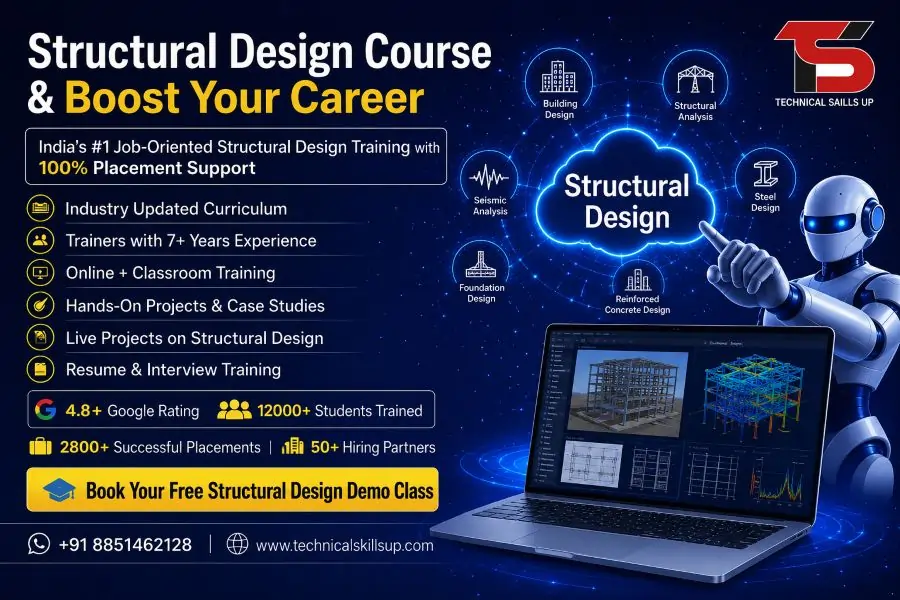
Modern construction and infrastructure development have created strong demand for skilled civil and structural engineers across India and especially in metro cities like Delhi. Large-scale residential projects, commercial towers, bridges, and industrial structures require precise planning, safety calculations, and advanced design understanding. Career growth in this field depends heavily on practical knowledge combined with industry-ready skills. Learners who want to enter this domain often look for professional guidance that bridges the gap between academic theory and real-world applications. A well-structured learning path such as Structural Design Course in Delhi offered by Technical Skills Up helps students and working professionals gain that required expertise in a practical and career-focused way.
Technical Skills Up focuses on building strong fundamentals along with advanced structural concepts that align with current industry standards. The training approach is designed to make learners confident in handling real projects, understanding structural behavior, and using modern design tools effectively. This program is suitable for civil engineering students, site engineers, designers, and professionals who want to upgrade their technical profile for better opportunities in the construction industry.
Course Overview
Structural Design Training in Delhi – Program Structure
Professional learning in structural engineering requires a balance between theoretical understanding and practical implementation. Structural Design Training in Delhi at Technical Skills Up is developed to provide that balance through a step-by-step curriculum.
The program begins with basic concepts and gradually moves toward advanced structural analysis and design practices used in modern construction industries. Learners gain clarity on how structures behave under different loads and environmental conditions.
Key learning stages include:
- Fundamentals of structural engineering
- Load calculations and distribution techniques
- RCC and steel structure design concepts
- Structural stability and safety analysis
- Practical design assignments using industry tools
Real-world case studies are also included to help learners understand how theoretical concepts are applied in actual construction projects. This structured learning approach ensures strong conceptual clarity and job readiness.
Learning Approach and Curriculum Design
Structured modules are carefully designed to match current industry requirements. Each topic is supported with practical examples and project-based learning. The course also emphasizes problem-solving skills that are essential for structural engineers working on real-site challenges.
Students are encouraged to analyze construction drawings, interpret design data, and apply engineering logic in simulations. This approach helps in developing confidence and technical accuracy.
Importance of the Course in Industry
Growing Demand in Construction Sector
Rapid urbanization has significantly increased the need for safe and efficient building structures. Construction companies are constantly searching for professionals who understand structural integrity and modern design standards. Structural engineers play a critical role in ensuring building safety, durability, and cost-effectiveness.
Structural design expertise is not limited to large firms only. Small architecture studios, real estate companies, and infrastructure consultancies also require skilled professionals who can handle design responsibilities effectively.
Industry Relevance of Structural Design Skills
Strong knowledge of structural design improves decision-making on construction sites. Engineers with practical design understanding can reduce errors, optimize material usage, and improve project efficiency.
Skills learned through Structural Design Classes in Delhi help professionals:
- Improve structural safety analysis
- Reduce construction errors
- Enhance design accuracy
- Support sustainable building practices
- Increase project efficiency and cost control
This makes structural design expertise highly valuable in today’s competitive job market.
Skills Covered in the Program
Core Technical Skills Development
Technical Skills Up focuses on building strong technical abilities that align with industry expectations. The training ensures learners develop both theoretical clarity and practical competence.
Key skills include:
- Structural analysis of beams, slabs, and columns
- RCC design fundamentals
- Load calculation techniques
- Foundation design principles
- Structural detailing concepts
- Drawing interpretation skills
These skills are essential for handling real engineering projects with accuracy and confidence.
Advanced Structural Engineering Skills
Advanced modules focus on complex design concepts used in large infrastructure projects. Learners gain exposure to structural optimization techniques and safety evaluation methods.
Additional skills covered:
- Earthquake-resistant design basics
- Wind load analysis
- Structural stability assessment
- Material strength evaluation
- Project-based structural planning
These advanced concepts help learners prepare for higher-level engineering roles.
Tools and Technologies Covered
Industry Software Training
Modern structural engineering relies heavily on software tools for analysis and design. The program introduces learners to widely used industry applications that improve productivity and precision.
Tools included:
- AutoCAD for structural drafting
- STAAD.Pro for structural analysis
- ETABS for building design
- MS Excel for engineering calculations
- Basic BIM concepts for structural planning
Practical training on these tools helps learners become job-ready and efficient in professional environments.
Practical Application of Software Skills
Hands-on practice ensures learners understand how to apply software tools in real scenarios. Assignments include structural modeling, load analysis, and drawing preparation.
This practical exposure helps in:
- Developing real project experience
- Improving technical speed and accuracy
- Understanding industry workflows
- Enhancing design presentation skills
Career Opportunities
Job Roles After Completion
Structural engineering offers a wide range of career opportunities across different sectors of construction and infrastructure development. After completing Structural Design Certification Course in Delhi, learners can explore multiple job roles.
Popular job profiles include:
- Structural Engineer
- Design Engineer
- Site Engineer
- RCC Detailer
- Construction Engineer
- Junior Project Engineer
These roles offer strong career growth and long-term stability.
Opportunities in Private and Government Sectors
Structural engineers are required in both private companies and government infrastructure projects. Real estate developers, construction firms, and consultancy agencies actively hire trained professionals.
Government sectors also provide opportunities in public works departments, metro projects, and infrastructure development authorities.
Freelancing and Independent Work Options
Experienced professionals can also work independently by offering design consultancy services. Structural design expertise allows engineers to handle freelance projects for small builders and contractors.
Industry Demand and Future Scope
Expanding Infrastructure Development
Continuous infrastructure growth in India has increased the need for skilled structural engineers. Smart cities, highways, metro systems, and commercial complexes require advanced structural planning.
This demand ensures long-term career stability for trained professionals in this field.
Future Growth in Structural Engineering
Modern construction trends are shifting toward sustainable and smart building designs. Engineers with updated structural knowledge will have better career opportunities in the coming years.
Future scope includes:
- Smart infrastructure projects
- Green building design
- Automated structural analysis systems
- Advanced BIM integration
- High-rise building design specialization
Professionals with updated skills will remain highly competitive in the job market.
Why Choose Technical Skills Up
Industry-Focused Learning Environment
Technical Skills Up provides training designed by industry professionals who understand real construction challenges. The focus remains on practical learning rather than only theoretical concepts.
Learners receive guidance based on real project experience, making the learning process more effective and relevant.
Expert Trainers and Mentorship
Experienced trainers guide students through complex topics in a simplified manner. Each concept is explained using real-life examples and practical applications.
Mentorship support helps learners improve confidence and technical clarity throughout the course journey.
Structural Design Training Institute in Delhi Advantage
Being a dedicated Structural Design Training Institute in Delhi, Technical Skills Up offers an environment that supports career-focused learning. Regular practice sessions, doubt-clearing classes, and project-based training help students stay aligned with industry requirements.
Training Methodology (Online + Practical Learning)
Interactive Learning System
Learning at Technical Skills Up follows a blended approach that combines online theory sessions with practical assignments. This ensures flexibility and better understanding for learners.
Key features of the training system include:
- Live interactive sessions
- Recorded lectures for revision
- Practical assignments and projects
- Real-world case studies
- Regular performance evaluation
Hands-On Project Experience
Practical training is a major part of the program. Students work on simulated construction projects to understand real engineering scenarios.
This approach improves:
- Technical problem-solving ability
- Design accuracy and speed
- Industry readiness
- Confidence in handling live projects
Doubt Resolution and Support System
Continuous support is provided to ensure smooth learning progress. Trainers help students clear doubts and improve understanding of complex topics.
This support system ensures that no learner feels left behind during the training journey.
Certification and Placement Support
Recognized Certification Program
Completion of the course provides a professional certification that validates structural design skills. This certification helps learners strengthen their resume and improve job opportunities.
Employers recognize practical training certifications as proof of job-ready skills.
Placement Assistance Support
Technical Skills Up provides dedicated placement assistance to help learners start their careers. Resume building, interview preparation, and job guidance are included in the support system.
Placement support includes:
- Resume preparation guidance
- Mock interview sessions
- Job referral assistance
- Career counseling support
Career Development Guidance
Career development sessions help learners understand industry expectations and improve professional communication skills. This guidance prepares students for interviews and workplace challenges.
Conclusion
Strong demand for skilled structural engineers continues to grow with expanding infrastructure development across India. Professional training plays a key role in shaping successful careers in this competitive industry. Structured learning combined with practical exposure helps learners build confidence and technical expertise required for real-world projects.
Technical Skills Up focuses on delivering industry-relevant education through expert-led sessions, practical training, and career support. The Structural Design Course in Delhi offers a complete pathway for students and professionals who aim to build a successful career in structural engineering. With strong emphasis on practical learning, modern tools, and real project experience, this program helps learners become job-ready and future-ready in the evolving construction industry.
Online Courses
Related Courses in Noida
- ETABS Course in Noida
- STAAD.Pro Course in Noida
- Primavera P6 Course in Noida
- BIM Course in Noida
- Structural Design Course in Noida
Related Courses in Delhi
FAQs:
Q1. What is a Structural Design Course?
Ans: A Structural Design Course is a professional training program that teaches the structural design of buildings, bridges, industrial structures, and other construction projects. The course covers design principles, load calculations, steel design, RCC design, and training on industry-standard software.
Q2. Who is the Structural Design Course in Delhi with Placement suitable for?
Ans: This course is suitable for Civil Engineering students, diploma holders, B.Tech graduates, site engineers, and professionals aiming to build a career in the construction sector. Both freshers and working professionals can benefit from this course.
Q3. What job roles can one get after completing the Structural Design Course?
Ans: After completing the course, you can work in roles such as Structural Design Engineer, RCC Design Engineer, Steel Design Engineer, BIM Structural Engineer, Project Engineer, and Construction Consultant.
Q4. What is the duration of the Structural Design Course?
Ans: Most Structural Design Courses range from 3 to 6 months in duration. The duration may vary depending on the institute, the curriculum, and the level of practical training involved.
Q5. Is placement assistance provided with the Structural Design Course?
Ans: Yes, at Technical Skills Up, the Structural Design Course in Delhi with Placement includes interview preparation, resume building, job referrals, and placement support to help students secure better career opportunities.
Q6. Which software tools are taught in the Structural Design Course?
Ans: The course typically provides training in AutoCAD, STAAD.Pro, ETABS, SAFE, Revit Structure, and other industry-standard software. Software training prepares students to work on real-world projects.
Q7. Is a Civil Engineering degree mandatory for this course?
Ans: While a Civil Engineering background is advantageous, many institutes also admit diploma holders and professionals associated with the construction sector.
Q8. Do students get the opportunity to work on live projects during the Structural Design Course?
Ans: Yes, reputable training institutes provide students with opportunities to work on live projects and case studies, enabling them to understand real-world industry requirements.
Q9. What is the starting salary for a Structural Design Engineer?
Ans: For freshers, the starting salary typically ranges from ₹3 lakh to ₹6 lakh per annum. Significant salary growth is observed as one gains experience and enhances technical skills.
Q10. Is the Structural Design Course available in both online and offline modes?
Ans: Yes, many training institutes offer both online and classroom options. Students can choose the mode that best suits their convenience and learning style.
Q11. Does the Structural Design Course include practical training?
Ans: Yes, the course includes practical designing, drawing preparation, software practice, project work, and industry-based assignments, all of which enhance the students’ technical proficiency.
Q12. Do I receive a certification upon completing the Structural Design Course?
Ans: Yes, a certificate is awarded upon successful completion of the course; this validates your skills and training and can assist in securing job opportunities.
Q13. What is the current demand for the Structural Design Course?
Ans: The demand for Structural Design professionals is steadily rising due to the expansion of the infrastructure, real estate, and construction industries. This field offers stable and lucrative long-term career opportunities.
Q14. Why choose the Structural Design Course from Technical Skills Up?
Ans: Technical Skills Up offers an industry-oriented curriculum, experienced instructors, practical lab training, live projects, interview preparation, and placement assistance, ensuring students are well-prepared for employment.
Q15. How can I enroll in the Structural Design Course?
Ans: Interested candidates can apply via the Technical Skills Up website or contact the institute directly. After a counseling session, a suitable batch and training plan can be selected.